Key Takeaways
- Silver quarter years: all US quarters struck for circulation and dated 1964 or earlier contain silver. From 1838 to 1964 they were 90% silver.
- Quarters dated 1965 and later are not silver: they are copper-nickel clad. The exceptions are 1976-S Bicentennial collector quarters (40% silver) and silver proof quarters from 1992.
- Silver content: a 90% silver quarter weighs 6.25 grams and contains 5.625 grams, or 0.18085 troy ounces, of pure silver.
- Melt value: at a silver spot price of $60.52 on October 3, 2026, one 90% silver quarter held $10.94 worth of silver.
- Quick check: a solid silver edge with no copper stripe and a weight of 6.25 grams (clad: 5.67 grams) tell you it is silver.
Which quarters are silver? It is one of the most searched coin questions in the US, and for good reason. A silver quarter is worth more than 40 times its face value in metal alone. The short answer: quarters dated 1964 or earlier are silver, while regular quarters from 1965 onward are not.
In this guide, we list all silver quarter years by design, calculate how much silver is in a quarter with a simple formula, and convert it to today’s melt value using the silver spot price. You will also learn how to check a quarter in seconds and which dates collectors pay a premium for.
Which Quarters Are Silver: The Quick List
Here are the silver quarter years at a glance:
- 1796 to 1838: Draped Bust and Capped Bust quarters, 89.24% silver (90% from 1837).
- 1838 to 1891: Seated Liberty quarters, 90% silver.
- 1892 to 1916: Barber quarters, 90% silver.
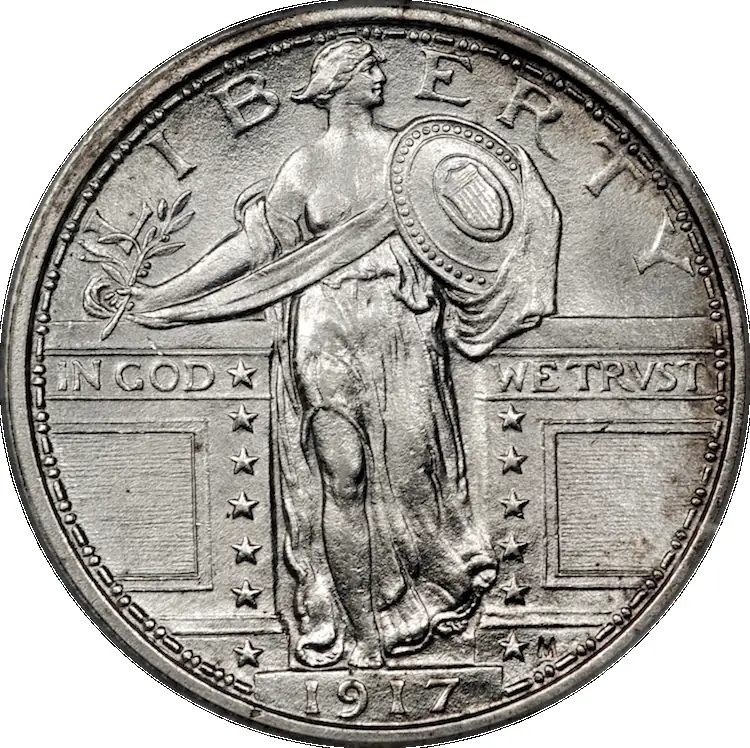
- 1916 to 1930: Standing Liberty quarters, 90% silver.
- 1932 to 1964: Washington quarters, 90% silver.
- 1976 (S mint mark): Bicentennial quarters sold in collector sets, 40% silver.
- 1992 to today: silver proof quarters with an “S” mint mark from Silver Proof Sets, 90% silver through 2018 and .999 fine silver from 2019.
Are all quarters before 1965 silver? Yes, every regular US quarter made for circulation before 1965 contains silver.
When Did Quarters Stop Being Silver?
The last 90% silver quarters are dated 1964. As silver prices rose in the early 1960s, the metal in a quarter came close to its face value, and the country faced a silver shortage. On July 23, 1965, President Lyndon Johnson signed the Coinage Act of 1965, which removed silver from circulating dimes and quarters and reduced it in half dollars.
Johnson explained the reason in plain numbers when he signed the act:
“The hard fact is that silver consumption is now more than double new silver production each year.”
Lyndon B. Johnson, President of the United States, remarks at the signing of the Coinage Act, White House, July 1965
According to the US Mint timeline, the Philadelphia Mint began striking the new clad quarters on August 23, 1965. They were the first coins to carry the 1965 date and were released nationwide on November 1, 1965.
Today’s quarter has copper-nickel outer layers bonded to a pure copper core. Overall it is 91.67% copper and 8.33% nickel and weighs 5.670 grams, per US Mint coin specifications.
Are 1965 quarters silver? Regular 1965 quarters are not. A small number were struck by mistake on leftover 90% silver blanks. These transitional errors weigh about 6.25 grams and are worth having checked by a grading service.
How Much Silver Is in a Quarter?
A 90% silver quarter weighs 6.25 grams. Here is the math:
Silver content = 6.25 g × 0.90 = 5.625 g
5.625 g ÷ 31.1035 g per troy ounce = 0.18085 troy ounces
That figure applies to Washington quarters from 1932 to 1964, Standing Liberty and Barber quarters, and Seated Liberty quarters from 1873 on. Older quarters used different weights:
| Quarter type | Years | Weight | Fineness | Pure silver | Melt value* |
|---|---|---|---|---|---|
| Draped Bust and Capped Bust | 1796 to 1836 | 6.74 g | 89.24% | 0.19338 oz | $11.70 |
| Seated Liberty | 1838 to early 1853 | 6.68 g | 90% | 0.19329 oz | $11.70 |
| Seated Liberty | 1853 to 1873 | 6.22 g | 90% | 0.17998 oz | $10.89 |
| Seated Liberty | 1873 to 1891 | 6.25 g | 90% | 0.18085 oz | $10.94 |
| Barber | 1892 to 1916 | 6.25 g | 90% | 0.18085 oz | $10.94 |
| Standing Liberty | 1916 to 1930 | 6.25 g | 90% | 0.18085 oz | $10.94 |
| Washington | 1932 to 1964 | 6.25 g | 90% | 0.18085 oz | $10.94 |
| Bicentennial (S, collector sets) | 1976 | 5.75 g | 40% | 0.07395 oz | $4.48 |
| Silver proof (S) | 1992 to 2018 | 6.25 g | 90% | 0.18085 oz | $10.94 |
| Silver proof (S) | 2019 to today | 6.343 g | 99.9% | 0.20373 oz | $12.33 |
| Clad | 1965 to today | 5.670 g | 0% | 0 oz | $0 |
How many silver quarters make an ounce?
It takes about 5.5 uncirculated 90% silver quarters to make one troy ounce of silver (1 ÷ 0.18085 = 5.53). In practice, many dealers price worn 90% coins at 0.715 troy ounces per $1 face value, instead of the theoretical 0.7234 ounces, to allow for wear.
How much does a silver quarter weigh?
A 90% silver quarter weighs 6.25 grams, about 0.20 troy ounces. A clad quarter weighs 5.670 grams. The difference of about 0.58 grams shows up on any kitchen scale that reads to 0.1 gram.
How Much Is a Silver Quarter Worth Today?
A common-date silver quarter in circulated condition is worth about its melt value, plus or minus a small dealer margin. The formula is:
Melt value = 0.18085 oz × silver spot price
At $60.52 per ounce on October 3, 2026, that is $10.94 per quarter, or about 44 times face value. Try other coins with our silver melt value calculator, and follow the live silver price chart.
| Quantity | Face value | Silver (new, 0.7234 oz per $1) | Melt value | Silver (worn, 0.715 oz per $1) | Melt value |
|---|---|---|---|---|---|
| 1 quarter | $0.25 | 0.1809 oz | $10.94 | 0.1788 oz | $10.82 |
| 4 quarters | $1 | 0.7234 oz | $43.78 | 0.715 oz | $43.27 |
| Roll of 40 quarters | $10 | 7.234 oz | $437.80 | 7.15 oz | $432.72 |
| 400 quarters | $100 | 72.34 oz | $4,377.97 | 71.5 oz | $4,327.18 |
Silver quarter value over the last year
The melt value moves with silver every trading day. Over the past year, one 90% silver quarter was worth $8.53 in silver on October 2, 2025, peaked at $21.14 on January 29, 2026, when silver reached $116.92 per ounce, and stood at $10.94 on October 3, 2026.
Is a silver quarter a good deal compared with bullion? It depends on the premium. On October 3, 2026, 1 oz silver coins at US dealers in our data ranged from 3.6% over spot (Canadian Silver Maple Leaf) to over 20%. Compare today’s offers in our silver coin price comparison.
Silver Quarter Types: A Closer Look
Washington quarters (1932 to 1964)
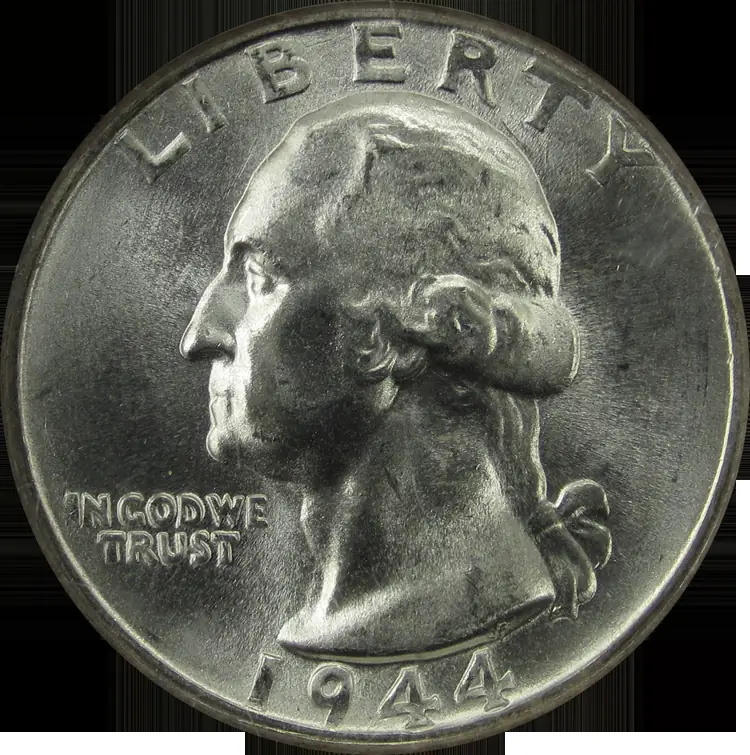
The Washington quarter was first issued in 1932 to mark the 200th anniversary of George Washington’s birth. The original design by John Flanagan shows Washington’s profile on the obverse and an eagle with spread wings on the reverse. It is by far the most common silver quarter today.
Standing Liberty quarters (1916 to 1930)
Designed by Hermon A. MacNeil, the Standing Liberty quarter shows Liberty in a gateway holding a shield and an olive branch, with an eagle in flight on the reverse. The date sits on a raised step and often wore off in circulation, so many coins have partial or missing dates. None were struck in 1922.
Barber quarters (1892 to 1916)
Charles E. Barber, the Mint’s chief engraver, designed this quarter with a head of Liberty wearing a laurel wreath and a heraldic eagle on the reverse. Worn Barber quarters often trade close to their silver value.
Seated Liberty quarters (1838 to 1891)
Based on Christian Gobrecht’s design, these quarters show Liberty seated on a rock. Arrows beside the date mark weight changes in 1853 to 1855 and in 1873 and 1874, which is why there are three weight standards in the table above.
Draped Bust and Capped Bust quarters (1796 to 1838)
The first US quarters, struck in 1796, used the early silver standard of 89.24%. In 1837, Congress set 90% silver for all US silver coins. These early quarters are valued as collectibles, far above their metal.
Bicentennial and silver proof quarters
The 1776-1976 Bicentennial quarter was struck in two versions. Coins made for circulation are clad. Coins with an “S” mint mark sold in special collector sets were made of 40% silver clad. Since 1992, the Mint has also made 90% silver quarters for Silver Proof Sets, including the State and America the Beautiful series, and switched them to .999 fine silver in 2019.
Read also: Which Dimes Are Silver? Silver Dime Years and Melt Value
How to Tell If a Quarter Is Silver
You can sort a jar of quarters in minutes with four checks:
- Date: 1964 or earlier means 90% silver.
- Edge: a silver quarter has a solid silver edge. A clad quarter shows a copper-colored stripe.
- Weight: 6.25 g for 90% silver, 5.67 g for clad, about 5.75 g for a 40% silver Bicentennial.
- Mint mark: on silver Washington quarters, a D or S mint mark sits on the reverse below the eagle. From 1968, mint marks moved to the obverse.
| Check | 90% silver quarter | Clad quarter |
|---|---|---|
| Date | 1964 or earlier | 1965 or later |
| Edge | Solid silver color | Copper stripe visible |
| Weight | 6.25 g | 5.670 g |
| Composition | 90% silver, 10% copper | 91.67% copper, 8.33% nickel |
| Mint mark (Washington) | D or S on the reverse below the eagle; none for Philadelphia | Obverse, right of Washington’s hair ribbon (from 1968) |
What about “W” quarters from 2019 and 2020? They are clad, not silver. Their value comes from the West Point mint mark and low mintage, not from metal.
Rare Silver Quarters Worth More Than Melt
Most silver quarters are worth their silver. These dates are the exceptions collectors look for:
| Coin | Why it is valuable |
|---|---|
| 1932-S Washington quarter | Lowest mintage of the series: 408,000 |
| 1932-D Washington quarter | Mintage of 436,800; scarce in high grades |
| 1916 Standing Liberty quarter | Only 52,000 struck at Philadelphia |
| 1950-D/S and 1950-S/D Washington quarters | Repunched mint mark varieties |
| 1796 Draped Bust quarter | First-year US quarter, very rare |
Found one of these? Do not clean it. Cleaning can wipe out most of a collectible coin’s premium. Have it authenticated and graded by a recognized service before you sell.
Other US Coins That Contain Silver
Quarters are only part of the “junk silver” family. If you sort coins, keep an eye on these too:
| Coin | Years | Silver | Pure silver | Melt value* |
|---|---|---|---|---|
| Dime | 1964 and earlier | 90% | 0.07234 oz | $4.38 |
| Quarter | 1964 and earlier | 90% | 0.18085 oz | $10.94 |
| Half dollar (incl. 1964 Kennedy) | 1964 and earlier | 90% | 0.36169 oz | $21.89 |
| Kennedy half dollar | 1965 to 1970 | 40% | 0.14789 oz | $8.95 |
| Morgan and Peace dollars | 1878 to 1935 | 90% | 0.77345 oz | $46.81 |
Nickels from 1942 to 1945 (“war nickels”) also contain 35% silver, but they are outside the scope of this guide.
Buying Silver Quarters vs Silver Bullion
Why do investors buy 90% silver quarters at all? Three reasons stand out:
- small, recognizable units that are easy to trade,
- simple pricing by face value,
- a known, fixed silver content backed by US Mint specifications.
The trade-off is the premium. Worn coins hold a little less silver than new ones, and dealers add a margin. For larger amounts, compare the cost per ounce with silver bars, the American Silver Eagle or a 1 kg silver bar before you buy.
Read also: Gold vs Silver Investments: Which Is Better for Your Portfolio?
Summary: Which Quarters Are Silver
| Question | Answer |
|---|---|
| Which quarters are silver? | Circulating US quarters dated 1964 or earlier; 1976-S collector Bicentennials (40%); silver proofs from 1992 |
| How much silver is in a quarter? | 5.625 g, or 0.18085 troy oz (90% quarters) |
| Melt value, October 3, 2026 | $10.94 per quarter at $60.52 silver |
| Quarters per troy ounce | About 5.5 |
| Are 1965 quarters silver? | No, apart from rare errors |
| Weight of a silver quarter | 6.25 g (clad: 5.670 g) |
FAQ: Which Quarters Are Silver
What year did they stop making silver quarters?
The last 90% silver quarters for circulation are dated 1964. The Coinage Act of 1965 switched quarters to copper-nickel clad, and clad production started on August 23, 1965.
How much is a 1964 silver quarter worth?
A circulated 1964 quarter is worth about its melt value. It contains 0.18085 troy ounces of silver, worth $10.94 at the October 3, 2026 spot price of $60.52.
How much is a $10 roll of silver quarters worth?
A $10 roll of 40 silver quarters contains about 7.15 to 7.23 troy ounces of silver. At $60.52 per ounce on October 3, 2026, that was about $433 to $438 in melt value.
Are 1976 Bicentennial quarters silver?
Only the ones with an “S” mint mark from collector sets are 40% silver. Bicentennial quarters found in circulation are clad and contain no silver.
Are state quarters silver?
Regular state quarters are not. Only the versions from US Mint Silver Proof Sets, marked “S”, were struck in 90% silver.
Are silver quarters still in circulation?
Yes, but rarely. Silver quarters have been hoarded since the 1960s, so finding one in change today is unusual.
How can I tell if my quarter is silver without a scale?
Check the date and the edge. A quarter dated 1964 or earlier with a solid silver edge and no copper stripe is silver.
Compare Silver Prices Before You Buy
Silver quarters are an easy way to own small amounts of silver, but the premium you pay decides how much metal you really get. That is why Metals Radar compares silver prices from many US dealers and shows the premium over spot for every offer.
See today’s offers for investment silver, check the silver price per gram, or find a bullion dealer near you who buys and sells 90% silver coins.
This article is for informational purposes only and is not investment advice.
Was this article helpful?
Thanks for your feedback!