Key Takeaways
- Larger sizes are cheaper per gram: on 3 October 2026, the lowest premium at UK dealers was 1.8% over spot for a 1 kg bar, against 23.7% for a 1 g bar.
- The jump in cost happens below 10 g: 10 g and 20 g bars started at 4.8% over spot, while 5 g bars started at 11.8%.
- Small coins beat small bars: a 1/10 oz Krugerrand (3.11 g of gold) cost 6.6% over spot, far less than a 1 g or 5 g bar.
- Selling costs follow the same pattern: the gap between a dealer’s selling and buy-back price was 3.0% for a 1 kg bar and 8.2% for a Sovereign.
- Size and tax interact: Britannias and Sovereigns of any size are exempt from Capital Gains Tax as UK legal tender, while gains on bars may be taxable.
- The best mix for most buyers is a core of 1 oz coins or larger bars, plus a few smaller pieces you can sell one at a time.
Should you buy one big gold bar or lots of small coins? It is one of the first decisions every gold buyer makes, and it affects how much gold you get for your money, how easily you can sell, and even how much tax you might pay. Large or small denominations each have a place, but the costs are very different.
In this guide, we compare gold bars and coins by size using real prices from UK dealers in our gold price comparison. You will see premiums over spot, buy-back spreads, what £10,000 actually buys in different sizes, plus storage and tax points. At the end, you will find a summary and an FAQ.
What Do We Mean by Gold Denominations?
A denomination is simply the size of a gold product: its weight of fine gold. Investment gold is sold in two families of sizes:
- Gram sizes: mostly bars, from 1 g, 2 g, 5 g, 10 g and 20 g up to 50 g, 100 g, 250 g, 500 g and 1 kg.
- Troy ounce sizes: coins and some bars, in 1/10 oz, 1/4 oz, 1/2 oz, 1 oz and larger. One troy ounce is 31.1035 g.
Some products sit outside these families. The gold Sovereign, for example, contains 7.32 g of fine gold (0.2354 oz). If you need a refresher on ounces and grams, see our troy ounce conversion table.
Is all investment gold the same purity?
No. Many bars and coins are 999.9 fine (24 carat), but not all. The Krugerrand and the Sovereign are 22 carat (916.7 fine), which means they weigh more than their gold content. Under HMRC rules, bars must be at least 995 fine to count as VAT-exempt investment gold. What matters for price comparison is always the fine gold content.
Why Small Sizes Cost More: The Premium
The premium is what you pay above the value of the gold itself (the spot price). It covers refining, minting, packaging, distribution and the dealer’s margin. Here is the formula:
Premium % = (dealer price − gold value at spot) / gold value at spot × 100
Why does a small bar carry a higher premium? Because many of the costs are per piece, not per gram. Striking, assay cards, packaging and handling cost roughly the same for a 1 g bar as for a 100 g bar. Spread over 1 gram, they make a big percentage. Spread over 100 grams, they almost disappear.
Gold bar premiums by size in the UK
On 3 October 2026, the gold spot price was £3,135.89 per troy ounce, or £100.82 per gram. This is what the cheapest bar of each size cost at the UK dealers in our data:
| Bar size | Cheapest price | Gold value at spot | Premium | Dealer |
|---|---|---|---|---|
| 1 g (Valcambi) | £124.76 | £100.82 | 23.7% | Tavex |
| 2 g (Heraeus) | £273.64 | £201.64 | 35.7% | Hatton Garden Metals |
| 5 g (Valcambi) | £563.44 | £504.11 | 11.8% | Tavex |
| 10 g (Valcambi) | £1,056.33 | £1,008.21 | 4.8% | Hatton Garden Metals |
| 20 g (Valcambi) | £2,112.92 | £2,016.42 | 4.8% | Tavex |
| 1 oz (Valcambi) | £3,248.42 | £3,135.89 | 3.6% | Tavex |
| 50 g (Valcambi) | £5,206.88 | £5,041.06 | 3.3% | Tavex |
| 100 g (Valcambi) | £10,373.48 | £10,082.12 | 2.9% | Tavex |
| 1 kg | £102,628.15 | £100,821.20 | 1.8% | Tavex |
Notice the 2 g bar? It cost more over spot than the 1 g bar. Premiums do not always fall in a straight line, because each dealer prices each product separately. That is why it pays to compare the exact size you want, for example 1 g gold bars, 5 g gold bars, 10 g gold bars or 100 g gold bars.
Gold coin premiums by size
Coins follow the same rule, but the small sizes are much cheaper than small bars. A 1/10 oz coin contains 3.11 g of gold, so it is a fair comparison with a 2 g or 5 g bar.
| Coin size | Gold content | Cheapest coin | Price | Premium |
|---|---|---|---|---|
| 1/10 oz | 3.11 g | Krugerrand (Hatton Garden Metals) | £334.26 | 6.6% |
| Sovereign | 7.32 g | Sovereign (Hatton Garden Metals) | £786.85 | 6.6% |
| 1/4 oz | 7.78 g | Maple Leaf (Hatton Garden Metals) | £812.95 | 3.7% |
| 1/2 oz | 15.55 g | Krugerrand (Hatton Garden Metals) | £1,609.78 | 2.7% |
| 1 oz | 31.10 g | Krugerrand (Hatton Garden Metals) | £3,173.61 | 1.2% |
So is a small coin always better than a small bar? On these prices, yes. A 1/10 oz Krugerrand cost 6.6% over spot, while the cheapest 5 g bar cost 11.8%. The trade-off is that coin premiums vary a lot between brands: a 1/10 oz Britannia was 10.3% over spot at Tavex on the same day.
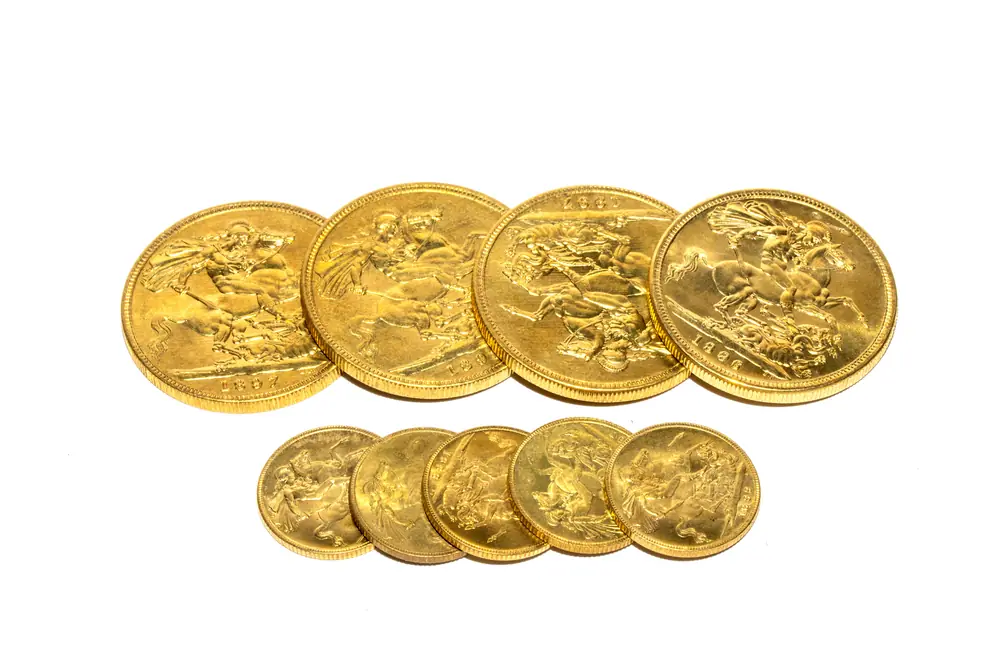
Read also: Gold Bars vs Gold Coins: Pros and Cons
What £10,000 Buys in Different Sizes
Percentages can feel abstract. What does the premium mean in grams? Here is how much gold £10,000 bought at the prices above, assuming you could spend the full amount on each product at the same price per gram:
| Product | Price per gram of gold | Gold for £10,000 | Value at spot | Paid above spot |
|---|---|---|---|---|
| 1 g Valcambi bars | £124.76 | 80.2 g | £8,081 | £1,919 |
| 5 g Valcambi bars | £112.69 | 88.7 g | £8,947 | £1,053 |
| 1/10 oz Krugerrands | £107.47 | 93.1 g | £9,382 | £618 |
| Sovereigns | £107.46 | 93.1 g | £9,382 | £618 |
| 10 g Valcambi bars | £105.63 | 94.7 g | £9,544 | £456 |
| 1 oz Britannias | £103.94 | 96.2 g | £9,700 | £300 |
| 100 g Valcambi bar | £103.73 | 96.4 g | £9,719 | £281 |
| 1 oz Krugerrands | £102.03 | 98.0 g | £9,881 | £119 |
The gap is striking. Buying in 1 g bars cost about £1,800 more than buying in 1 oz Krugerrands for the same budget. That money is gone on day one, and the gold price has to rise by more than 20% before the 1 g buyer breaks even at spot.
The Other Half of the Cost: Selling
The premium is only what you pay going in. When you sell, the dealer pays you its buy-back price, which is usually below its selling price. The difference is the spread, and it also tends to be wider for smaller and more specialised products.
What does a 3% spread mean? If you bought a product and sold it back to the same dealer the same day, you would lose about 3% of what you paid. For a 1 kg bar, that was the smallest round trip in our data. For a Sovereign, it was 8.2%.
| Product | Dealer sells at | Dealer buys back at | Spread |
|---|---|---|---|
| 1 kg gold bar (Tavex) | £102,628.15 | £99,570.99 | 3.0% |
| 1 oz Krugerrand (Hatton Garden Metals) | £3,173.61 | £3,072.25 | 3.2% |
| 1 oz Britannia (Tavex) | £3,232.78 | £3,103.26 | 4.0% |
| 100 g gold bar (Tavex) | £10,514.34 | £9,957.08 | 5.3% |
| 1 oz gold bar (Tavex) | £3,270.33 | £3,097.00 | 5.3% |
| 10 g gold bar (Tavex) | £1,043.90 | £985.66 | 5.6% |
| Sovereign (Hatton Garden Metals) | £786.85 | £722.56 | 8.2% |
If you want to see what dealers would pay you today, check our sell gold page before you choose a dealer.
Liquidity: Why Small Pieces Still Make Sense
If big sizes are cheaper, why buy anything small? Because gold is only useful when you can turn it into money, and sometimes you only need part of it.
Consider these two investors:
- One owns a single 100 g bar. To raise £1,000, they must sell the whole bar, worth about £10,000, and decide what to do with the rest.
- The other owns three 1 oz coins and ten Sovereigns. They can sell one Sovereign or one coin at a time.
Small pieces give you that flexibility. They are also easier to give as gifts or to split between heirs. A 1 kg bar is efficient to buy, but fewer private buyers can afford it, so you will usually sell it back to a dealer.
Most private buyers seem to agree. The Royal Mint reported that 77% of the gold bar and coin investors it served in 2023 bought fractional products, smaller than 1 oz, with the Sovereign, the 1 g bar and the 1/10 oz Britannia the most popular. Its precious metals director explained why the range keeps growing:
“The Royal Mint is committed to responding to market needs and, as part of this commitment, we have continued the development of our smaller, fractional products allowing entry level investment right up to our six-figure investment options.”
Andrew Dickey, Director of Precious Metals, The Royal Mint, annual bullion results statement, January 2024
Large bars are not hard to sell
Large bars from well-known refiners are still easy to sell to UK dealers. The issue is not that nobody wants them. It is that you have to sell all of it at once. Bars from refiners on the LBMA Good Delivery List in their original packaging are the simplest to resell.
Tax: Why Size and Type Matter in the UK
Size alone does not change your tax bill, but the type of product does, and small denominations offer more tax-friendly choices.
- VAT: investment gold, including bars of at least 995 purity and qualifying coins, is exempt from VAT in the UK under HMRC VAT Notice 701/21. This applies to small and large sizes alike.
- Capital Gains Tax: HMRC’s Capital Gains Manual states that Sovereigns minted in 1837 and later and Britannia gold coins are currency and exempt from CGT. This covers fractional Britannias too.
- Bars and foreign coins: gains on gold bars and on coins such as the Krugerrand or Maple Leaf may be subject to CGT if your total gains exceed your annual allowance.
What does that mean in practice? If you expect large gains, Britannias and Sovereigns can be worth a higher premium than a bar, because the gain is tax-free. Compare Britannia gold coin prices across dealers to keep the extra cost low.
Storage: Big Bars Are Easier to Keep
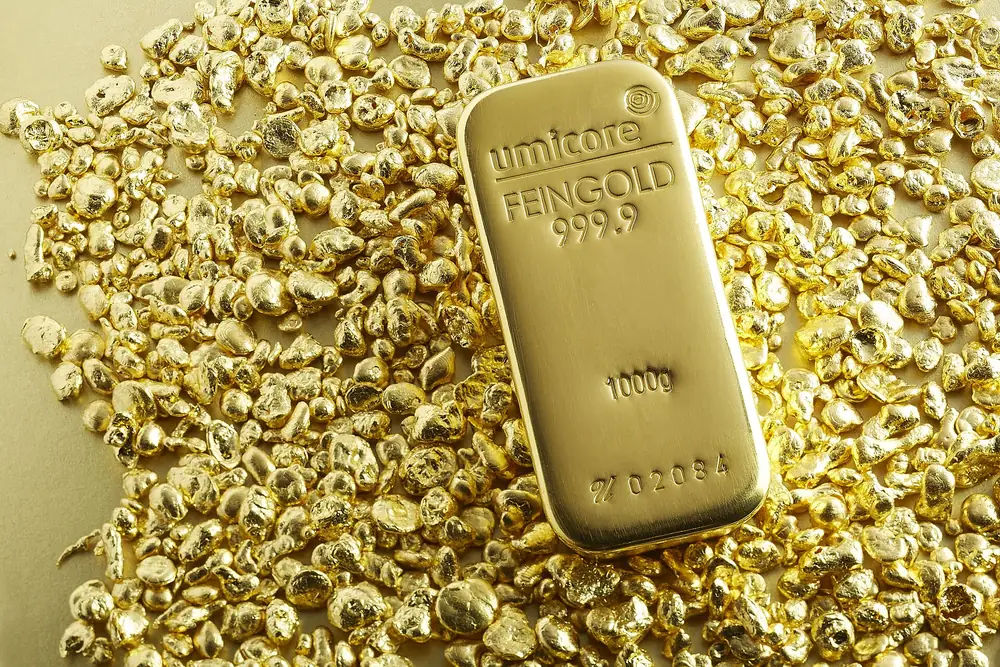
A 1 kg bar is small for its value and easy to store. The same amount of gold in Sovereigns is about 137 coins. More pieces mean more space, more capsules and more to count.
Vault fees can also depend on size. The Royal Mint, for example, charges 1% + VAT a year for coin tubes and larger bars, but 2% + VAT for single coins and 1 g, 5 g and 10 g bars. We cover the options in detail in our guide on the proper way to store gold.
Which Size Should You Buy?
There is no single right answer, but the data points to some simple rules:
- Choose larger sizes (100 g, 1 kg) if: you are investing a larger sum, plan to hold for years, and want the most gold for your money.
- Choose 1 oz coins if: you want low premiums, easy resale and, with Britannias, CGT-free gains.
- Choose small coins or Sovereigns if: you want pieces you can sell one at a time or give as gifts, and accept a premium of around 6% to 7%.
- Avoid very small bars (1 g, 2 g, 5 g) as an investment: their premiums of 12% to 36% in our data make them closer to gifts than to savings.
Many investors combine both. A practical split might be most of the budget in 1 oz coins or a 100 g bar, plus a handful of Sovereigns or 1/10 oz coins for flexibility. Compare 1 oz gold bars, Krugerrands and 1 kg gold bars to see current prices.
Summary: Large or Small Gold Denominations
| Factor | Large (100 g to 1 kg, 1 oz) | Small (1 g to 10 g, fractional coins) |
|---|---|---|
| Premium over spot | 1.2% to 3.6% (lowest in our data) | 2.7% to 35.7% |
| Buy-back spread | From 3.0% | Up to 8.2% (Sovereign) |
| Selling in parts | Not possible | Easy |
| Storage | Compact, lower vault fees | More pieces, higher vault fees |
| Best for | Larger sums, long-term holding | Small budgets, gifts, flexibility |
FAQ: Large or Small Gold Denominations
Is it better to buy small or large gold bars?
Large gold bars are better value per gram. On 3 October 2026, a 1 kg bar cost 1.8% over spot at a UK dealer, while a 1 g bar cost 23.7%.
Is it worth buying small gold bars?
Small bars of 10 g or 20 g can be worth it, with premiums from about 5% in our data. Bars of 1 g to 5 g usually are not, because their premiums are much higher.
What is the smallest gold bar you can buy?
In the UK, 1 g bars are widely sold, and smaller items exist. At a 23.7% premium in our data, a 1 g bar is an expensive way to buy gold.
Are fractional gold coins a good investment?
Yes, they can be, if you buy popular coins at a low premium. A 1/2 oz Krugerrand cost 2.7% over spot and a 1/10 oz Krugerrand 6.6% on 3 October 2026.
What size gold bar is best for investment?
For most private buyers, 1 oz to 100 g is a good balance between low premiums and flexibility. A 1 kg bar has the lowest premium but ties up over £100,000 in one piece.
Are small gold coins exempt from Capital Gains Tax?
Britannias and Sovereigns are exempt from CGT as UK legal tender, in every size. Foreign coins like the Krugerrand and Maple Leaf are not.
Is a Sovereign better than a 1/4 oz coin?
On price, not always: the cheapest 1/4 oz Maple Leaf was 3.7% over spot, while the Sovereign was 6.6%. The Sovereign wins on CGT exemption and recognition in the UK.
Compare Gold Prices by Size
The size you choose can change your cost by several hundred pounds per £10,000, and the dealer can change it again. The same 10 g bar was 4.8% over spot at one UK dealer and 7.3% at another on the same morning.
Compare gold bars and gold coins by size across UK dealers, and check the gold price per gram to see what each gram should cost today.
This article is for information only and is not investment or tax advice.
Was this article helpful?
Thanks for your feedback!