Key Takeaways
- What it is: the Britannia coin is the Royal Mint’s flagship bullion coin. The gold version holds 999.9 fine gold, the silver version 999 fine silver, and coins dated 2021 onwards carry four visible security features.
- What it costs: on 3 November 2026, the cheapest 1 oz gold Britannia we tracked cost £3,037.12, against a gold value of £2,922.53. That is a premium of 3.92% over spot.
- Tax: gold Britannias are UK legal tender, so HMRC treats them as sterling currency and gains on them are free of Capital Gains Tax. They are also VAT-free investment gold.
- Size matters: the 1/10 oz gold Britannia cost at least 12.86% over spot on the same day, more than three times the premium of the 1 oz coin.
- Silver is different: silver Britannias carry 20% VAT, so the cheapest 1 oz coin (£52.98) cost 43.8% more than the silver it contains.
Walk into any UK bullion dealer and you will see two British coins on almost every shelf: the sovereign and the Britannia. The sovereign is the old favourite. The Britannia is the modern one, made in a full ounce of pure gold or silver, and it is now the coin that many first-time investors pick.
In this guide, we explain what a Britannia coin is, how its sizes and security features work, and how UK tax treats it. We also show real prices from our gold Britannia price comparison on 3 November 2026, next to other gold coins sold in the UK.
What Is a Britannia Coin?
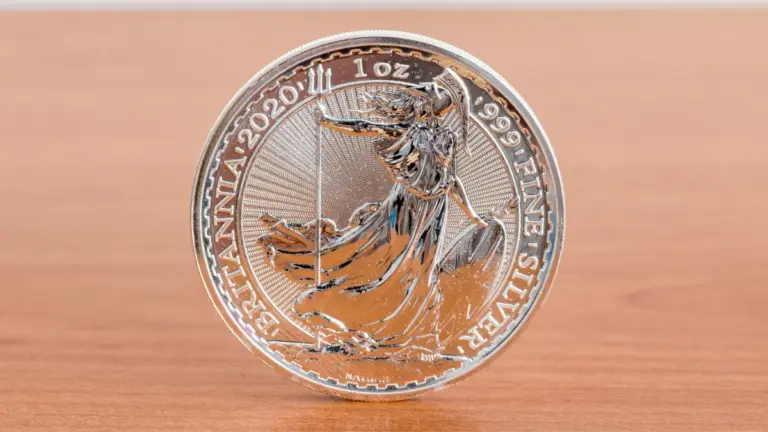
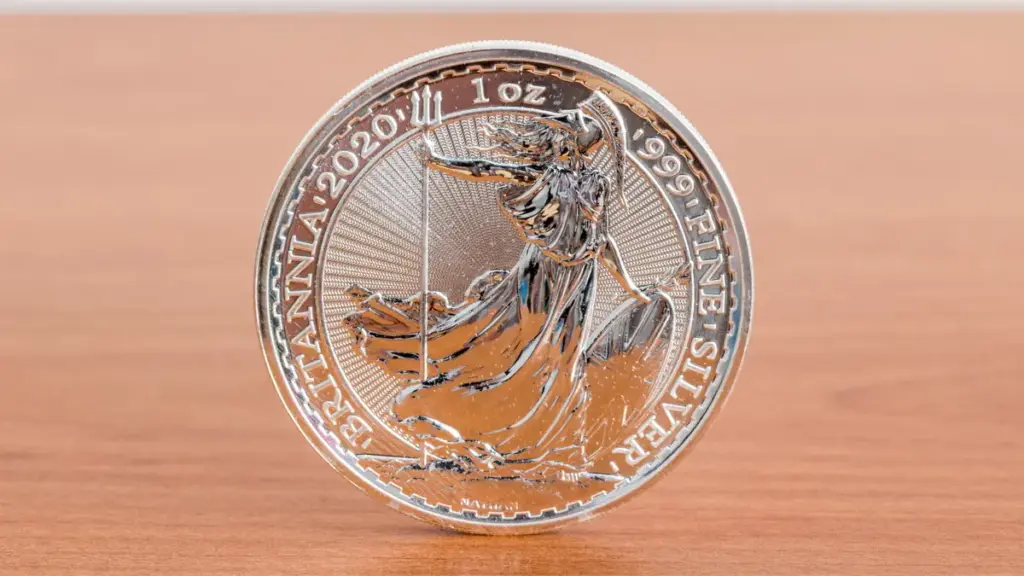
A Britannia coin is a bullion coin issued by the Royal Mint, with the figure of Britannia on the reverse and the portrait of the reigning monarch on the obverse. It is struck in gold, silver and platinum, and it is legal tender in the UK.
Who is Britannia? She is the female personification of Britain, shown with a shield, a trident and an olive branch. According to the Royal Mint, she first appeared on the coins of the Roman Emperor Hadrian and has been on British coins without a break since 1672, in the reign of Charles II.
The bullion coin you can buy today uses the design that sculptor Philip Nathan created in 1987. Newer coins carry the portrait of King Charles III by Martin Jennings on the obverse. Older ones show Queen Elizabeth II, and dealers often sell both side by side.
Britannia coins come in two broad types:
- bullion Britannias, sold close to the value of their metal to investors,
- proof and commemorative Britannias, struck in small numbers with new designs each year and sold at a much higher price.
This guide is about the bullion coins. If you are paying for design and rarity, you are in the collector market, where prices follow demand rather than the metal.
A Short History of the Britannia
The Britannia is young for a British coin. Here are the dates that shaped it, as described by the Royal Mint:
- 1987: Chancellor of the Exchequer Nigel Lawson approves a new £100 gold coin. The gold Britannia launches on 14 October 1987 in 1 oz, 1/2 oz, 1/4 oz and 1/10 oz sizes, struck in 22 carat gold.
- 1997: the silver Britannia arrives for the coin’s tenth anniversary, struck in 958 fine “Britannia silver”.
- 2000: VAT on investment gold is removed on 1 January. Before that, VAT of 17.5% was added to the price of gold coins.
- 2007: a platinum Britannia joins the range.
- 2013: the gold Britannia moves from 916.7 to 999.9 fine gold (24 carat), and the silver coin from 958 to 999 fine silver.
- 2021: four visible security features are added to coins dated 2021 onwards.
- 2027: for 40 years of the gold coin and 30 years of the silver coin, the Royal Mint has announced 2027 bullion Britannias with a one-off wave privy mark.
The early years were not a success. The Royal Mint has written that it and HM Treasury soon saw the project as a disappointment, mainly because of the VAT that was then charged on gold coins. Today the picture is very different: the Royal Mint describes the Britannia as the world’s best-selling bullion coin in both gold and silver.
The Royal Mint itself is one of the mints we track. You can see its other bullion products on our Royal Mint page.
Britannia Coin Sizes, Weights and Face Values
Every bullion Britannia is defined by the weight of pure metal it contains, measured in troy ounces. One troy ounce is 31.1035 g, so the fine metal in each size is easy to work out.
Gold Britannia coin
The gold Britannia is made in four bullion sizes. Since 2013, all of them are 999.9 fine, which means 999.9 parts in every 1,000 are pure gold.
| Size | Face value | Diameter | Fine gold |
|---|---|---|---|
| 1 oz | £100 | 32.69 mm | 31.10 g |
| 1/2 oz | £50 | 27.00 mm | 15.55 g |
| 1/4 oz | £25 | 22.00 mm | 7.78 g |
| 1/10 oz | £10 | 16.50 mm | 3.11 g |
What about Britannias made before 2013? They were 22 carat (916.7 fine), but the Royal Mint kept the same fine gold content in each size. A pre-2013 1 oz Britannia still holds one troy ounce of gold. It is simply a little heavier, because the alloy adds other metal on top.
Silver Britannia coin
The 1 oz silver Britannia is the version most UK investors buy. It has a face value of £2, a diameter of 38.61 mm and contains one troy ounce of 999 fine silver, according to the Royal Mint. Smaller silver coins (1/2 oz and 1/4 oz) also exist, mostly sold in tubes.
Silver Britannias dated before 2013 are 958 fine. That standard is older than the coin: “Britannia silver” was a British hallmark standard long before 1997. If you collect older pieces, our guide to silver hallmarks shows how the 958 mark is stamped on silverware.
Security Features: How to Recognise a Genuine Britannia
Popular coins attract counterfeiters, and the Britannia is one of the most popular coins in the world. The Royal Mint’s answer was to build four visible security features into the design of coins dated 2021 onwards:
- Latent image: a small symbol below Britannia switches between a trident and a padlock when you tilt the coin.
- Micro-text: tiny lettering spells out “DECUS ET TUTAMEN”, meaning “an ornament and a safeguard”.
- Tincture lines: fine lines create the light and dark tones of the Union flag on Britannia’s shield.
- Surface animation: a wave pattern behind Britannia appears to move as the coin moves.
According to the Royal Mint, the features appear on the whole Britannia bullion coin range except the quarter ounce and tenth ounce silver coins. Gordon Summers, Chief Engraver at the Royal Mint, described the aim on the Royal Mint website: “Britannia is one of our most iconic and enduring designs, so it was vital we retained the beauty of the coin whilst adding sophisticated new anti-counterfeit measures.”
Do the features make a coin fake-proof? No, but they make a fake much harder to pass off. For coins dated before 2021, the usual checks still apply:
- weigh the coin on a scale that reads to 0.01 g,
- measure the diameter against the table above,
- be wary of any offer well below the gold value,
- buy from established dealers with a UK address and company details.
Our guide on how to spot fake coins covers the main tests in more detail, for gold and silver alike.
How Much Is a Britannia Coin Worth?
Like any bullion coin, a Britannia has three different “values”, and it helps to keep them apart:
- Face value: £100 for the 1 oz gold coin, £2 for the 1 oz silver coin. It is legal tender, but nobody spends it at face value.
- Metal (melt) value: the fine metal content multiplied by the spot price.
- Market price: what a dealer charges you, which is the metal value plus a premium.
On 3 November 2026, the gold price in our price service was £2,922.53 per troy ounce, or £93.96 per gram. That gives a 1 oz gold Britannia a gold value of £2,922.53, about 29 times its £100 face value. The silver price on the same day was £36.84 per troy ounce, so the silver in a 1 oz silver Britannia was worth £36.84.
Gold value moves every day. Over the 12 months to 3 November 2026, the gold in a 1 oz Britannia was worth between £2,887.09 (30 October 2026) and £4,004.73 (2 March 2026), according to our daily data.
What does the chart tell you? The swing between the March peak and today was more than £1,000 per coin, many times the premium you pay a dealer. Over a much longer period, the Royal Mint notes that gold stood at £278.73 per ounce on the day the Britannia launched in 1987. You can follow the live price on our gold price chart.
Gold Britannia prices at UK dealers
Here is what two UK dealers we track charged for bullion gold Britannias on the morning of 3 November 2026.
| Coin | Dealer | Total price | Gold value | Premium over spot |
|---|---|---|---|---|
| Britannia 1 oz | Hatton Garden Metals | £3,037.12 | £2,922.53 | 3.92% |
| Britannia 1 oz | Tavex UK | £3,062.40 | £2,922.53 | 4.79% |
| Britannia 1/2 oz | Hatton Garden Metals | £1,550.74 | £1,461.27 | 6.12% |
| Britannia 1/2 oz | Tavex UK | £1,561.62 | £1,461.27 | 6.87% |
| Britannia 1/4 oz | Hatton Garden Metals | £796.80 | £730.63 | 9.06% |
| Britannia 1/4 oz | Tavex UK | £798.02 | £730.63 | 9.22% |
| Britannia 1/10 oz | Tavex UK | £329.85 | £292.25 | 12.86% |
| Britannia 1/10 oz | Hatton Garden Metals | £330.63 | £292.25 | 13.13% |
The formula behind the last column is the same for any coin: Premium % = (price − gold value) ÷ gold value × 100. Our glossary entry on the premium over spot explains it step by step. Both dealers have profiles on our site: Hatton Garden Metals and Tavex.
Notice how close the two dealers were. On the 1 oz coin, the gap was £25.28. On the 1/4 oz coin, it was just £1.22.
Is the Britannia Good Value Compared With Other Gold Coins?
The Britannia is not always the cheapest 1 oz coin on the shelf. On 3 November 2026, several foreign coins cost a little less per ounce at the same dealer, and the full sovereign had a lower premium too.
| Coin | Fine gold | Lowest total price | Premium over spot | UK CGT |
|---|---|---|---|---|
| Krugerrand 1 oz | 31.10 g | £3,012.13 | 3.07% | Chargeable |
| Maple Leaf 1 oz | 31.10 g | £3,014.08 | 3.13% | Chargeable |
| Vienna Philharmonic 1 oz | 31.10 g | £3,028.71 | 3.63% | Chargeable |
| Britannia 1 oz | 31.10 g | £3,037.12 | 3.92% | Exempt |
| Gold sovereign | 7.32 g | £708.42 | 3.00% | Exempt |
So should you buy the Krugerrand instead? It depends on what you expect to do with the coin. On that day, a 1 oz Britannia cost £24.99 more than a Krugerrand. If you hold the coin for years and gold rises, the Capital Gains Tax you avoid on the Britannia can be worth far more than that. If you hold a small amount and your total gains stay under the annual allowance, the cheaper coin may win. The live ranking is always on our cheapest gold coins page.
Want the British option at the lowest premium? On that day, the full sovereign beat the 1 oz Britannia on premium. We compare the two coins in detail in Gold Sovereign: All You Need to Know as a UK Investor.
Silver Britannia: Prices and the VAT Problem
The silver Britannia is one of the best-known silver coins in the UK. It also comes with a cost that gold buyers never see: VAT. Silver coins do not count as investment gold, so they are charged the standard UK VAT rate of 20%.
| Coin | Dealer | Total price | Silver value | Over spot |
|---|---|---|---|---|
| Maple Leaf 1 oz | Hatton Garden Metals | £50.33 | £36.84 | 36.6% |
| American Eagle 1 oz | Hatton Garden Metals | £50.33 | £36.84 | 36.6% |
| Britannia 1 oz | Hatton Garden Metals | £52.98 | £36.84 | 43.8% |
| Britannia 1 oz | Tavex UK | £54.18 | £36.84 | 47.1% |
| Kangaroo 1 oz | Tavex UK | £55.27 | £36.84 | 50.0% |
Why is the gap so large? When a price includes 20% VAT, one sixth of it is tax. On the £52.98 Britannia, that is £8.83. The rest of the gap is the dealer premium, which is always higher on silver because a coin worth £37 costs almost as much to mint, ship and store as a gold coin worth £3,000.
What does this mean for you? A silver Britannia has to rise a long way before you can sell it at a profit, because dealers usually buy silver back at a price linked to spot and you do not get the VAT back. We explain the trade-offs in Silver Bars or Coins: Which Should UK Investors Buy? and compare current offers on our silver Britannia prices page.
Britannia Coins and Tax in the UK
Tax is the main reason UK investors choose Britannias and sovereigns over foreign coins. Here is how the three taxes you are likely to meet apply.
Capital Gains Tax
Gold Britannias are free of Capital Gains Tax for UK investors. HMRC’s Capital Gains Manual (CG78305) states that “Sovereigns minted in 1837 and later years and Britannia gold coins are currency” and that, like all sterling currency, they are exempt. The full text is on GOV.UK.
Three details are worth knowing:
- HMRC’s manual names gold Britannias. Silver Britannias are also UK legal tender, and the Royal Mint says Britannias are exempt from CGT for UK residents because of that status,
- foreign coins such as the Krugerrand are “currency but not sterling”, so HMRC treats them as chargeable assets,
- the exemption covers Capital Gains Tax only, not other taxes.
How much can this save? It depends on your gains and your tax band, so we built a Capital Gains Tax on gold calculator that shows the numbers for your own case.
VAT on gold and silver Britannias
Gold Britannias are investment gold, so you pay no VAT when you buy them. Under VAT Notice 701/21A, an investment gold coin is a gold coin minted after 1800, at least 900 thousandths pure, that is or has been legal tender in its country of origin, and is normally sold for no more than 180% of the open market value of its gold. A modern 999.9 Britannia easily meets the purity test.
Silver and platinum Britannias do not qualify, so UK buyers pay VAT on them. Our article on VAT on gold and silver in the UK covers the rules for each metal, and the investment gold VAT glossary entry gives the short version.
Inheritance Tax
The CGT exemption does not carry over to Inheritance Tax. Britannias you hold when you die form part of your estate like cash, shares or property, and the normal Inheritance Tax rules apply.
Which Britannia Should You Buy?
All gold Britannias share the same purity and the same tax treatment. The real difference is the premium and how easily you can sell part of your holding later.
Choose the 1 oz gold Britannia if:
- you want the lowest premium in the Britannia range,
- you plan to build a holding over several years,
- you want the coin that every UK dealer stocks and buys back.
Choose a 1/2 oz or 1/4 oz Britannia if:
- your budget per purchase is closer to £800 or £1,500 than £3,000,
- you want to sell gold in smaller amounts later,
- you are buying a gift and the size matters more than the premium.
The 1/10 oz coin is the most expensive way to own gold in the range. On 3 November 2026, you paid about £106 per gram of gold in a tenth ounce Britannia, against £97.65 in the 1 oz coin. We look at this trade-off in more depth in Large or Small Denominations: What’s Better When Buying Gold?
And silver? Choose the 1 oz silver Britannia if you want a British coin you can sell easily and you accept the VAT cost. If your only goal is the cheapest ounce of silver, the table above shows that other coins were cheaper on that day.
Bullion, Proof and Older Britannias
Not every Britannia is priced on its metal. Three types sit on the market side by side:
- Current year bullion: new coins in standard finish, priced on metal value plus a premium.
- Older or mixed year bullion: coins from earlier years, including Queen Elizabeth II and pre-2013 22 carat coins, usually priced the same way, on metal value plus a premium.
- Proof and commemorative coins: special finishes, yearly designs and limited mintages, priced far above metal value.
Which Britannia coins are worth more than their metal? Mainly proofs with low mintages and some early coins in perfect condition. For a bullion investor, an older year is usually just as good as a new one, because the gold content is the same.
How to Buy and Sell Britannia Coins
Buying a Britannia takes a few minutes. Getting a fair price takes a little more care:
- Compare the total price: include delivery and insurance, not just the coin price.
- Check the premium: divide the price by the gold value of the coin, so you know what you pay above the metal.
- Look at the buyback price: the gap between buy and sell prices decides how far gold has to rise before you break even.
- Keep the paperwork: the invoice and original capsule or blister help when you sell.
When it is time to sell, treat buyback offers the same way: compare them across dealers. Our sell gold page is a good place to start.
Summary: Britannia Coin
| Question | Answer |
|---|---|
| What is it? | The Royal Mint’s flagship bullion coin, made in gold, silver and platinum |
| Purity | Gold 999.9 and silver 999 since 2013 (before: 916.7 gold, 958 silver) |
| Face value | £100 (1 oz gold), £2 (1 oz silver) |
| Lowest 1 oz gold price on 3 November 2026 | £3,037.12, a 3.92% premium over spot |
| Capital Gains Tax | Exempt for gold Britannias (HMRC CG78305) |
| VAT | None on gold; 20% on silver |
FAQ: Britannia Coin
How much is a gold Britannia coin worth?
A 1 oz gold Britannia is worth the value of one troy ounce of gold plus a dealer premium. On 3 November 2026, its gold value was £2,922.53 and the cheapest UK offer we tracked was £3,037.12.
Are Britannia coins 24 carat?
Yes, gold Britannias made since 2013 are 24 carat, 999.9 fine gold. Coins from 1987 to 2012 are 22 carat but contain the same weight of fine gold.
Are Britannia coins CGT free?
Yes, HMRC treats gold Britannias as sterling currency, so gains on them are exempt from Capital Gains Tax. Foreign gold coins such as the Krugerrand do not get this exemption.
Are silver Britannia coins a good investment?
Silver Britannias are easy to sell and recognised worldwide, but they carry 20% VAT. On 3 November 2026, the cheapest 1 oz coin cost 43.8% more than the silver it contained.
Who makes Britannia coins?
The Royal Mint makes Britannia coins at its site in Llantrisant, Wales. Only the Royal Mint can strike bullion coins with Philip Nathan’s Britannia design.
How much does a Britannia coin weigh?
A modern 1 oz gold or silver Britannia contains one troy ounce, or 31.10 g, of pure metal. Pre-2013 gold coins weigh a little more, because their 22 carat alloy includes other metals.
Is a Britannia better than a sovereign?
Neither coin is better in every case, because both are CGT-free and VAT-free. On 3 November 2026, the sovereign had a slightly lower premium (3.00% against 3.92%), while the Britannia gives you a full ounce in one coin.
Compare Britannia Prices Before You Buy
The gold price is the same for everyone. The premium is not: on 3 November 2026, the same 1 oz gold Britannia cost £25.28 more at one UK dealer than at the other, and the cheaper dealer for the 1/10 oz coin was a different one.
Metals Radar compares prices from UK dealers, including delivery, so you can see the real cost before you order. Check today’s 1 oz gold Britannia prices, the 1 oz silver Britannia prices, or read our guide on the cheapest way to buy gold in the UK.
This article is for informational purposes only and is not investment or tax advice.
Was this article helpful?
Thanks for your feedback!