
THE SHORT ANSWER: For most UK investors, gold coins and gold bars do the same job – they store wealth in physical gold – but they suit different priorities. Choose UK legal-tender coins (Britannia, Sovereign) when you want tax-free gains and easy part-selling. Choose larger bars (100 g to 1 kg) when you want the lowest cost per ounce for a long-term hold. Most people end up holding a mix of both.
Once you have decided to buy physical gold, the next question is what form it should take. Bars look like the serious option; coins feel more familiar. In reality the choice comes down to four practical factors: how much you pay above the metal price (the premium), how the gold is taxed in the UK, how easily you can sell part of your holding, and how you plan to store it. This guide works through each, with UK-specific rules and figures, so you can match the right product to your own goals.
Key takeaways
- Cost: larger bars carry the lowest premium over spot; small bars and coins cost more per ounce.
- Tax: all investment gold is VAT-free in the UK, but only UK legal-tender coins (Britannias, Sovereigns) are also free of Capital Gains Tax.
- Flexibility: coins and small bars are far easier to sell a little at a time.
- Storage: one big bar is compact but hard to divide; a stack of coins can be split across locations.
- Verdict: coins for tax efficiency and liquidity, larger bars for cost efficiency – and a blend covers both.
Gold bars vs gold coins: what’s the difference?
Both are bullion – physical gold bought for its metal value rather than as jewellery or as a collector’s rarity. The difference is in format, and that format drives cost, tax and how you sell.
Spot price. The spot price is the live global benchmark for one troy ounce of pure gold, set in the London and other wholesale markets. Every retail coin or bar is priced from spot, plus a premium. You can follow the sterling gold price on the Metals Radar live gold price page (/gb/charts/gold-price/).
Gold bar. A gold bar, or ingot, is a rectangular unit of investment-grade gold – cast or minted – ranging from one gram to a 400 oz wholesale bar. Investment bars are at least 995 parts per 1,000 fine. Larger bars carry lower premiums per ounce, which makes them the most cost-efficient way to hold a given amount of gold.
Gold coin. A gold bullion coin is a legal-tender coin whose value tracks its gold content rather than its small face value. UK examples are the Royal Mint’s Britannia (999.9 fine, one troy ounce, £100 face value) and the Sovereign (916.7 fine, 0.2354 oz, £1 face value). Coins are easy to divide, trade and verify.
Fineness matters because it determines both tax status and how the coin feels in the hand. A 999.9 Britannia is pure 24-carat gold; a 916.7 Sovereign or Krugerrand is 22-carat, alloyed with a little copper for durability but still containing a full measure of pure gold. Recognised refiners and mints – those on the London Bullion Market Association Good Delivery framework, and national mints such as The Royal Mint or the Perth Mint – are the safest starting point for authenticity and resale.
Gold bars: pros and cons
Pros
- Lowest premium per ounce. Fabrication is cheaper per gram on a big bar, so more of your money buys metal. A 1 kg bar is far more cost-efficient than the equivalent weight in small coins.
- Efficient for large holdings. If you are deploying a lump sum for the long term, bars keep your entry cost down.
- Compact storage. A large amount of value fits in a small, stackable form with a serial number and, usually, an assay certificate.
- VAT-free. Investment gold bars (995 fine or better) carry no VAT in the UK.
Cons
- All bars are subject to Capital Gains Tax. Unlike UK coins, bars are chargeable assets, so gains above your annual allowance are taxable.
- Hard to part-sell. You cannot shave a slice off a 1 kg bar – it is all-or-nothing unless you bought smaller bars.
- Higher premium on tiny bars. The cost advantage only applies to larger sizes; 1-5 g bars can cost more per ounce than a 1 oz coin.
- No numismatic upside. A bar is only ever worth its gold content.
Gold coins: pros and cons
Pros
- UK coins can be Capital Gains Tax-free. Britannias and post-1837 Sovereigns are legal tender, so any profit is exempt from CGT – potentially the biggest saving on this page.
- Easy to sell in parts. Sell one or two coins to release cash and keep the rest invested.
- Highly liquid and recognised. Common bullion coins are known worldwide and change hands quickly.
- Buy little and often. Fractional coins and Sovereigns let you build a holding gradually rather than committing a large sum at once.
- Some collectable potential. Limited-mintage or older coins can carry a premium above their gold value (though this is not guaranteed).
Cons
- Higher premium per ounce. Minting detailed coins costs more, so you pay a little more above spot than for a comparable bar.
- Small coins cost most, proportionally. A 1/10 oz coin can carry a premium several times that of a large bar.
- More items to store and track. A holding in coins means more units to secure and account for.
- Foreign coins are not CGT-free. Krugerrands, Maple Leafs and American Eagles are legal tender abroad, not in the UK, so their gains are taxable here.
Gold bars vs gold coins at a glance
| Factor | Gold bars | Gold coins |
|---|---|---|
| Premium over spot | Lowest, especially 100 g-1 kg | Higher; smaller coins cost most per ounce |
| Divisibility / part-selling | Limited – sell the whole bar | Excellent – sell coin by coin |
| Portability | Very compact for the value | Compact; more individual items |
| VAT (UK) | None (995 fine or better) | None on investment gold coins |
| Capital Gains Tax (UK) | Applies to all bars | None on UK legal-tender coins; applies to foreign coins |
| Authentication | Serial number + assay certificate | Mint markings, weight and security features |
| Collectable value | None – metal value only | Possible on limited or older coins |
| Best suited to | Large, long-term, cost-focused holdings | Tax efficiency, flexibility, regular buying |
Table 1. UK comparison. Tax treatment reflects the 2025/26 tax year.
Premiums: the number that decides your real cost
Headline price is the wrong thing to compare. Two products can both buy an ounce of gold yet cost noticeably different amounts, because the premium sits on top of the same spot value.
Premium. A premium is the amount charged above the spot value of the metal, covering refining or minting, distribution, insurance and the dealer’s margin. It is usually quoted as a percentage over spot. Because premiums vary widely between products and dealers, the premium – not the sticker price – determines your true cost of ownership.
The pattern is consistent: the bigger the single unit, the lower the premium as a percentage. A 1 kg bar spreads its fabrication cost over a lot of metal; a 1/10 oz coin spreads a similar minting cost over very little. The chart below shows the shape of the market. Treat the numbers as illustrative – they move with demand and differ by dealer, which is exactly why comparing live, all-in prices matters.
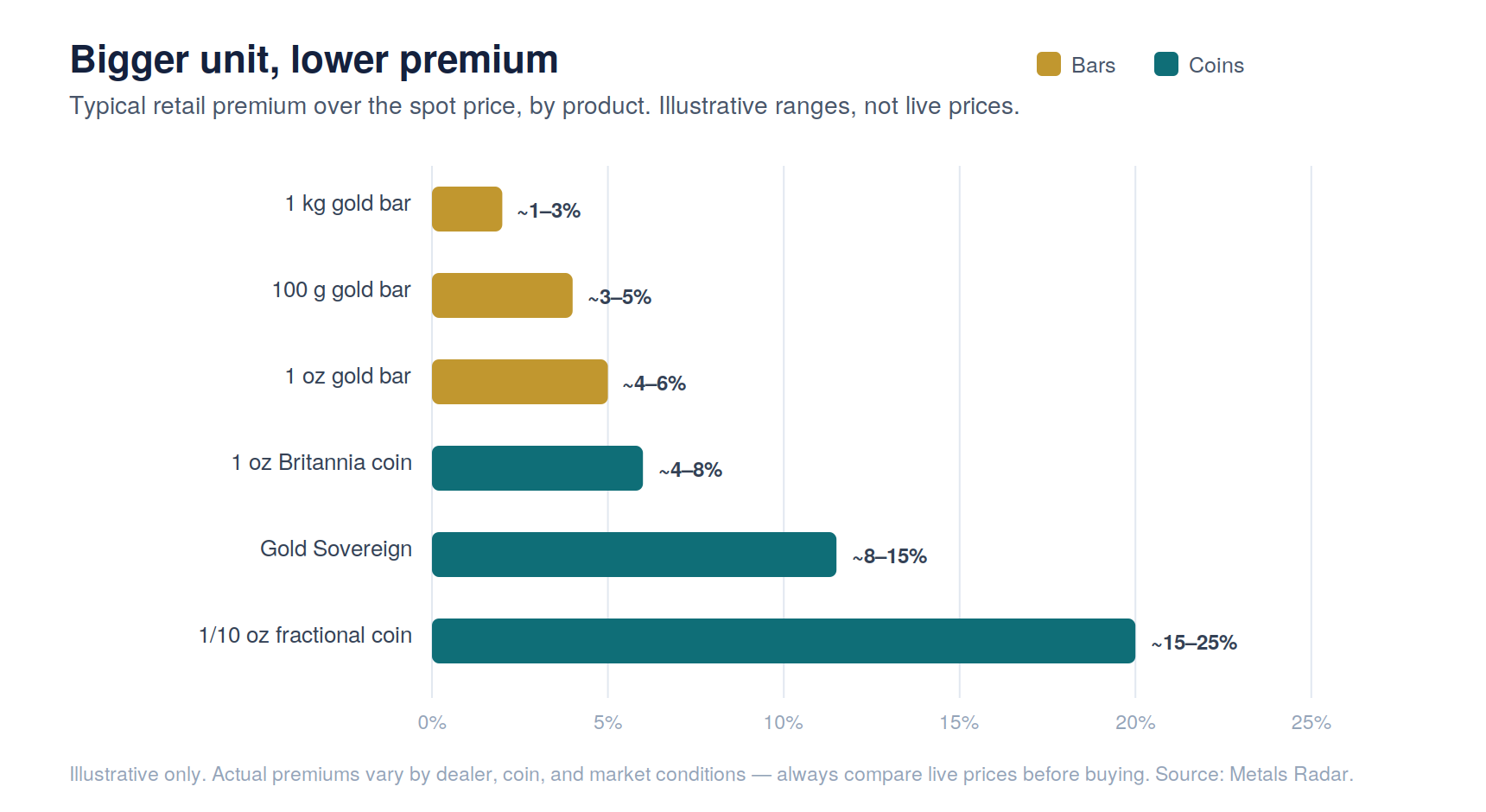
Figure 1. Typical premium over spot by product (illustrative).
| Product | Typical size | Premium over spot | Why |
|---|---|---|---|
| Large gold bar | 1 kg | ~1-3% | Fabrication cost spread over the most metal |
| Medium gold bar | 100 g | ~3-5% | Still efficient; a popular balance of cost and value |
| Small gold bar | 1 oz | ~4-6% | Convenient unit, slightly higher fabrication share |
| Britannia coin | 1 oz | ~4-8% | Minting detail plus CGT-free status |
| Gold Sovereign | 0.2354 oz | ~8-15% | Small, historic, highly divisible |
| Fractional coin | 1/10 oz | ~15-25% | Minting cost spread over very little gold |
Table 2. Illustrative premium ranges over spot for common UK products – compare live prices before buying.
This is where a comparison engine earns its keep. Because the same coin or bar can differ by several percentage points between dealers – before you even add delivery – the product that looks cheapest by unit price is not always cheapest once everything is included. Comparing the total landed cost (spot + premium + delivery) is the only way to know what you are really paying.
Tax: VAT and Capital Gains Tax on gold in the UK
Tax is the single biggest reason the coin-versus-bar decision matters more in the UK than almost anywhere else. There are two taxes to understand: VAT on the way in, and Capital Gains Tax on the way out.
VAT: investment gold is exempt
Investment gold. Investment gold is HMRC’s VAT category. It covers gold bars of at least 995 fineness in bullion-market weights, and gold coins minted after 1800 that are at least 900 fine, are or were legal tender, and normally sell for no more than 180% of their gold value. Investment gold is exempt from VAT in the UK.
In practice this means both qualifying bars and qualifying coins are bought free of VAT, under HMRC VAT Notice 701/21 and the coin list in Notice 701/21A. Silver, platinum and palladium are treated differently: physical silver and platinum bullion carry the standard 20% VAT on purchase in the UK. That single fact makes gold far more efficient to hold than silver for many UK investors, pound for pound.
Capital Gains Tax: only UK legal-tender coins are exempt
This is the decisive difference. Under the Taxation of Chargeable Gains Act 1992, sterling currency is not a chargeable asset. HMRC’s own manual confirms that Sovereigns minted from 1837 onwards and Britannia coins are sterling currency and therefore exempt from Capital Gains Tax (HMRC CG78305). Gold bars, and foreign coins such as Krugerrands, are ordinary chargeable assets – so their gains are taxable. The Royal Mint confirms the same treatment for its bullion ranges.
For the 2025/26 tax year, the annual exempt amount is £3,000 per person, and gains on other assets (including gold bars) are taxed at 18% for basic-rate taxpayers and 24% for higher and additional-rate taxpayers.
Illustrative example – the tax gap
Suppose you invest £30,000 in gold and later sell for £45,000, a £15,000 gain.
- In CGT-free coins (Britannias or Sovereigns): you keep the full £15,000. No CGT, whatever the size of the gain.
- In gold bars: the first £3,000 is covered by the annual allowance, leaving £12,000 taxable – roughly £2,160 at 18%, or £2,880 at 24%.
Choosing bars over coins could cost up to about £2,880 here. A coin’s higher premium – often only a point or two more than a comparable bar – rarely outweighs a tax bill of that size on a larger holding. But if your gains will stay within the £3,000 allowance each year, or you can spread sales across tax years, the bar’s lower premium can come out ahead.
| Product | VAT on purchase | CGT on gains | Why |
|---|---|---|---|
| Investment gold bars (995+) | None | Applies (18% / 24% above £3,000) | A chargeable asset |
| UK coins – Britannia, post-1837 Sovereign | None | None (unlimited) | Sterling legal tender, TCGA 1992 s.21(1)(b) |
| Foreign gold coins – Krugerrand, Maple, Eagle | None | Applies | Legal tender abroad, not in the UK |
| Silver coins & bars | 20% | Silver Britannia none; bars & foreign apply | Silver is not VAT-exempt; UK coins still CGT-free |
Table 3. UK tax treatment by product (2025/26). General information, not personal tax advice.
Three further points are worth knowing. First, CGT-free is not the same as tax-free: UK coins still form part of your estate for Inheritance Tax at full market value. Second, investment-grade gold of at least 99.5% purity can be held inside a self-invested personal pension (SIPP) where your provider allows it. Third, physical bullion sits outside the Financial Conduct Authority’s remit – buying and selling coins and bars is not a regulated activity, and there is no Financial Services Compensation Scheme cover if a dealer fails. That makes dealer choice and secure delivery part of the true cost of ownership.
Storage, security and checking your gold is genuine
Physical gold has to live somewhere, and how you store it interacts with the coin-or-bar choice.
- Home storage is free but concentrates risk in one place; check your home insurance limits for high-value items, which are often low for cash-equivalent valuables.
- Professional vaulting adds an annual fee but provides insured, segregated storage – useful for larger bars where a single item holds a lot of value.
- Splitting a coin holding across locations is easy; splitting a single 1 kg bar is not. This is a quiet advantage of coins for the security-conscious.
On authenticity, bars typically ship with a serial number and an assay certificate from the refiner; coins carry mint markings, defined weights and, on modern Royal Mint issues, latent security features. Buying from mints and dealers working to recognised standards – the LBMA Good Delivery framework for bars, and national mints for coins – is the simplest way to avoid counterfeits and protect resale value. If in doubt, an XRF test at a reputable dealer confirms purity in seconds.
Liquidity: how easily can you sell?
Buying gold is easy; the test is selling well. Here coins have a clear edge. Because you can sell a single Sovereign or 1 oz coin, you can release exactly the cash you need and leave the rest invested – handy for rebalancing a portfolio or covering a one-off expense. A large bar forces an all-or-nothing decision, and finding a buyer for a 1 kg bar at a fair price can take a little longer than selling a widely traded coin.
Two practical tips follow from this. If you value flexibility, favour widely recognised coins and smaller bar sizes over a single large bar. And whichever you hold, keep your purchase paperwork: clear records of what you paid and when make selling smoother and, for taxable items, make any CGT calculation straightforward.
Which should you buy? A simple decision guide
There is no universal better – only better for your situation. Start from your main priority and work outwards.
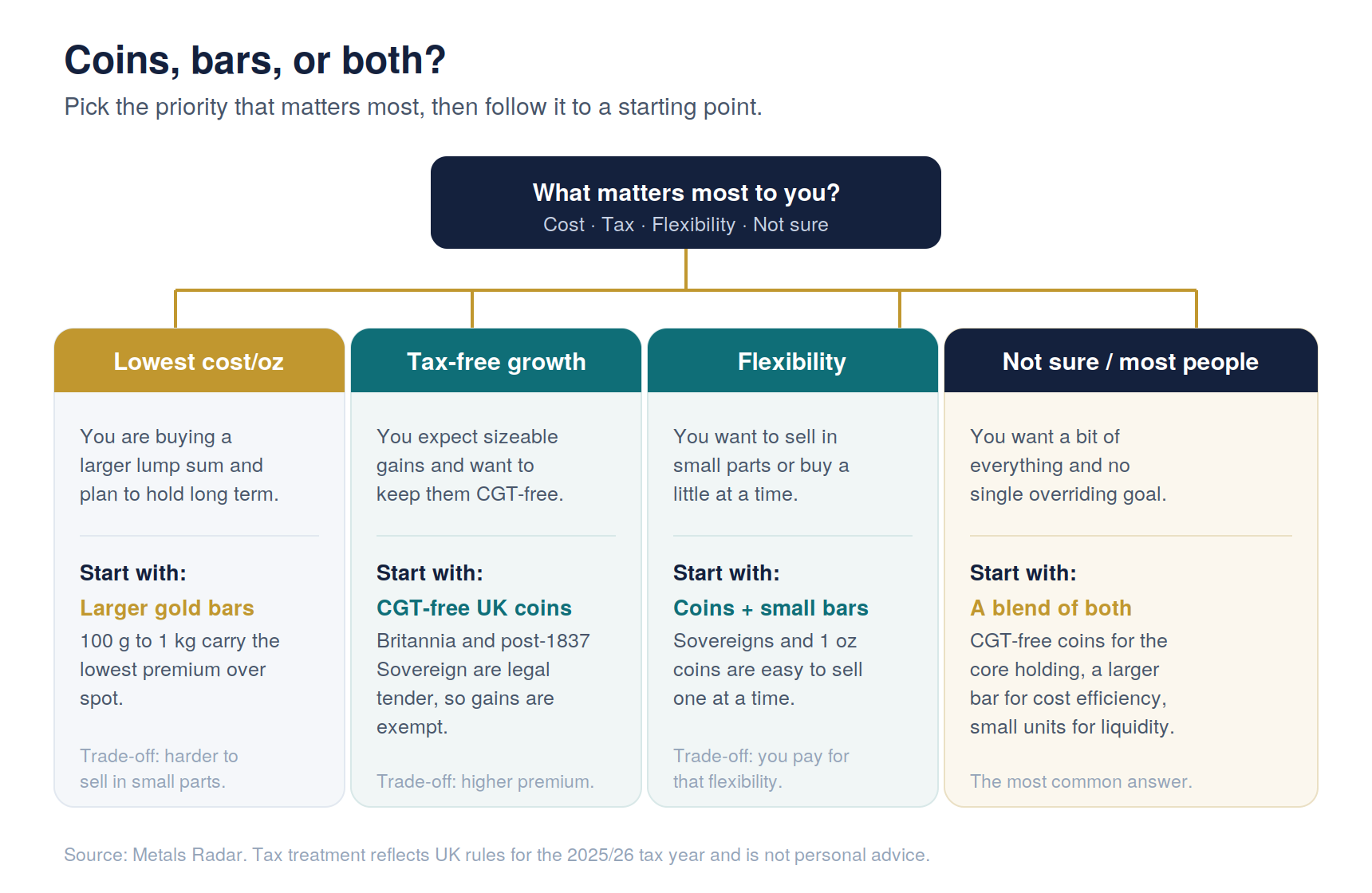
Figure 2. A quick way to narrow the choice by priority.
- First-time or small investors: Sovereigns and 1 oz Britannias are ideal – affordable entry points, CGT-free, and easy to sell.
- Large, long-term investors: lead with 100 g-1 kg bars for cost efficiency, but keep a slice in CGT-free coins so you can realise gains without a tax charge.
- Tax-sensitive investors: stay in UK legal-tender coins for the whole holding – the CGT exemption is unlimited.
- Everyone else: a blend. Most experienced investors hold coins for tax and flexibility and a bar or two for cost.
Gold coins vs bars in 2025-2026: what’s changed
Three recent developments make the coin-or-bar decision more consequential than it was a few years ago.
- Record gold prices, then a sharp pullback. Gold rose roughly 60% in 2025 – its best year since 1979 – and set an all-time high of about $5,590 per ounce in late January 2026, before correcting to around $4,000 by mid-2026 as markets repriced interest-rate expectations. Higher prices mean larger paper gains, which makes the CGT question more valuable. J.P. Morgan Global Research notes central-bank buying as a key long-run driver.
- A smaller CGT allowance. The annual exempt amount has fallen from £12,300 in 2022/23 to £6,000, and now £3,000 from 2024/25 onwards – so more ordinary investors are exposed to CGT on taxable gold, and the coin exemption is worth more.
- Higher CGT rates. Following the October 2024 Budget, gains on assets such as gold bars are taxed at 18% and 24% (up from 10% and 20%). The gap between a CGT-free coin and a taxable bar has widened accordingly.
The direction of travel is clear: as allowances shrink and rates rise, the tax advantage of UK legal-tender coins becomes a bigger part of the total-return story. HMRC’s list of recognised investment gold coins is refreshed regularly (most recently in early 2026), so it is worth checking a specific coin’s status before buying.
Frequently asked questions
Are gold coins or gold bars better for beginners?
For most beginners, coins are the easier starting point. Sovereigns and 1 oz Britannias are affordable, widely recognised, easy to sell one at a time, and – as UK legal tender – free of Capital Gains Tax. Bars become more attractive once you are investing larger sums and want the lowest possible premium.
Do you pay VAT on gold bars or gold coins in the UK?
No. Investment gold – bars of at least 995 fineness and qualifying gold coins – is exempt from VAT in the UK under HMRC VAT Notice 701/21. This applies to both bars and coins. Silver, platinum and palladium bullion, by contrast, carry the standard 20% VAT.
Are gold Sovereigns and Britannias exempt from Capital Gains Tax?
Yes. Britannias and Sovereigns minted from 1837 onwards are UK legal tender and are treated as sterling currency, which is exempt from CGT under the Taxation of Chargeable Gains Act 1992. There is no limit on the tax-free gain. Gold bars and foreign coins such as Krugerrands are not exempt.
Why are gold bars cheaper than gold coins?
Bars carry a lower premium because casting or minting a large bar costs less per gram than striking a detailed coin. The bigger the bar, the more that fixed fabrication cost is spread across the metal, so more of your money buys gold rather than paying for production.
Are gold coins more liquid than gold bars?
Generally yes, in the sense that matters most: divisibility. You can sell a single coin to raise a specific amount and keep the rest invested, whereas a large bar has to be sold whole. Widely traded coins also find buyers quickly.
Is it better to buy one large bar or several smaller bars?
One large bar has the lowest premium, so it is cheapest to buy. Several smaller bars cost a little more per ounce but let you sell in stages. If you may need to release part of your holding, the flexibility of smaller units often outweighs the small extra cost.
Do gold coins hold their value better than bars?
Both track the gold price, so their core value moves together. Coins can carry an additional collectable premium on limited or older issues, but this is not guaranteed. For a pure bullion holding, judge value by the total cost you pay over spot, not by the coin-versus-bar label.
Can I hold gold bars or coins in a SIPP?
Investment-grade gold of at least 99.5% purity can be held in a self-invested personal pension where your provider offers physical gold custody. Not all providers do, so check before assuming it is possible. The purity threshold is the same one that defines investment gold for VAT.
Does CGT-free mean the coins are also free of Inheritance Tax?
No. The CGT exemption on UK legal-tender coins does not extend to Inheritance Tax. Coins – like bars and other assets – form part of your estate at full market value and may be subject to IHT above the applicable threshold.