Key Takeaways
- The short answer: buy silver bars if you want the most metal for your money, and buy coins if you value easy resale, small units and protection against fakes. Many investors hold both.
- Bars were cheaper per ounce: on October 19, 2026, a 100 oz bar started at 1.6% over spot and a 10 oz bar at 1.8%, while the cheapest 1 oz coin cost 3.8% over spot.
- Coin premiums vary a lot: a 1 oz American Silver Eagle cost 10.8% to 34.1% over spot at the US dealers we track, a Silver Maple Leaf 3.8% to 22.0%.
- Size matters more than shape: a 1 oz bar (from 3.3%) was in the same price range as popular 1 oz coins, so the real saving starts at 10 oz.
- Tax is mostly the same: the IRS treats both as collectibles, and state sales tax rules usually cover bullion bars and coins alike.
Every new silver buyer hits the same question sooner or later. Should you buy silver bars or coins? Forums give you a hundred opinions, and most dealer guides stop at “it depends.”
We prefer numbers. In this guide to silver bars vs coins, we compare the premiums that six US dealers charged on October 19, 2026, using data from our investment silver price comparison. You will see what each form costs, how easy it is to sell, how the tax works and which option fits which buyer.
Silver Bars vs Coins: The Basic Difference
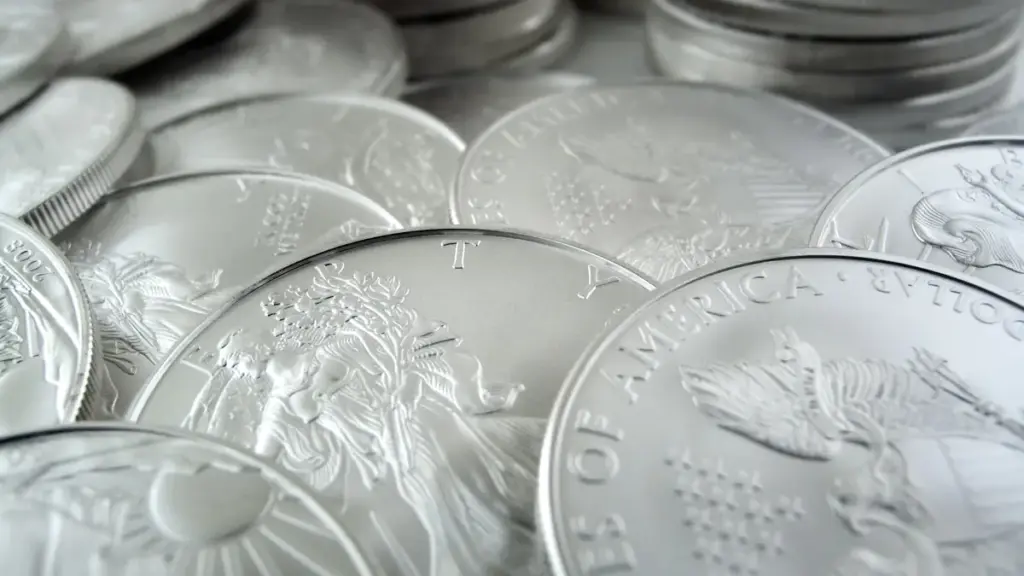
A silver bar is a block of silver made by a private refiner or mint. Its value comes almost entirely from its weight and purity. A silver bullion coin is struck by a government mint, carries a face value and is legal tender in the issuing country.
Both are usually .999 fine or better, so the silver content per ounce is the same. What changes is the price you pay above the metal, how easy the product is to resell and how much it can be trusted at a glance. Our glossary entry on bullion explains the wider term.
| Feature | Silver bars | Silver bullion coins |
|---|---|---|
| Who makes them | Private refiners and mints | Government mints |
| Face value | None | Yes, for example $1 on the American Silver Eagle |
| Typical purity | .999 | .999 or .9999 |
| Common sizes | 1 oz, 10 oz, 100 g to 1 kilo, 100 oz | Mostly 1 oz, some 2 oz and 30 g |
| Premium over spot | Lowest at 10 oz and above | Higher, and very different by coin |
| Anti-fake features | Depends on the brand | Security features on modern coins from big mints |
| Resale | Easy for known brands, larger bars sell as one piece | Very easy, recognized by every dealer |
There is a third option that sits between the two: silver rounds. A round looks like a coin but is made by a private mint and has no face value. It is priced more like a bar, and we cover it in a separate section below.
What Do Silver Bars and Coins Cost Over Spot?
The spot price is the market price of one troy ounce of raw silver. Nobody sells a finished bar or coin at spot. The amount you pay above it is the premium over spot, and it is where silver buyers lose or save the most money.
The formula is simple:
- Melt value = spot price × troy ounces of fine silver
- Premium in % = (price you pay − melt value) ÷ melt value × 100
Example: at the time of our check on October 19, 2026, silver spot was $57.65 per troy ounce. The cheapest 10 oz bar cost $587.00, against a melt value of $576.47. That is a premium of $10.53, or 1.8%.
1 oz silver coins: price by coin
Most buyers start with 1 oz coins. Here is what the main bullion coins cost at the US dealers we track:
| Coin (1 oz) | Mint | Purity | Price range | Premium over spot |
|---|---|---|---|---|
| Canadian Silver Maple Leaf | Royal Canadian Mint | .9999 | $59.86 to $70.31 | 3.8% to 22.0% |
| Austrian Silver Philharmonic | Austrian Mint | .999 | $60.73 to $62.15 | 5.3% to 7.8% |
| South African Silver Krugerrand | South African Mint | .999 | $61.25 to $62.69 | 6.3% to 8.7% |
| Mexican Silver Libertad | Mexican Mint | .999 | $61.67 to $65.70 | 7.0% to 14.0% |
| British Silver Britannia | The Royal Mint | .999 | $61.78 to $63.28 | 7.2% to 9.8% |
| Australian Silver Kangaroo | Perth Mint | .9999 | $62.17 to $64.14 | 7.8% to 11.3% |
| American Silver Eagle | US Mint | .999 | $63.89 to $77.32 | 10.8% to 34.1% |
Notice the American Silver Eagle. It is the best known silver coin in the US, and it is also the most expensive one to buy. At the cheapest dealer it cost $4.03 more than a Silver Maple Leaf, with the same ounce of silver inside. Our American Silver Eagle price comparison and Silver Maple Leaf prices show the current numbers.
Another detail: coins sold with a specific year cost more than “random year” coins. A 2024 Silver Maple Leaf cost $70.31 at one dealer, while a random year Maple cost $59.86 at another. If you buy for the metal, the year rarely matters.
Read also: Best Silver Coins to Buy: Top Silver Coins for Investment Compared
Silver bars: premium by size
What happens when you switch to bars? It depends on the size, and the drop is not as smooth as most guides suggest:
| Bar size | Melt value at spot | Price range | Premium over spot |
|---|---|---|---|
| 1 oz | $57.65 | $59.54 to $63.30 | 3.3% to 9.8% |
| 100 g | $185.34 | $190.88 to $241.55 | 3.0% to 30.3% |
| 250 g | $463.36 | $493.24 to $564.46 | 6.5% to 21.8% |
| 10 oz | $576.47 | $587.00 to $632.97 | 1.8% to 9.8% |
| 500 g | $926.72 | $968.08 to $1,080.68 | 4.5% to 16.6% |
| 1 kilo (32.15 oz) | $1,853.44 | $1,939.45 to $2,003.87 | 4.6% to 8.1% |
| 100 oz | $5,764.70 | $5,857.97 to $6,240.01 | 1.6% to 8.2% |
Two things stand out. First, the gap between dealers is often bigger than the gap between sizes. A 100 g bar cost 3.0% over spot at one dealer and 30.3% at another. Second, the metric sizes (100 g, 250 g, 500 g) were often more expensive per ounce than the 10 oz bar, and in our data most of those listings were branded Germania Mint cast bars.
So what is the sweet spot? In our data, the 10 oz bar and the 100 oz bar gave the lowest premiums. Our silver bar price comparison lists every size, including 1 oz silver bars and 1 kilo silver bars.
What 100 oz of silver costs in each form
Let’s make it concrete. Say you want 100 troy ounces of silver. Here is what it cost on October 19, 2026, at the cheapest dealer for each product:
Buying your 100 oz as one bar instead of 100 Silver Eagles saved $531.03. Buying it as 100 Silver Maple Leafs instead of Eagles saved $403. The bar route is cheaper, but the gap between a good coin and a bar was small: $128.03 between 100 Maples and one 100 oz bar.
Why Coins Cost More Than Bars
Why would anyone pay more for the same silver? Because a coin is a more finished product, and a few costs are built into its price:
- more detailed striking and quality control at a government mint,
- security features such as micro-engraving and radial lines on modern coins,
- legal tender status and a guarantee of weight and purity by a government,
- strong demand, which for the Silver Eagle often keeps the premium high,
- distribution through a limited network of authorized buyers.
Bars are simpler. A refiner pours or presses the silver, stamps the weight, purity and brand, and that is it. The bigger the bar, the less work per ounce, which is why the premium drops with size.
Pros and Cons of Silver Bars
Bars suit buyers who think in ounces, not pieces. Here is the honest picture.
Advantages of silver bars as silver bullion
- Lower cost per ounce: from 1.8% over spot for a 10 oz bar and 1.6% for a 100 oz bar in our data.
- Compact storage: a 100 oz bar takes far less space than 100 coins in tubes.
- Easy to count: ten 10 oz bars are 100 oz, no math needed.
- Wide choice of brands: from generic bars to known refiners on the LBMA Good Delivery list for silver.
Disadvantages of silver bars
- a large bar must be sold as one piece, so you cannot sell just part of it,
- generic or unknown brands may get a lower buyback price,
- some buyers test large bars before paying, which can slow a sale,
- counterfeit bars exist, and they are harder to spot than fake coins from big mints.
One tip: stick to known brands such as those from LBMA accredited refiners or well known US mints. Recognition is what keeps the selling price close to spot.
Pros and Cons of Silver Coins
Coins cost more, but they solve problems that bars do not.
Advantages of silver coins
- recognized by every dealer and many private buyers, which makes them easy to sell,
- small units, so you can sell one coin at a time when you need cash,
- weight and purity guaranteed by a government mint,
- anti-counterfeit features on modern coins, for example the Silver Maple Leaf from the Royal Canadian Mint and the Britannia from The Royal Mint,
- American Silver Eagles are named in the law as eligible for a precious metals IRA.
Disadvantages of silver coins
- higher premium, up to 34.1% over spot for a specific year Silver Eagle in our data,
- more space needed for storage,
- scratches and milk spots can lower the price a buyer offers,
- some dealers sell “graded” or proof versions at prices far above their silver content.
The last point catches many beginners. A proof or graded coin is a collectible, and its price follows rarity and condition, not the silver price. Our glossary entry on numismatic coins explains the difference.
What About Silver Rounds?
A silver round is a coin-shaped piece of silver made by a private mint. It has no face value and is not legal tender. Most rounds are 1 oz of .999 silver.
Rounds usually cost less than government coins and about the same as 1 oz bars. They are a good fit if you like the coin shape but do not want to pay a mint premium. The downside is the same as with generic bars: recognition depends on the maker, and a buyer may offer less for an unknown design.
Silver rounds vs coins
Here is a quick way to choose between the two:
- pick rounds if price per ounce is your main goal and you buy from known private mints,
- pick government coins if you want the widest resale market, a government guarantee or IRA eligibility.
Liquidity: Which Is Easier to Sell?
Buying is only half of the trade. When you sell, a dealer pays you a price below its selling price, and the gap is the bid-ask spread.
In general, the most recognized products sell fastest and closest to spot. That means 1 oz government coins like the Silver Eagle and Maple Leaf, and bars from known refiners in standard sizes like 10 oz, 1 kilo and 100 oz. Odd sizes and unknown brands are harder to sell at a good price.
Does a higher premium come back when you sell? Partly, sometimes. Popular coins often get a higher buyback price than generic bars, but rarely the full premium you paid. That is why paying 30% over spot for a coin is hard to win back.
Storage and Fake Silver
Silver is bulky. At $57.65 per ounce, $10,000 of silver weighs more than 170 troy ounces, which is almost 12 pounds. That shapes your choice of form.
- Bars: stack neatly and use space well. A few 100 oz bars fit in a small home safe.
- Coins: need tubes or a monster box, and take more space for the same weight.
Our page on gold and silver storage compares home, bank and vault options. Read also: How to Store Gold: The Proper Way at Home, in a Bank or a Vault
How to protect yourself from fakes
Fakes exist for both forms. A few simple habits cut the risk:
- Buy from established dealers, not anonymous sellers on marketplaces.
- Learn the weight and size of what you buy, and check them with a scale and a caliper.
- Know the security features of your coin. Our guides on spotting a fake Silver Eagle and spotting a fake Silver Maple Leaf walk through them.
- Be careful with prices far below spot. Real silver does not sell for less than its metal value.
Purity marks matter too. Our article on silver purity and fineness explains what .999 and .9999 mean.
Tax on Silver Bars and Coins in the US
Is one form better for tax? In most cases, no. The rules treat bars and coins in a similar way.
Federal tax when you sell
The IRS treats precious metals as collectibles. According to IRS Topic 409, net capital gains from selling collectibles such as coins are taxed at a maximum rate of 28%, and an asset generally counts as long term after more than one year. That applies to silver bars and silver coins alike.
State sales tax
There is no federal sales tax on bullion. Each state decides. Texas, for example, exempts gold and silver bullion and coins from sales tax, while California exempts bullion sales only above a set dollar amount per transaction. Our glossary entry on precious metals sales tax covers the rules, and when you buy online the tax usually follows the state where the metal is delivered.
Silver in an IRA
A self-directed IRA cannot normally hold collectibles. The law makes exceptions for American Eagle silver coins and for bullion of at least .999 fine silver held by a trustee. That covers many bars and coins, but the custodian decides which products it accepts.
Silver Bars or Coins: Which Should You Buy?
So, is it better to buy silver bars or coins? It depends on your investment goals and on what you want the silver to do. Use this checklist.
Choose silver bars if:
- you want the most silver for your money,
- you plan to buy and hold for many years,
- you buy in larger amounts, from about 10 oz at a time,
- storage space is limited.
Choose silver coins if:
- you want to sell in small parts when needed,
- you value a government guarantee and anti-fake features,
- you buy small amounts at a time,
- you want IRA eligible products without checking each bar.
Many investors do both. A common approach is a base of 10 oz or 100 oz bars for low cost, plus a stack of 1 oz coins such as Maple Leafs for flexibility. With prices moving as much as they did this year, buying in steps also helps.
Silver went from $47.31 on October 1, 2025, to above $93 in March 2026 and back to about $58 today. You can follow the live price on our silver price chart or check the gold silver ratio if you are deciding between the two metals. Read also: Gold vs Silver Investment: Which Is Better for Your Portfolio?
Summary: Silver Bars vs Coins
| Point | What our data shows |
|---|---|
| Cheapest way per ounce | 10 oz and 100 oz bars, from 1.8% and 1.6% over spot (October 19, 2026) |
| Cheapest 1 oz coin | Silver Maple Leaf, from 3.8% over spot |
| Most expensive popular coin | American Silver Eagle, 10.8% to 34.1% over spot |
| Price gap for 100 oz | $531.03 between 100 Silver Eagles and one 100 oz bar |
FAQ: Silver Bars vs Coins
Is it better to buy silver bars or coins?
Bars are better if you want the lowest cost per ounce, and coins are better if you want easy resale in small parts. On October 19, 2026, a 10 oz bar started at 1.8% over spot, the cheapest 1 oz coin at 3.8%.
Are silver bars worth more than silver coins?
No, an ounce of silver is worth the same in both forms. Coins usually sell for a higher premium over spot, both when you buy and often when you sell back to a dealer.
Are silver coins easier to sell than bars?
Yes, 1 oz government coins such as the Silver Eagle and Silver Maple Leaf are recognized by every dealer and can be sold one at a time. Large bars from known refiners also sell easily, but only as a whole piece.
Which silver coin has the lowest premium?
In our US data from October 19, 2026, the Canadian Silver Maple Leaf had the lowest premium at 3.8% over spot. The Austrian Philharmonic followed at 5.3%.
Are silver rounds better than coins?
Silver rounds are usually cheaper than government coins, but they have no face value and no government guarantee. They suit buyers who focus on price per ounce and buy from known private mints.
Do you pay tax on silver bars and coins in the US?
Yes, gains are taxed when you sell, as collectibles at a maximum federal rate of 28% for long term holdings. Sales tax when you buy depends on your state, and many states exempt bullion.
What is the best size silver bar to buy?
For most buyers, the 10 oz bar is the best balance of low premium and flexibility. The 100 oz bar was slightly cheaper per ounce in our data, but it must be sold as one piece.
Compare Silver Prices Before You Buy
The spot price is the same for everyone. The premium is not. On the same day, the same 1 oz Silver Eagle cost $63.89 at one dealer and $77.32 at another. Comparing before you buy is the easiest way to keep that difference.
metalsradar compares prices from US bullion dealers and does not sell metal. Start with silver coin prices, check the cheapest silver coins today, or browse our list of bullion dealers.
This article is for informational purposes only and is not investment or tax advice.
Was this article helpful?
Thanks for your feedback!