Key Takeaways
- Silver purity is shown as fineness: parts of pure silver per 1,000. A “925” stamp means 92.5% silver, and “999” means 99.9% silver.
- Investment silver is fine silver: bullion coins like the Silver Maple Leaf and Silver Kangaroo are .9999, and the American Silver Eagle is .999.
- Sterling silver (.925) is for jewelry and tableware: under US law it must contain at least 925 parts per 1,000 of silver, with a tolerance of 4 parts per 1,000.
- Pre-1965 US dimes, quarters and half dollars are 90% silver: on October 3, 2026, a silver dime held about $4.38 of silver at a spot price of $60.52/oz.
- “German silver” or “nickel silver” contains no silver at all: it is a copper, nickel and zinc alloy.
- Stamps can be faked: combine a visual check with weight, size, a magnet test and, for valuable pieces, a professional XRF or fire assay.
Silver purity is the first thing to check before you buy, sell or value anything made of silver. A ring stamped 925, a coin marked .999 and an old dime from 1964 all contain silver, but in very different amounts. Do you know what those numbers mean for the price you pay? Most people don’t, and some sellers count on it.
In this guide, we explain silver purity and fineness in plain language, show a silver purity chart with all common standards, compare fine silver vs sterling silver, and walk you through the US marking rules. You will also see melt values calculated from our live silver price chart and seven ways to check if your silver is what the stamp says.
What Is Silver Purity?
Silver purity is the share of pure silver in a piece of metal. Pure silver is too soft for most everyday objects, so it is usually mixed with other metals, mainly copper. The result is an alloy, and its purity tells you how much of it is actual silver.
Purity vs Fineness: Same Thing, Two Notations
Purity is usually written as a percentage. Fineness (also called millesimal fineness) is written as parts per 1,000. They describe exactly the same thing:
- 99.9% purity = fineness 999 (often written .999)
- 92.5% purity = fineness 925 (sterling silver)
- 90% purity = fineness 900 (coin silver)
Fineness is the notation you will see stamped on bars, coins and jewelry. Dealers, refiners and assay offices use it because it is precise and short.
How to Convert Fineness to Silver Weight
The math is simple. Multiply the total weight by the fineness to get the weight of pure silver:
Pure silver weight = total weight × (fineness ÷ 1,000)
A 100 gram sterling silver bracelet contains 92.5 grams of pure silver. A 100 gram .999 bar contains 99.9 grams. Small differences, but they add up on larger pieces, and they decide what a buyer will pay.
Silver Purity Chart: Common Fineness Standards
Here are the silver standards you are most likely to meet in the US, from the purest bullion to alloys that only look like silver.
| Standard | Fineness | Silver content | Where you see it |
|---|---|---|---|
| Fine silver (four nines) | .9999 | 99.99% | Silver Maple Leaf, Silver Kangaroo |
| Fine silver | .999 | 99.9% | American Silver Eagle, most silver bars and rounds |
| Britannia silver | .958 | 95.8% | Silver Britannia coins from 1997 to 2012, some UK silverware |
| Sterling silver | .925 | 92.5% | Jewelry, flatware, tableware |
| Coin silver | .900 | 90% | US dimes, quarters, halves and dollars minted before 1965 |
| 800 silver | .800 | 80% | Older European silverware |
| Silver-clad half dollar | .400 overall | 40% | Kennedy half dollars from 1965 to 1970 |
| Nickel silver (German silver) | 0 | 0% | Costume jewelry, instruments, cutlery |
Fine Silver (.999 and .9999)
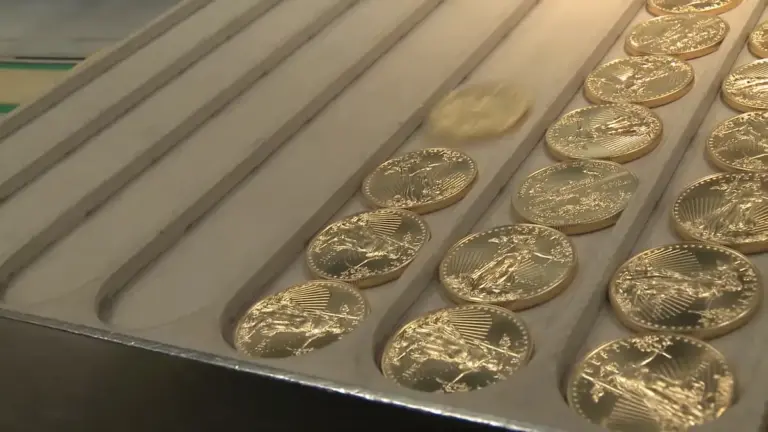
Fine silver is silver of at least 99.9% purity. It is bright, soft and easy to scratch, which is why you rarely see it in rings or forks. It is the standard for investment silver because a buyer only needs the weight and the spot price to know what it is worth.
Silver Bullion Coins and Their Fineness
| Coin (1 oz) | Mint | Fineness |
|---|---|---|
| American Silver Eagle | US Mint | .999 |
| Canadian Silver Maple Leaf | Royal Canadian Mint | .9999 |
| Australian Silver Kangaroo | Perth Mint | .9999 |
| British Silver Britannia (since 2013) | The Royal Mint | .999 |
| Austrian Silver Philharmonic | Austrian Mint | .999 |
| South African Silver Krugerrand | South African Mint | .999 |
Notice the Britannia? Until 2012, the Silver Britannia was struck in .958 Britannia silver. From 2013, The Royal Mint switched it to .999, in line with other major bullion coins. Both versions contain a full troy ounce of silver, but the older ones are heavier because of the added alloy.
Why Large Silver Bars Are .999
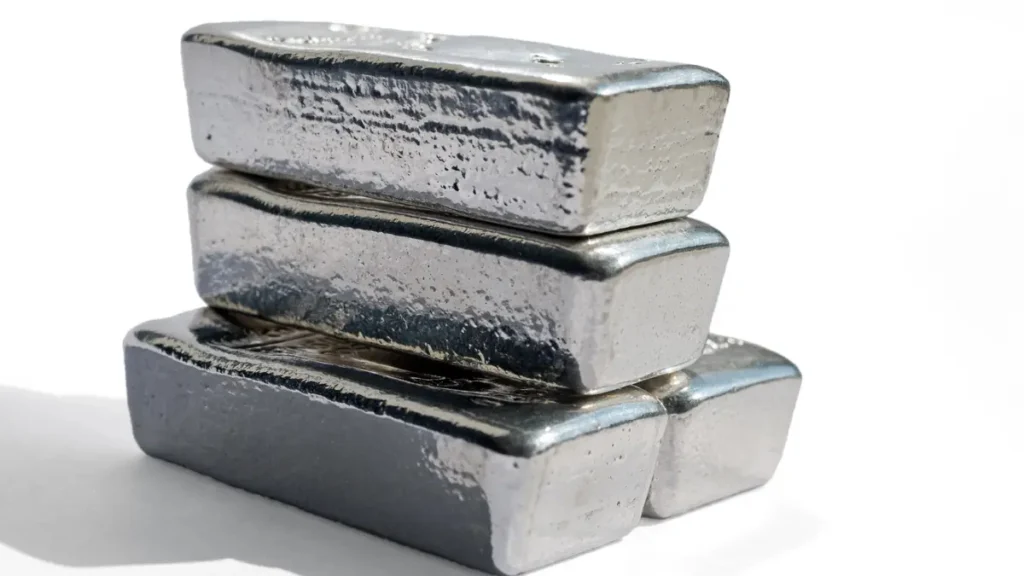
The wholesale silver market sets the bar. Under the LBMA Good Delivery rules, large silver bars traded in London must have a minimum fineness of 999.0. Retail bars from 1 oz to 1 kg follow the same .999 standard, and some refiners go to .9999.
Compare today’s prices: silver coins, silver bars and the 1 kg silver bar.
Sterling Silver (.925)
Sterling silver is an alloy of 92.5% silver and 7.5% other metals, usually copper. The copper makes the metal harder and more durable, so it keeps its shape in a chain, a ring clasp or a spoon used every day.
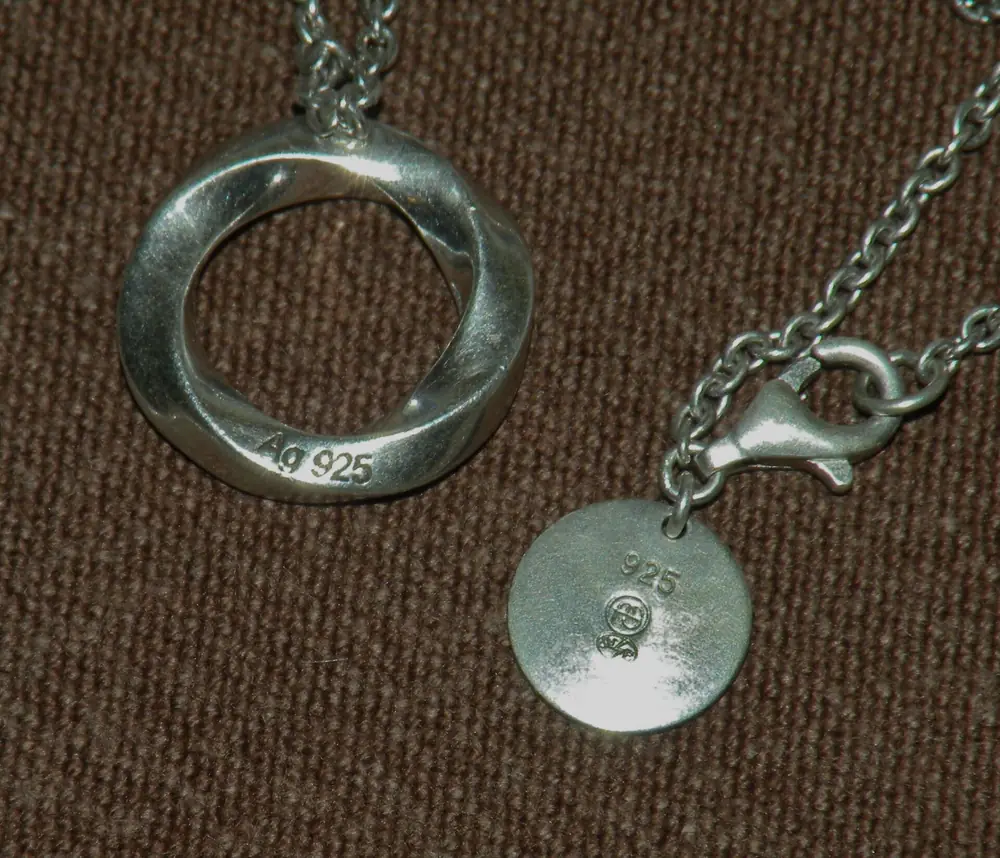
What US Law Says About Sterling and Coin Silver
The National Gold and Silver Stamping Act sets the rules for silver marks in the US. Here is what it requires:
- Sterling: an article marked “sterling” must contain 925 parts per 1,000 of pure silver (15 U.S.C. 296).
- Coin: an article marked “coin” must contain 900 parts per 1,000.
- Tolerance: the actual fineness may be up to 4 parts per 1,000 lower than marked, or 10 parts per 1,000 when the whole article, including solder, is tested.
- Trademark: a seller who stamps a quality mark must also apply a registered trademark next to it (15 U.S.C. 297).
The Federal Trade Commission adds its own guidance. Under the FTC Jewelry Guides (16 CFR 23.5), the words “sterling” or “sterling silver” may only describe products of at least 925/1,000 silver, and “coin silver” requires at least 900/1,000.
Does Sterling Silver Tarnish?
Yes, sterling silver tarnishes. Tarnish is a thin dark layer that forms when silver reacts with sulfur compounds in the air. The copper in sterling can make the discoloration show up faster than on fine silver. Tarnish is a surface effect and does not change the fineness of the piece.
Fine Silver vs Sterling Silver
Which one is better? It depends on what you want the silver for. Here is a side-by-side comparison.
| Feature | Fine silver (.999) | Sterling silver (.925) |
|---|---|---|
| Silver content | 99.9% | 92.5% |
| Other metals | Trace only | 7.5%, usually copper |
| Hardness | Soft, scratches easily | Harder, keeps its shape |
| Tarnish | Tarnishes slowly | Tarnishes faster |
| Typical use | Bullion coins, bars, some jewelry | Jewelry, flatware, tableware |
| Melt value per gram (Oct 3, 2026) | $1.94 | $1.80 |
| Price you usually pay | Close to spot plus a premium | Mostly design and craftsmanship |
So should you buy sterling jewelry as an investment? Usually not. A sterling ring is priced for its design and the retailer’s margin, and a buyer will often pay you only for the silver it contains. If your goal is silver as a store of value, fine silver coins and bars give you far more metal per dollar.
Read also: What Are the Top Silver Coins for Investment?
Other Silver Standards You Will Meet
Britannia Silver (.958)
Britannia silver is a British standard of 95.84% silver. It is still a legal hallmarking standard in the UK, next to 800, 925 and 999, according to the UK government’s hallmarking guidance. In the US, you will mostly see it on older Silver Britannia coins and antique British silver.
Coin Silver (.900) and Pre-1965 US Coins
Coin silver is 90% silver and 10% copper. US silver dollars, half dollars, quarters and dimes were struck in this alloy (the Morgan and Peace silver dollars stopped in 1935). The Coinage Act of 1965 removed silver from dimes and quarters, and half dollars kept 40% silver until 1970.
How much silver is in these coins? Here is the math at today’s spot price.
| Coin | Total weight | Fineness | Pure silver | Melt value |
|---|---|---|---|---|
| Dime (before 1965) | 2.50 g | .900 | 0.0723 oz | $4.38 |
| Quarter (before 1965) | 6.25 g | .900 | 0.1808 oz | $10.95 |
| Half dollar (before 1965) | 12.50 g | .900 | 0.3617 oz | $21.89 |
| Kennedy half dollar (1965 to 1970) | 11.50 g | .400 | 0.1479 oz | $8.95 |
| Morgan or Peace dollar | 26.73 g | .900 | 0.7734 oz | $46.81 |
Want the details by coin? See What Dimes Are Silver? and Which Quarters Are Silver?, or use our silver melt value calculator.
800 Silver
800 silver contains 80% silver. It was widely used for European silverware and is still a recognized hallmark standard in the UK and under the international Hallmarking Convention. Expect lower melt value than sterling for the same weight.
Nickel Silver and German Silver
Nickel silver and German silver are two names for the same alloy: copper, nickel and zinc. It has a silver color but contains no silver. You will find it in costume jewelry, zippers, keys and musical instruments. If a cheap “silver” item is marked “German silver,” it is not a bargain on silver.
Silver-Plated Items
Silver-plated objects have a thin coat of silver over a base metal such as copper or brass. Marks like “EP,” “EPNS” (electroplated nickel silver) or “silver plate” tell you that only the surface is silver. Their melt value is close to zero.
Silver Hallmarks and Stamps
A stamp tells you what the maker claims. A hallmark, in countries that use them, tells you what an independent assay office tested.
Stamps in the US
The US has no government hallmarking system. Makers stamp the quality themselves, for example “925,” “STERLING” or “.999 FINE SILVER,” and federal law makes them responsible for the accuracy. Look for the maker’s trademark next to the quality mark. A lone “925” with no maker’s mark is a reason to test the piece.
The FTC gives shoppers the same advice in its jewelry guide:
“According to the law, silver items must also show the name or U.S. registered trademark of the company or person that stands behind the mark.”
Federal Trade Commission, consumer guide Buying Platinum, Gold, and Silver Jewelry, November 2024
Hallmarks in the UK and Europe
In the UK, silver items above 7.78 grams must be hallmarked to be sold as silver. A full UK hallmark has three compulsory parts:
- the sponsor’s mark (who made or sent the item),
- the fineness mark (for example 925),
- the assay office mark (London, Birmingham, Sheffield or Edinburgh).
A lion passant is the traditional optional mark for sterling silver, and the figure of Britannia marks .958 silver. Members of the international Hallmarking Convention also use a Common Control Mark, recognized in all member countries.
Can a Stamp Be Faked?
Yes, and it happens often with counterfeit coins and cheap jewelry. A stamp costs almost nothing to add. That is why the next section matters.
How to Check Silver Purity: 7 Methods
Start with the free, non-destructive checks and move to professional tests for anything valuable. No single home test proves purity on its own.
1. Read the Marks
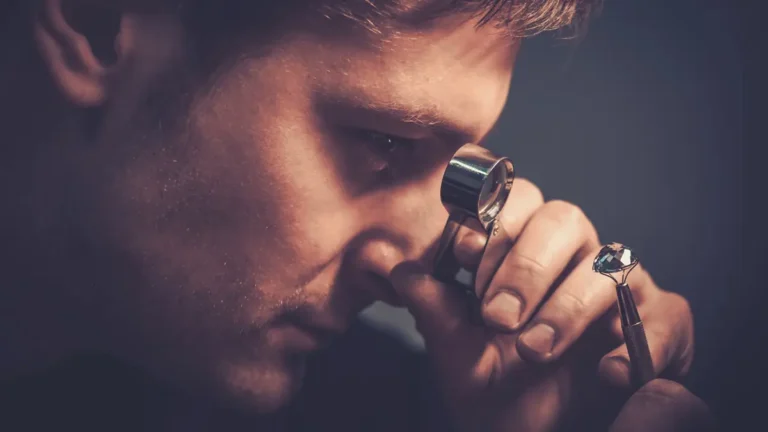
Use a magnifying glass. Look for a fineness number, the maker’s mark and, on bullion, the weight. Bullion coins also carry the mint’s design details, which counterfeiters often get wrong.
2. The Magnet Test
Silver is not magnetic. If a strong neodymium magnet sticks to your coin or bar, it is not solid silver. Be careful with the result, though. Many fakes are made from non-magnetic metals like copper or brass, so passing this test proves very little.
3. Weigh It and Measure It
Silver is denser than most metals used in fakes, at about 10.49 grams per cubic centimeter. A genuine 1 oz bullion coin has an exact weight, diameter and thickness published by the mint. Check all three with a jewelry scale and calipers. A coin with the right weight but the wrong thickness is a red flag.
4. The Ice Test
Silver conducts heat better than any other metal. An ice cube placed on a silver bar or coin starts melting almost immediately. It is a quick sign, not proof, because copper also conducts heat well.
5. The Acid Test
Silver testing acid changes color depending on the silver content of a tiny scratch made on the item. It is cheap and fairly reliable for jewelry, but it damages the surface. Never acid-test a bullion coin you plan to sell.
6. XRF Analysis
An X-ray fluorescence (XRF) analyzer reads the metal composition in seconds without damaging the item. Many dealers and pawn shops have one. Its limit: it reads the surface, so a thick silver plating over a base metal core may fool it.
7. Fire Assay
Fire assay is the laboratory standard. A sample is melted and the silver is separated and weighed. It is the most accurate method but destroys the sample, so it is used for refining, scrap and large bars, not for coins in your collection.
| Method | Cost | Damages the item? | What it tells you |
|---|---|---|---|
| Reading marks | Free | No | What the maker claims |
| Magnet test | Very low | No | Rules out steel and iron fakes |
| Weight and size | Low (scale, calipers) | No | Spots most fake bullion coins |
| Ice test | Free | No | Rough hint of high conductivity |
| Acid test | Low | Yes, a small scratch | Approximate fineness |
| XRF | Often free at a dealer | No | Surface composition |
| Fire assay | Highest | Yes | Exact fineness |
Bought a bullion coin and want to be sure? Our coin-by-coin guides show the details to check: fake American Silver Eagle, fake Silver Maple Leaf and the full guide to spotting fake gold and silver coins.
Does Silver Purity Affect the Price You Pay?
Purity sets the melt value. The premium sets the rest. Here is the formula dealers use for melt value:
Melt value = weight in troy oz × fineness × silver spot price
On October 3, 2026, silver spot was $60.52 per troy ounce, or $1.95 per gram (see the silver price per gram). A 1 oz .999 bullion coin therefore holds about $60.52 of silver. But the price you pay is higher, and the gap differs a lot between products.
All six products are fine silver, yet the cheapest Silver Maple Leaf cost 3.6% over spot while the cheapest American Silver Eagle cost 10.3%. Higher purity does not mean a higher premium. The Maple Leaf is .9999 and was the cheapest coin in our data that day.
The dealer matters too. The same 1 oz Silver Maple Leaf ranged from 3.6% to 7.1% over spot across three dealers. Before you buy, compare offers for the Silver Maple Leaf, the American Silver Eagle and other investment silver.
What About Selling Sterling Silver?
Scrap buyers pay for the silver content, minus their margin. A 100 gram sterling silver tray holds 92.5 grams of silver, worth about $180 at the October 3, 2026 spot price. Expect an offer below that, because the buyer has to refine it.
Caring for Silver of Different Purity
- Bullion coins and bars: keep them in their original capsules or tubes, handle them by the edges, and never polish them. Polishing leaves fine scratches that buyers notice.
- Sterling jewelry and tableware: a soft polishing cloth removes light tarnish. Store pieces in a dry place, ideally in anti-tarnish bags.
- Silver-plated items: clean gently. Aggressive polishing can wear through the thin silver layer.
Read also: Gold Purity, Fineness and Karat: What It Means and How to Check It
Summary: Silver Purity
| If you see | It means | Good for |
|---|---|---|
| .9999 or .999 | Fine silver, 99.9% or more | Investment coins and bars |
| 925 or STERLING | 92.5% silver | Jewelry, tableware |
| .900 or COIN | 90% silver | Pre-1965 US coins, older silverware |
| 800 | 80% silver | Older European silverware |
| German or nickel silver, EPNS | No silver or only plating | Not a silver investment |
FAQ: Silver Purity
What is the purest form of silver?
The purest silver you can buy is .9999 fine, or 99.99% silver, used in coins like the Silver Maple Leaf and Silver Kangaroo. Absolutely pure silver is not practical to produce for retail products.
Which is better, 925 or 999 silver?
It depends on use. 999 silver is better for investment because nearly all of it is silver, while 925 sterling is better for jewelry and tableware because the copper makes it harder.
Is 925 silver real silver?
Yes, 925 silver is real silver. It contains 92.5% pure silver, and US law requires an item marked “sterling” to meet that standard, within a tolerance of 4 parts per 1,000.
What does .999 fine silver mean?
.999 fine silver means the metal is 99.9% pure silver. It is the standard for most silver bullion bars, rounds and coins, including the American Silver Eagle.
How can I check silver purity at home?
Check the stamps, test with a magnet, and compare the weight and size with the official specifications. These checks catch many fakes, but only XRF or fire assay confirms the exact purity.
Is German silver real silver?
No, German silver contains no silver. It is an alloy of copper, nickel and zinc, also sold as nickel silver.
How much silver is in a pre-1965 quarter?
A pre-1965 US quarter contains 0.1808 troy ounces of pure silver. At the October 3, 2026 spot price of $60.52, that was worth about $10.95.
Compare Silver Prices Before You Buy
Purity tells you how much silver you get. The premium tells you how much extra you pay for it. Our data shows that two coins of the same weight and similar purity can differ by several percent over spot, and the same coin can cost more at one dealer than another on the same day.
Check today’s offers for silver coins and silver bars, follow the silver price, or find a bullion dealer near you to get your silver tested.
This article is for informational purposes only and is not investment or tax advice.
Was this article helpful?
Thanks for your feedback!