Key Takeaways
- Gold vs silver investment comes down to risk: gold is the steadier store of value, while silver can rise faster and fall harder.
- The last year proved it: from its January 29, 2026 peak to July 17, 2026, gold fell 26.7% and silver fell 52.3%.
- Silver is mostly an industrial metal: industry used about 59% of silver demand in 2024, according to the Silver Institute. Gold demand is driven by investors, jewelry, and central banks.
- Silver costs more to buy and store: the cheapest 1 oz silver coin cost 3.6% over spot on October 3, 2026, against 0.7% for the cheapest gold coin, and $10,000 of silver weighs about 5.1 kg.
- Same US tax treatment: both are collectibles for the IRS, with long-term gains taxed at up to 28%.
Gold vs silver investment is one of the oldest debates among precious metals buyers. Gold has a reputation for safety. Silver is cheaper per ounce and often described as “gold on steroids”. Both claims have some truth in them, but what do the numbers say?
In this guide, we compare gold and silver using one full year of daily spot prices from our gold price and silver price charts, real premiums from US dealers, and data from the World Gold Council and the Silver Institute. You will see how each metal behaves, what it costs to own, and which one fits your goal.
Gold vs Silver: The Short Answer
There is no single winner. Here is the quick version:
- Want stability and a store of value? Gold has smaller price swings and lower buying costs.
- Can you live with big swings for a chance of bigger gains? Silver moves more in both directions.
- Small budget? Silver lets you buy whole coins for about $63, while one ounce of gold costs over $4,100.
- Limited storage space? Gold holds far more value in the same volume.
- Not sure? Many investors hold both, with most of the money in gold.
So is silver a better investment than gold? Not in general. Silver is a higher-risk version of a precious metals investment, and it suits a different kind of buyer.
Gold vs Silver at a Glance
| Feature | Gold | Silver |
|---|---|---|
| Spot price per troy oz (October 3, 2026) | $4,141.80 | $60.52 |
| Change over 12 months | +7.0% | +27.2% |
| Fall from January 2026 peak to July low | −26.7% | −52.3% |
| Days with a move of 3% or more (12 months) | 10 | 68 |
| Lowest 1 oz coin premium (US dealers) | 0.7% (Krugerrand) | 3.6% (Maple Leaf) |
| Weight of $10,000 at spot | About 75 g | About 5.1 kg |
| Main demand | Investment, jewelry, central banks | Industry (about 59% in 2024) |
| US federal tax on long-term gains | Collectible, up to 28% | Collectible, up to 28% |
Performance: How Gold and Silver Moved in the Last Year
The last twelve months were a textbook example of how the two metals differ. Both started rising in autumn 2025, both peaked on the same day, and both fell afterwards. The size of the moves was very different.
Here are the key numbers behind the chart:
- Gold: from $3,870.53 to a peak of $5,459.29 on January 29, 2026, down to $4,000.14 on July 17, 2026, and $4,141.80 on October 3, 2026.
- Silver: from $47.58 to a peak of $116.92 on January 29, 2026, down to $55.76 on July 17, 2026, and $60.52 on October 3, 2026.
- Worst single day: on January 30, 2026, gold fell 7.1% and silver fell 14.7%.
What does this mean for an investor? Someone who bought silver at the top lost more than half of their money on paper within six months. A gold buyer at the top lost about a quarter. Silver rewarded early buyers far more, but punished late buyers far more too.
Why silver is more volatile
Volatility means how strongly a price moves up and down. Silver is more volatile than gold for three main reasons:
- A smaller market: far less money flows through silver than gold, so the same amount of buying or selling moves the price more.
- Industrial demand: silver use in factories rises and falls with the economy.
- Fewer stabilizing buyers: central banks buy gold in large amounts, but not silver.
What Drives Gold and Silver Demand?
Gold: investors and central banks
Gold is mainly a monetary and investment metal. According to the World Gold Council, total gold demand hit a record 5,002 tonnes in 2025. Within that:
- investment demand reached 2,175 tonnes,
- bar and coin demand was 1,374 tonnes,
- gold ETFs added 801 tonnes,
- central banks bought 863 tonnes.
Central banks hold gold as a reserve asset that does not depend on any government’s promise. That steady buying is one reason gold tends to fall less than silver in a sell-off.
The World Gold Council summed up the record year like this:
“2025 saw surging demand for gold and rocketing prices. Consumers and investors alike bought and held gold in an environment where economic and geopolitical risks have become the new normal.”
Louise Street, Senior Markets Analyst, World Gold Council, Gold Demand Trends Q4 and full year 2025 press release, January 2026
Silver: industry first
Silver has the highest electrical conductivity of any metal, so it is used in electronics, solar panels, cars, and power grids. According to the Silver Institute’s World Silver Survey 2025, industrial demand hit a record 680.5 million ounces in 2024, out of total demand of 1.16 billion ounces. That is about 59% of the market.

Is industrial demand good or bad for investors? Both. It supports silver when the economy and green technology grow, but it can drag silver down in a slowdown, even when investors are buying gold.
Read also: Gold Isn’t Rising: Currencies Are Losing Value
The Gold/Silver Ratio
The gold/silver ratio shows how many ounces of silver you need to buy one ounce of gold. It is calculated as gold price ÷ silver price.
| Date | Gold | Silver | Gold/silver ratio |
|---|---|---|---|
| October 3, 2025 | $3,870.53 | $47.58 | 81.3 |
| October 27, 2025 (12-month high) | $4,033.72 | $47.53 | 84.9 |
| January 27, 2026 (12-month low) | $5,093.72 | $110.22 | 46.2 |
| October 3, 2026 | $4,141.80 | $60.52 | 68.4 |
Some investors use the ratio as a timing tool: they favor silver when the ratio is high and gold when it is low. In the last year, the ratio fell from about 85 to 46 and then rose back to 68. That shows two things: the ratio can move a lot within months, and a “high” ratio can get higher before it falls. Treat it as one signal, not a rule.
Follow it live on our gold/silver ratio chart.
Cost of Buying: Premiums on Gold and Silver
The premium is what you pay above the spot value of the metal. It matters because the price must rise by at least the premium before you break even.
The pattern holds across products: silver costs more over spot than gold in every comparable format. The gap is largest for popular coins like the American Eagle. Why? Making and shipping a silver coin costs about the same as a gold coin, but the silver inside is worth about 68 times less.
See today’s offers for gold coins, silver coins, and 100 g gold bars.
Storage, Weight, and Selling
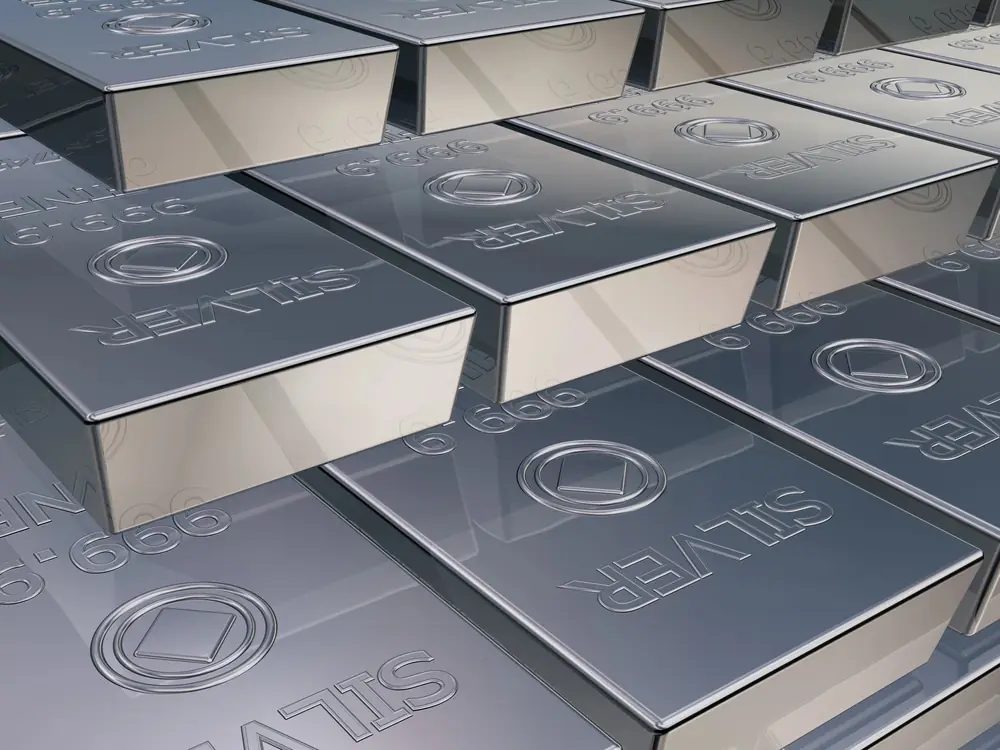
How much space does $10,000 take up? At October 3, 2026 spot prices, $10,000 buys about 2.4 troy ounces of gold (about 75 grams) or about 165 troy ounces of silver (about 5.1 kg). The gold fits in a coin capsule. The silver needs a tube box or a heavy bag.
- Gold: compact, easy to hide or vault, low storage fees per dollar of value.
- Silver: bulky and heavy, higher storage and shipping costs per dollar, tarnishes over time.
- Selling: both sell easily as well-known coins and bars, but moving a large amount of silver to a buyer takes more effort and shipping.
Compare professional options in our gold and silver storage directory.
Taxes and IRAs: Gold vs Silver in the US
Does the IRS treat gold and silver differently? No, both are generally treated the same way:
- Collectibles rate: long-term gains on coins and bullion are taxed at a maximum rate of 28%, according to IRS Topic 409.
- Short-term gains: taxed at your ordinary income rate.
- IRAs: the IRS allows certain US Mint coins (such as the Gold Eagle and Silver Eagle) and bullion of a required fineness, held by a bank or approved trustee.
- Sales tax: varies by state for both metals.
Other Ways to Invest in Gold and Silver
Physical metal is not the only route. Here is how the main options compare:
| Option | You own | Main costs | Main risk |
|---|---|---|---|
| Coins and bars | The metal itself | Premium, storage, insurance | Theft, buying from a bad dealer |
| ETFs backed by metal | Fund shares | Annual fee, brokerage fees | Depends on the fund and custodian |
| Futures | A contract | Margin, rolling costs | Leverage can multiply losses |
| Mining stocks | Shares in a company | Brokerage fees | Company problems, not just the metal price |
If your goal is to own metal outside the financial system, physical coins and bars are the only option on this list.
Gold or Silver: Which Should You Buy?
Choose gold if:
- you want to protect savings more than grow them quickly,
- you want low buying costs and compact storage,
- you plan to hold a larger amount.
Choose silver if:
- you accept that the price can halve and still hold,
- you have a small budget and want to buy whole coins,
- you want exposure to industrial demand such as solar and electronics.
Can you hold both?
Yes, and many investors do. A common approach is to keep most of the precious metals allocation in gold for stability and add a smaller share of silver for growth potential. There is no correct split. It depends on how much volatility you can live with.
Read also: Best Gold Coins to Buy: 8 Bullion Coins Compared and Best Silver Coins to Buy.
Common Mistakes When Choosing Between Gold and Silver
- Thinking silver is “cheap” because the price per ounce is low. The price per ounce says nothing about value. Compare percentage moves instead.
- Buying silver at the top of a rally. In our data, silver doubled in about four months and then lost more than half.
- Ignoring premiums. A 10% premium on silver coins needs a 10% price rise just to break even.
- Underestimating storage. A few thousand dollars in silver already weighs several pounds.
- Using the gold/silver ratio as a guarantee. It moved from 85 to 46 and back to 68 in one year.
Summary: Gold vs Silver Investment
| Criterion | Better choice | Why |
|---|---|---|
| Stability | Gold | Fell 26.7% from peak vs 52.3% for silver |
| Upside in a rally | Silver | Peaked at 2.5 times its October 2025 price vs 1.4 times for gold |
| Buying costs | Gold | 0.7% vs 3.6% lowest coin premium |
| Storage | Gold | $10,000 weighs about 75 g vs 5.1 kg |
| Small budgets | Silver | Whole coins from about $63 |
| US taxes | Equal | Both collectibles, up to 28% |
FAQ: Gold vs Silver Investment
Is gold or silver a better investment?
Gold is usually the better choice for stability and low costs, while silver offers bigger potential gains with much bigger risk. Many investors hold mostly gold with some silver.
Should I buy gold or silver right now?
No one can reliably time the market, so decide based on your goal and risk tolerance, not on predictions. If you buy, compare premiums first and consider buying in several steps.
Is silver more volatile than gold?
Yes, silver is much more volatile than gold. In the 12 months to October 3, 2026, silver had 68 days with a move of 3% or more, while gold had 10.
Why is silver so much cheaper than gold?
Silver is cheaper because it is mined in much larger quantities and much of it is used up in industry. On October 3, 2026, one ounce of gold cost about 68 ounces of silver.
Will silver outperform gold?
Silver sometimes outperforms gold in strong rallies, as it did in late 2025, but it also underperforms in sell-offs. There is no guarantee in either direction.
Is silver taxed differently from gold in the US?
No, silver and gold are taxed the same way. Both are collectibles for federal tax, with long-term gains taxed at up to 28%.
Which is easier to sell, gold or silver?
Both are easy to sell as well-known coins and bars. Gold is easier to transport and ship in large amounts because it holds far more value per ounce.
Compare Gold and Silver Prices Before You Buy
Whichever metal you choose, your result starts with the price you pay. Premiums vary between products and dealers, and the cheapest offer today may not be the cheapest next week.
metalsradar compares precious metals prices from several dealers and shows the premium over spot for every offer. Start with investment gold and investment silver, compare 1 kg silver bars, or check the gold price per gram.
This article is for informational purposes only and is not investment or tax advice.
Was this article helpful?
Thanks for your feedback!