Key Takeaways
- Definition: a gold premium is the amount you pay above the spot price of the metal inside a coin or bar. It covers minting, distribution, the dealer’s costs and margin.
- Typical range: on October 5, 2026, 1 oz gold coins and bars at four US dealers we track carried premiums from 0.7% to 7.1% over spot.
- Size matters most: a 1 gram gold bar cost about 20% over spot, while a 100 gram bar from the same refiner cost 1.5% to 2.4%.
- Silver costs more to buy: 1 oz silver coins carried premiums of 3.6% to 10.5%, several times higher than gold coins.
- The dealer matters too: the same 1 oz American Gold Eagle cost $4,216.41 at one dealer and $4,334.48 at another on the same day, a gap of $118.07 per coin.
Most people who buy gold for the first time notice the same thing: the price at the checkout is higher than the gold price they saw on the news. That difference is the gold premium. It is normal, every dealer charges one, and it is the single biggest cost you control when you buy physical metal.
In this guide, we explain what a gold premium is, what drives it, and how much over spot you should expect to pay. We use real prices that our investment gold comparison collected from US dealers on October 5, 2026, so you can see actual numbers instead of rules of thumb.
What Is a Gold Premium?
A gold premium is the difference between the price you pay for a gold product and the current market value of the gold it contains. Dealers usually show it as a percentage of the spot price or as a dollar amount per ounce.
The spot price is the price of one troy ounce of gold traded for immediate delivery in the wholesale market. You can follow it live on our gold price chart. The LBMA Gold Price, set twice a day in London, is the main benchmark for large wholesale contracts.
Retail buyers never pay spot. Why not? Because spot is the price of raw metal in large wholesale lots, not of a finished coin in a protective tube shipped to your door.
How to calculate the premium
The formula is simple:
- Premium in dollars = price you pay minus (spot price × troy ounces of fine gold)
- Premium in percent = premium in dollars ÷ (spot price × troy ounces of fine gold) × 100
Here is an example with our data. On October 5, 2026, gold closed at $4,138.80 per troy ounce. A 1 oz South African Krugerrand cost $4,173.10 at the cheapest dealer we track. The premium was $34.30, which is about 0.8% over spot.
The glossary entry premium over spot gives a short definition, and the spot price entry explains the benchmark itself.
Premium vs spread: not the same thing
People often mix up these two terms. The premium is what you pay above spot when you buy. The bid-ask spread is the gap between the dealer’s selling price and the price at which the same dealer buys the product back from you.
Both matter for your real cost. A product with a low premium and a high buyback price loses the least value on the round trip.
What Drives Gold Premiums?
A premium is not one fee. It is a stack of costs, and each layer depends on the product and the market. These are the main parts:
- fabrication: refining, rolling, stamping and quality control at the mint or refinery,
- the mint’s own markup when it sells to large wholesalers,
- distribution: wholesalers, insurance, secure transport and storage,
- the dealer’s costs: payment processing, packaging, shipping and staff,
- the dealer’s profit margin,
- supply and demand for that specific product at that moment.
Product size
Making a 1 gram bar takes almost as much work as making a 1 ounce bar, but the small bar contains about 31 times less gold. The fixed cost is spread over far less metal, so the percentage premium jumps. You will see this clearly in the bar table below.
Coins vs bars
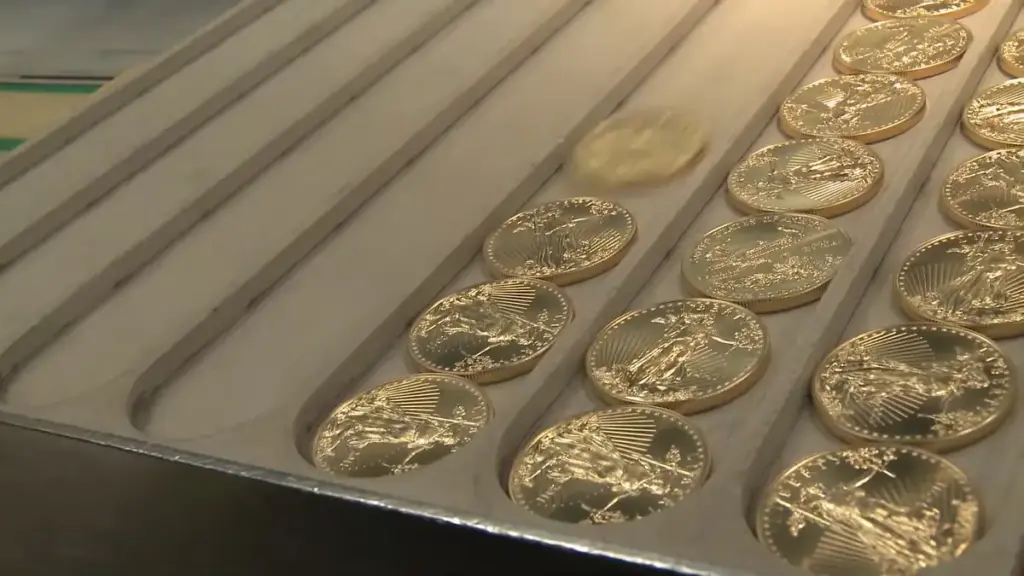
Sovereign bullion coins such as the American Gold Eagle are legal tender, carry detailed designs and are struck by government mints. They are widely recognized and easy to resell, but they usually cost more over spot than a plain bar of the same weight. Our guide to the best gold coins to buy compares the popular choices.
The U.S. Mint does not sell its bullion coins straight to the public. It sells them to a network of authorized purchasers, who then supply dealers. Each step in that chain adds a small cost.
Market stress
When demand suddenly spikes, mints and refiners cannot add capacity overnight. Dealers raise premiums to slow orders, and buyback premiums often rise too. In calm markets, competition between dealers pushes premiums back down.
Payment method and quantity
Many US dealers show two prices: a lower one for bank wire or check and a higher one for credit cards. Larger orders often unlock volume discounts. Shipping and insurance can add a fixed fee to small orders. Always compare the final price at checkout, not the first number you see.
Gold Premiums at US Dealers: Our Data
What does this look like in practice? We pulled every US offer with a calculated premium from the metalsradar price service on October 5, 2026: 40 offers from SD Bullion, Summit Metals, Gainesville Coins and Hero Bullion. Prices are single-unit prices, before any shipping fees.
1 oz gold coins
| Coin (1 oz) | Lowest premium | Highest premium | Price range |
|---|---|---|---|
| South African Krugerrand | 0.7% | 2.6% | $4,173.10 to $4,251.79 |
| Australian Kangaroo | 1.0% | 2.2% | $4,184.10 to $4,236.40 |
| Canadian Maple Leaf | 1.7% | 2.8% | $4,212.10 to $4,260.76 |
| American Gold Eagle | 1.8% | 4.6% | $4,216.41 to $4,334.48 |
| British Britannia | 2.3% | 2.8% | $4,237.29 to $4,258.66 |
| American Gold Buffalo | 1.2% | 7.1% | $4,194.09 to $4,436.45 |
The cheapest gold coins in our sample were the Krugerrand and the Kangaroo. The Gold Eagle and the Buffalo cost more, and their premiums varied the most between dealers. A specific year usually costs more than “random year” or “dates of our choice” stock. You can check today’s numbers on our cheapest gold coins page.
Gold bars by size
| Valcambi gold bar | Melt value (Oct 5, 2026) | Dealer price | Premium |
|---|---|---|---|
| 1 gram | $133.07 | $159.29 to $160.95 | 19.6% to 20.8% |
| 10 gram | $1,330.66 | $1,389.24 to $1,405.80 | 4.3% to 5.5% |
| 1 oz | $4,138.80 | $4,215.26 to $4,247.56 | 1.7% to 2.5% |
| 100 gram | $13,306.55 | $13,526.75 to $13,645.96 | 1.5% to 2.4% |
Look at the cost per gram of gold. The 1 gram bar costs about $26 over its melt value for a single gram. The 100 gram bar costs about $2.20 to $3.40 over melt value per gram. Same refiner, same purity, ten times cheaper to own per gram.
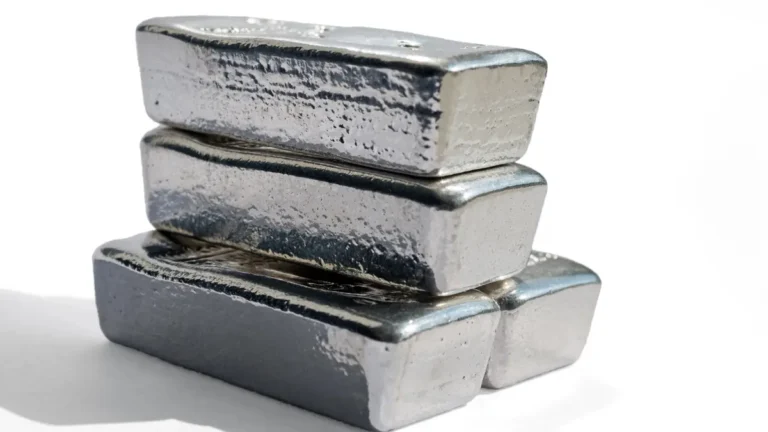
Small bars still have a place. They are affordable, easy to gift and easy to sell in small pieces. Just be aware that you pay for that flexibility. See all sizes on our gold bar price comparison, including 1 oz gold bars and 100 gram gold bars.
Silver premiums are higher
| Silver product | Lowest premium | Highest premium | Price range |
|---|---|---|---|
| Canadian Silver Maple Leaf (1 oz) | 3.6% | 6.6% | $63.62 to $65.47 |
| Austrian Silver Philharmonic (1 oz) | 3.8% | 6.7% | $63.75 to $65.50 |
| South African Silver Krugerrand (1 oz) | 5.5% | 7.4% | $64.77 to $65.98 |
| British Silver Britannia (1 oz) | 6.5% | 8.2% | $65.40 to $66.43 |
| American Silver Eagle (1 oz, current) | 10.2% | 10.5% | $67.66 to $67.84 |
| 1 kilo silver bar | 4.0% | 7.4% | $2,053.04 to $2,120.62 |
Why is silver more expensive to buy? An ounce of silver is worth about 68 times less than an ounce of gold, but it still has to be minted, packed, insured and shipped. Those costs take a much bigger share of a $61 coin than of a $4,139 coin. Our article on gold vs silver investments covers what this means for your portfolio.
How Much Over Spot Should You Pay for Gold?
There is no single right number, because the fair premium depends on the product. Based on our October 2026 data, these ranges are a useful guide for US buyers:
| Product | Competitive premium | Ask questions above |
|---|---|---|
| 1 oz gold bullion coins (Krugerrand, Kangaroo, Maple Leaf) | 1% to 3% | 5% |
| 1 oz American Gold Eagle or Buffalo | 2% to 5% | 7% |
| 1 oz and 100 g gold bars | 1.5% to 2.5% | 4% |
| 10 g gold bars | 4% to 6% | 8% |
| 1 g gold bars | about 20% | 25% |
| 1 oz silver bullion coins | 4% to 10% | 15% |
A premium above these levels is not automatically a scam. Rare dates, proof coins and graded coins are priced as collectibles, not as bullion. But if a seller offers a standard bullion coin at 20% or 30% over spot, you are paying far more than the market requires.
Watch out for high-pressure sellers
Some companies advertise “free” gold or push buyers into rare or semi-numismatic coins with very high markups. The real cost is hidden in the premium. Before any purchase, ask one question: what is the price per ounce, and how does it compare with spot right now?
How to Pay a Lower Premium
You cannot avoid premiums, but you can keep them small. These steps work for most buyers:
- compare the same product across several dealers before you buy,
- choose widely traded bullion coins and bars instead of special editions,
- buy larger units when your budget allows, for example one 1 oz bar instead of thirty 1 gram bars,
- pick “random year” stock when the year does not matter to you,
- pay by bank wire or check if the dealer offers a cash discount,
- include shipping and insurance in the comparison, especially on small orders,
- check the dealer’s buyback price, not only the selling price.
How much can comparison save? On October 5, 2026, the gap between the cheapest and the most expensive 1 oz Gold Eagle in our data was $118.07 per coin. On a 10-coin order, that is $1,180.70 for the exact same gold.
Our US bullion dealer directory lists the shops we track, and the gold melt value calculator shows the metal value of any coin or bar so you can work out the premium yourself.
Do You Get the Premium Back When You Sell?
Only partly. When you sell, dealers usually pay a price close to spot for bullion coins and bars, sometimes a little above spot for the most popular coins and sometimes below spot for less liquid products. Most of the premium you paid stays with the seller.
That is why the premium works like an entry fee. If you buy a coin at 3% over spot and sell it back at spot, the gold price has to rise about 3% before you break even. With a 20% premium, you need a 20% rise. For long-term holders, a low premium gives a big head start.
Taxes are a separate cost
Premiums are not the only cost of owning gold. Some US states charge sales tax on certain bullion purchases; our glossary entry on precious metals sales tax explains the basics. When you sell at a profit, the IRS treats physical gold as a collectible, and long-term gains on collectibles can be taxed at a maximum rate of 28% (IRS Topic No. 409).
Summary: Gold Premium
| Question | Short answer |
|---|---|
| What is a gold premium? | The price you pay above the spot value of the gold in a coin or bar |
| Typical premium, 1 oz gold coins | 0.7% to 7.1% at US dealers (October 5, 2026) |
| Typical premium, 1 oz gold bars | 1.7% to 2.5% |
| Highest premiums | Small bars (1 g: about 20%) and silver coins (up to 10.5%) |
| Biggest saving | Comparing dealers: up to $118.07 per 1 oz Gold Eagle on the same day |
FAQ: Gold Premium
What is a good premium on gold?
A good premium on a 1 oz gold bullion coin or bar is about 1% to 3% over spot in the US market. On October 5, 2026, the lowest premium we recorded was 0.7% on a Krugerrand.
Why is gold more expensive than the spot price?
Gold costs more than spot because spot is the wholesale price of raw metal. Minting, distribution, insurance, shipping and the dealer’s margin are added on top.
Are premiums lower on gold bars than on gold coins?
Yes, usually, at the same weight. In our data, 1 oz Valcambi bars cost 1.7% to 2.5% over spot, while 1 oz American Gold Eagles cost 1.8% to 4.6%.
Why do small gold bars have such high premiums?
Small bars have high premiums because production and packaging costs are almost the same for a 1 gram bar as for a larger one. Those costs are spread over very little gold.
Do gold premiums change over time?
Yes, premiums change with demand, supply and competition. They tend to rise during market panics and fall when demand is calm.
Is the premium the same as the dealer’s profit?
No, the premium includes the dealer’s profit but also the mint’s markup, wholesale costs, shipping and insurance. The dealer keeps only part of it.
Compare Gold Premiums Before You Buy
The premium is the part of the price you can actually influence. The spot price is the same for everyone, but the amount you pay above it can differ by more than $100 per ounce for the very same coin.
metalsradar compares prices from US dealers so you can see the premium before you order. Start with gold coin prices, check silver coin prices, or follow the silver price chart to see how spot moves during the day.
This article is for informational purposes only and is not investment or tax advice.
Was this article helpful?
Thanks for your feedback!