Key Takeaways
- Gold purity is measured two ways: karats (parts out of 24) and fineness (parts out of 1,000). 18 karat gold is 75% gold, which is the same as fineness 750.
- 24 karat is pure gold in practice: investment bars and coins like the Maple Leaf and Gold Buffalo are .9999 fine.
- 22 karat coins still hold a full ounce of gold: the American Gold Eagle and Krugerrand are 91.67% gold but heavier, so each 1 oz coin contains 1 troy ounce of pure gold.
- Purity drives melt value: on October 3, 2026, one gram of 14k gold held about $77.68 of gold, against $133.03 for 24k, at a spot price of $4,141.80/oz.
- In the US, “gold” alone means 24 karat: under FTC guidance, an alloy must carry a correct karat mark, such as “14K Gold.”
- Check purity in layers: stamps, magnet, weight and size first, then a professional XRF or fire assay for anything valuable.
Gold purity decides what a piece of gold is actually worth. Two rings of the same weight can differ in value by almost half, just because one is 14k and the other 24k. So what do the numbers stamped on gold really mean, and how can you check them? Most buyers know that 24k is “pure,” but few can say how much gold is in 585, 916 or 10k.
In this guide, we explain gold purity, karats and fineness, with a gold purity chart and melt values per gram calculated from our live gold price chart. You will also learn the US marking rules, why 22k bullion coins are not “less gold,” and seven ways to check gold purity, from a free magnet test to a fire assay.
What Is Gold Purity?
Gold purity is the share of pure gold in a piece of metal. Pure gold is very soft. It bends and scratches easily, so jewelers mix it with other metals such as silver, copper, zinc, nickel or palladium. The mix is called an alloy, and its gold purity tells you how much of it is gold.
Does higher purity mean a stronger piece? No, it means the opposite. The more gold in the alloy, the softer it is. That is why everyday jewelry is often 14k or 18k, while investment bars are 24k and simply sit in a safe.
Karats: Gold Purity Out of 24
A karat (written k, K or kt) is one twenty-fourth of the whole. 24 karat means 24 parts out of 24 are gold. 12 karat would be half gold, half other metals.
Gold purity % = karats ÷ 24 × 100
So 18k gold is 18 ÷ 24 = 75% gold, and 14k gold is 14 ÷ 24 = 58.33% gold.
Karat vs Carat: Not the Same Word
In the US, “karat” measures gold purity and “carat” measures the weight of gemstones (1 carat = 0.2 grams). In British English, “carat” is used for both, which is why you may see “18 carat gold” on UK sites.
Fineness: Gold Purity Out of 1,000
Fineness, or millesimal fineness, shows purity in parts per 1,000. A fineness of 750 means 750 parts out of 1,000 are gold, which equals 18 karats. Fineness is more precise than karats, which is why refiners, mints and the wholesale market use it.
The large gold bars traded between banks in London are a good example. Under the LBMA Good Delivery rules, they must have a minimum fineness of 995.0 and contain between 350 and 430 troy ounces of fine gold.
Why You See 999 and 9999
Each extra 9 adds a decimal place: .999 means 99.9% gold (“three nines”) and .9999 means 99.99% (“four nines”). According to the World Gold Council, 24 carat gold can in practice be refined to a fineness of 999.9 parts per thousand.
Gold Purity Chart: Karat, Fineness and Value per Gram
Here is the gold purity chart with the most common standards. The last column shows how much gold one gram of each alloy contained at the spot price on October 3, 2026.
| Karat | Gold parts | Gold content | Common stamp | Gold value per gram |
|---|---|---|---|---|
| 24k | 24/24 | 99.9% or more | 999, 9999 | $133.03 |
| 22k | 22/24 | 91.67% | 916, 917 | $122.07 |
| 21k | 21/24 | 87.5% | 875 | $116.52 |
| 18k | 18/24 | 75% | 750 | $99.87 |
| 14k | 14/24 | 58.33% | 585 | $77.68 |
| 10k | 10/24 | 41.67% | 417 | $55.48 |
| 9k | 9/24 | 37.5% | 375 | $49.94 |
Notice that 14k is often stamped 585, which is 58.5% and slightly more than 14/24 (58.33%). Makers round up so the piece stays above 14 karats after manufacturing.
Want the current price per gram of pure gold? See the gold price per gram or work out the value of a specific item with our gold melt value calculator.
Common Gold Karats Explained
24k Gold
24 karat gold is pure gold, usually .999 or .9999 fine. It has a deep yellow color and is very soft. You find it in investment bars, most modern bullion coins and in some traditional jewelry markets.
22k Gold
22 karat gold is 91.67% gold. It is harder than 24k and resists scratches better, which is why it is used for some of the best-known bullion coins and for jewelry in parts of Asia and the Middle East.
18k Gold
18 karat gold is 75% gold. It is popular for fine jewelry and watches because it balances color, value and durability.
14k Gold
14 karat gold is 58.33% gold (585 when stamped). It is a common choice for everyday jewelry in the US, because it is hard enough for rings and chains worn daily.
10k Gold
10 karat gold is 41.67% gold. It is cheaper and harder than higher karats, and with more than half of the alloy made of other metals, its color is paler.
Gold Purity of Bullion Coins and Bars
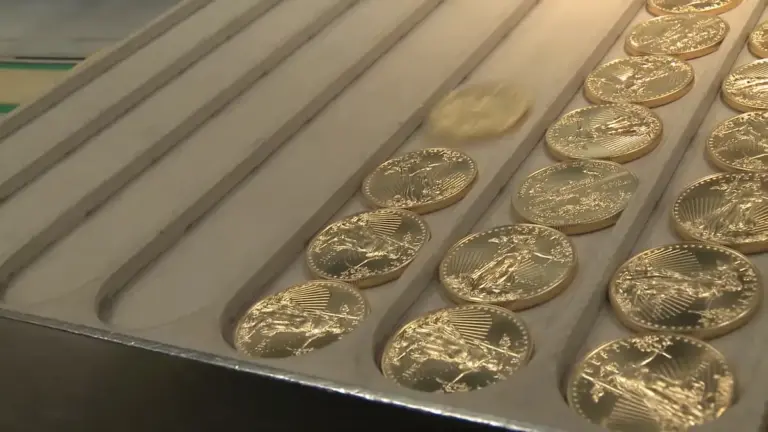
Investment gold comes in two purities: 24 karat (.999 or .9999) and 22 karat (.9167). Here is how the most popular 1 oz coins compare.
| Coin (1 oz) | Mint | Purity | Fine gold content |
|---|---|---|---|
| American Gold Eagle | US Mint | 22k (.9167) | 1 troy oz |
| South African Krugerrand | South African Mint | 22k (.9167) | 1 troy oz |
| American Gold Buffalo | US Mint | 24k (.9999) | 1 troy oz |
| Canadian Gold Maple Leaf | Royal Canadian Mint | 24k (.9999) | 1 troy oz |
| Australian Gold Kangaroo | Perth Mint | 24k (.9999) | 1 troy oz |
| British Gold Britannia (since 2013) | The Royal Mint | 24k (.9999) | 1 troy oz |
| Austrian Gold Philharmonic | Austrian Mint | 24k (.9999) | 1 troy oz |
Is 22 Karat Gold Worse for Investment?
No, a 1 oz 22k bullion coin contains exactly as much gold as a 1 oz 24k coin. The mint simply adds alloy on top of the gold, so the coin weighs more. The American Gold Eagle weighs 33.931 grams: 91.67% gold, 3% silver and 5.33% copper, which works out to one troy ounce of pure gold. The Krugerrand uses copper, which gives it its slightly orange tone.
Do 22k coins cost more or less? Our data shows that purity has little to do with the premium you pay.
The cheapest coin that day was the 22k Krugerrand at 0.7% over spot. The 22k Gold Eagle and the 24k Maple Leaf were almost level. So choose a coin by premium, recognition and resale, not by karat. Compare today’s offers for the Krugerrand, the American Gold Eagle, the Gold Maple Leaf and all gold coins.
Read also: What Are the Best Gold Coins to Buy and Why
Gold Bars
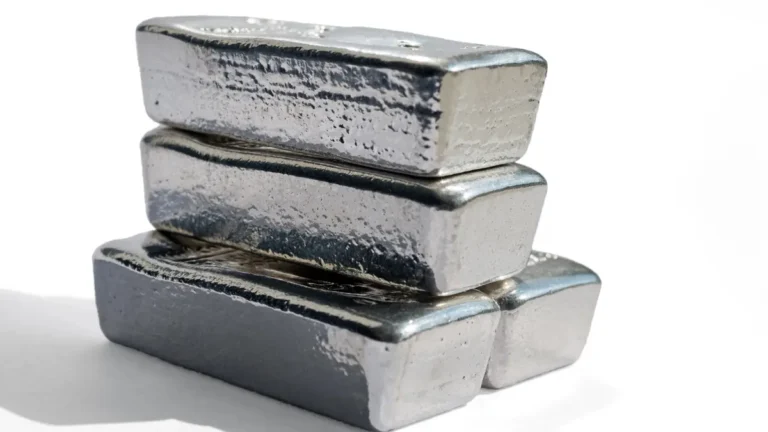
Investment gold bars from major refiners are almost always .999 or .9999 fine, with the purity, weight and often a serial number stamped on the bar. Here, size matters more than purity: on October 3, 2026, the cheapest 100 g bar cost 1.7% over spot, while the cheapest 1 g bar cost 19.6%. See prices for gold bars and 1 oz gold bars.
Gold Colors and Purity
Pure gold is yellow. Other colors come from the metals added to it, so colored gold is always an alloy, never 24k.
- Yellow gold: gold mixed mainly with silver and copper.
- White gold: gold mixed with white metals such as palladium or silver, and usually plated with rhodium for a brighter, harder surface (World Gold Council).
- Rose gold: gold with a higher share of copper, which gives the pink tone.
Does color change the value? Not directly. 18k white gold and 18k yellow gold contain the same 75% gold. In the US, the FTC also says sellers must disclose a rhodium plating on products described as precious metal (16 CFR 23.7).
US Rules for Gold Purity Marks
The US has no government assay or hallmarking office. Makers stamp the purity themselves, and two sets of rules keep them honest.
What the FTC Jewelry Guides Say
The FTC Jewelry Guides (16 CFR 23.3) set out how gold may be described:
| Term | What it must mean |
|---|---|
| “Gold” (no karat mark) | Fine (24 karat) gold throughout |
| “14 Karat Gold,” “14K Gold” | A correct karat mark placed immediately before the word “Gold” |
| “Gold Filled” | A gold alloy layer of at least 10 karat that makes up at least 1/20 of the metal’s weight |
| “Gold Plate” | A layer of gold alloy of at least 10 karat and of reasonable durability |
| “Solid gold” | Should not be used for hollow items |
What the National Stamping Act Allows
The National Gold and Silver Stamping Act sets the tolerance for gold marks. The gold in a marked article may be no more than 3 parts per 1,000 below the stamped fineness. When the whole article is tested, including solder, the limit is 7 parts per 1,000 for most items and 3 parts per 1,000 for watchcases and flatware (15 U.S.C. 295). A seller who applies a quality mark must also apply a registered trademark next to it.
Hallmarks Outside the US
Many countries test gold independently. In the UK, gold items over 1 gram must be hallmarked by an assay office, and the legal gold standards are 375, 585, 750, 916.6, 990 and 999, according to the UK government’s hallmarking guidance. Countries in the international Hallmarking Convention, signed in Vienna in 1972, also recognize each other’s Common Control Mark.
How to Check Gold Purity: 7 Methods
How can you tell if your gold really is 14k, 18k or 24k? Use several methods together. Each one has blind spots.
1. Read the Stamp
Look for a karat mark (10K, 14K, 18K) or a fineness number (417, 585, 750, 999) with a magnifying glass. Be careful with marks like “GF” (gold filled), “GP” or “GEP” (gold plated) and “HGE” (heavy gold electroplate). They mean the gold is only a surface layer. Stamps can also be faked.
The FTC is blunt about stamps that come without a maker’s mark:
“If you’re thinking about buying a piece of gold jewelry but don’t see a trademark along with the karat mark, don’t buy it.”
Federal Trade Commission, consumer guide Buying Platinum, Gold, and Silver Jewelry, November 2024
2. The Magnet Test
Gold is not magnetic. If a strong magnet pulls on your item, it contains a magnetic metal such as iron, nickel or cobalt, and it is not what the stamp says. Passing the test proves little, because many fakes use non-magnetic metals like brass or tungsten.
3. Weight, Size and Density
Gold is very dense, about 19.3 grams per cubic centimeter. For bullion coins, compare the weight, diameter and thickness with the mint’s published specifications. One warning: tungsten has almost the same density as gold, so a well-made tungsten-core fake can pass a density test.
4. The Acid and Touchstone Test
The item is rubbed on a dark stone, and acids for different karats are applied to the streak. According to the Gemological Institute of America (GIA), the purer the gold, the stronger the acid needed to dissolve it, so the test works by comparison with known karat samples. It is cheap and useful for jewelry but leaves a mark and needs careful handling of acids.
5. Electronic Gold Testers
Handheld electronic testers measure how the surface of the metal responds to a small electrical current. They are fast and widely used by pawn shops, but plating can fool them.
6. XRF Analysis
An X-ray fluorescence (XRF) spectrometer shows the metal composition in seconds without damaging the item. It is accurate for solid pieces, but it reads only the surface, so a thick gold layer over a base metal core may hide the problem.
7. Fire Assay
Fire assay is the most accurate method. A sample is melted, the gold is separated and weighed. Refiners use it, but it destroys the sample, so it is not used on coins you want to keep.
| Method | Cost | Damages the item? | Can be fooled by |
|---|---|---|---|
| Reading the stamp | Free | No | Fake stamps |
| Magnet test | Very low | No | Brass, copper, tungsten fakes |
| Weight, size, density | Low | No | Tungsten cores |
| Acid and touchstone | Low | Yes, a small mark | Thick plating |
| Electronic tester | Medium | No | Plating |
| XRF | Often free at a dealer | No | Thick plating over a core |
| Fire assay | Highest | Yes | Very hard to fool |
Testing a bullion coin? Our coin guides list the details counterfeiters miss: fake American Gold Eagle, fake Krugerrand and the full guide to spotting fake gold and silver coins.
How Gold Purity Affects Price
When you sell gold, a buyer starts from melt value: the weight of pure gold times the spot price.
Melt value = weight in grams × (karats ÷ 24) × gold price per gram
Example: a 10 gram 14k chain contains 5.83 grams of gold. At $133.16 per gram on October 3, 2026, that is about $777 of gold. A scrap buyer will usually offer less, because refining costs money. Jewelry also sells for far more than melt value in a store, because you pay for design and the retailer’s margin.
With bullion, the math is simpler. A 1 oz coin or bar of investment gold is worth about one ounce at spot, plus or minus a premium. That is why bullion is priced daily against the spot price, and jewelry is not.
Read also: Silver Purity Explained: Fineness, 999 vs 925 and How to Check It
Gold Purity in an IRA
Can any gold go into an IRA? No. According to the IRS, collectibles are generally not allowed in IRAs, but there are exceptions for certain US Mint coins such as the American Gold Eagle and for bullion that meets the required fineness, held by an approved trustee. The Gold Eagle qualifies even though it is 22 karat, because the exception covers certain coins issued by the US Mint. Always confirm eligibility with your IRA custodian.
Summary: Gold Purity
| If you see | It means | Typical use |
|---|---|---|
| 24K, 999, 9999 | 99.9% gold or more | Bullion bars and most bullion coins |
| 22K, 916, 917 | 91.67% gold | Gold Eagle, Krugerrand, some jewelry |
| 18K, 750 | 75% gold | Fine jewelry, watches |
| 14K, 585 | 58.33% to 58.5% gold | Everyday US jewelry |
| 10K, 417 | 41.67% gold | Budget jewelry |
| GF, GP, HGE | Only a gold layer | Not solid gold |
FAQ: Gold Purity
What is the purest gold you can buy?
The purest gold you can buy is .9999 fine, or 99.99% gold, used in coins such as the Gold Maple Leaf, Gold Buffalo and Gold Kangaroo.
Is 22k or 24k gold better?
It depends on the use. 24k has more gold per gram but is soft, while 22k is harder; for 1 oz bullion coins both contain one full troy ounce of gold.
What does 585 mean on gold?
585 means the gold is 58.5% pure, which is 14 karat gold. The stamp is common on jewelry made in Europe and sold worldwide.
What does 750 mean on gold?
750 means 75% gold, which is 18 karat. The other 25% is made of metals such as silver, copper or palladium.
How can I check gold purity at home?
Check the stamp, try a magnet, and compare the weight and size with the official specifications. These checks catch many fakes, but only XRF or a fire assay confirms the exact purity.
Is 10k gold real gold?
Yes, 10k gold is real gold alloy, but only 41.67% of it is gold. The rest is other metals, so its melt value per gram is much lower than that of 18k or 24k.
How much is a gram of 14k gold worth?
On October 3, 2026, a gram of 14k gold contained about $77.68 of gold at a spot price of $4,141.80 per ounce. Buyers usually pay less than melt value.
Compare Gold Prices Before You Buy
Purity tells you how much gold you get. The premium tells you how much you pay on top. Our data shows that a 22k coin can be cheaper over spot than a 24k coin, and that the same coin can cost noticeably more at one dealer than at another on the same day.
Check today’s offers for investment gold, browse the cheapest gold coins, or find a bullion dealer near you who can test your gold.
This article is for informational purposes only and is not investment or tax advice.
Was this article helpful?
Thanks for your feedback!