Key Takeaways
- There are three main options: a home safe, a bank safe deposit box or a professional vault. Each trades off access, cost and risk differently.
- Bank boxes are getting harder to find: NAB has closed its safe custody service, and ANZ stopped offering boxes to new customers in 2016.
- Check your insurance first: many home contents policies exclude bullion or cap claims at a few thousand dollars unless you list it separately.
- Vault storage has a clear price: The Perth Mint charges 1% a year for allocated gold and 1.9% for allocated silver, with its holdings backed by a Western Australian government guarantee.
- Handle with care, not fear: pure gold does not rust or tarnish, but scratches, dents and opened packaging can lower the price a dealer pays you.
How to store gold is a question most new buyers ask only after the bars or coins arrive. By then, the gold is sitting in a drawer. That is the moment to make a plan. Gold is small, valuable and easy to carry away, so where you keep it matters as much as what you paid for it.
In this guide, we compare the main storage options available in Australia: a home safe, a bank safe deposit box and a professional vault. You will see the real costs, the insurance traps, how to handle coins and bars, and a short checklist. We use spot prices from our precious metals price comparison to show what your storage is protecting.
Why Gold Storage Needs a Plan
Why not just hide it in a cupboard? Because gold packs a lot of value into very little space. On 2 October 2026, one kilogram of gold was worth about A$191,829 at the spot price, according to our gold price per kilogram page. A single 100 g bar was worth more than A$19,000.
That density is both the appeal and the risk:
- a burglar can carry a lifetime of savings in one pocket,
- a fire or flood can damage packaging and papers you need for resale,
- a family member may not know the gold exists, or where it is, if something happens to you.
Good storage answers three questions. Is it safe from theft? Is it insured? Can you prove what you own?
Option 1: Storing Gold at Home
Home storage means keeping your gold in your own house, usually in a safe. It is the most popular choice for small holdings because it is cheap and you can reach your gold at any time.
Benefits of storing gold at home
- Immediate access: you can sell or move your gold without appointments or notice periods.
- No annual fees: after you buy the safe, there is no ongoing storage charge.
- Full control: nobody else holds your metal or decides when you can collect it.
Risks of storing gold at home
- Theft: a home is easier to break into than a commercial vault.
- Insurance gaps: standard contents cover often excludes bullion or limits it (see below).
- Fire and flood: a cheap safe may not protect packaging, certificates or invoices.
- Talking about it: the more people who know, the higher the risk.
How to store gold at home safely
If you choose home storage, these steps make the biggest difference:
- Buy a proper safe: choose one with a recognised burglary and fire rating, not a lockbox.
- Bolt it down: a safe fixed to a concrete floor or wall is much harder to remove than a free-standing one.
- Hide it well: avoid the main bedroom wardrobe, the first place many burglars look.
- Keep it dry: use a moisture absorber inside the safe, especially if you also store silver or paperwork.
- Split your holdings: some owners keep part at home and part elsewhere, so one event cannot take everything.
- Stay quiet: do not post about your gold online or mention deliveries to people who do not need to know.
Check your home and contents insurance
This is the trap most people miss. Many Australian home contents policies list cash, bullion and coin collections as either excluded or subject to a low sub-limit, often a few thousand dollars in total. A 1 oz gold coin alone was worth almost A$6,000 at spot on 2 October 2026.
What can you do?
- read the Product Disclosure Statement (PDS) and look for “bullion”, “precious metals”, “coins” and “cash”,
- ask your insurer if you can list the gold as a specified item and what proof they need,
- check whether cover applies only while the gold is in a locked safe,
- update the insured value when the gold price moves a lot.
Read also: Troy Ounce: Definition, History and Conversion Table
Option 2: Bank Safe Deposit Boxes
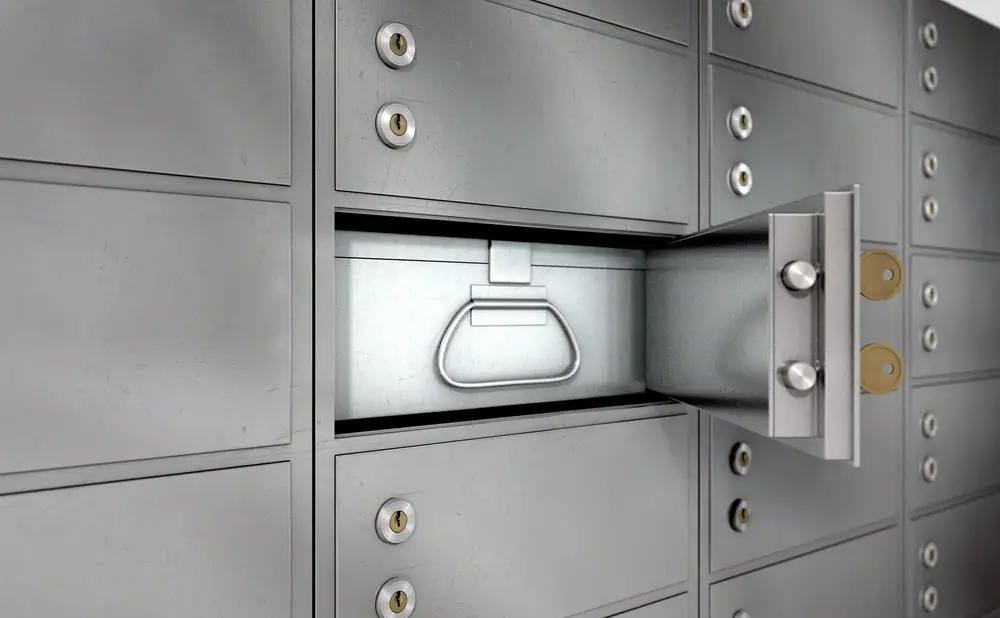
A safe deposit box is a locked container you rent inside a bank’s vault. You hold the key or access code, and the bank controls entry to the vault.
Are safe deposit boxes still available in Australia?
Fewer than before. NAB states that it has closed its safe custody service, with its centres in Adelaide, Brisbane, Perth, Melbourne and Sydney shut. According to SMSF Adviser, ANZ has not offered safe deposit boxes to new customers since 2016, and Bankwest has also stopped offering them. Some banks and credit unions still have boxes in selected branches, so ask your own bank directly.
Pros and cons of a safe deposit box
| Pros | Cons |
|---|---|
| Bank-grade vault, alarms and controlled entry | Access only during branch hours |
| Usually cheaper than a dedicated bullion vault | Limited availability and waiting lists |
| Gold is out of your house | Contents are often not insured by the bank |
| Simple to set up if your bank offers it | Risk of the service closing, as several banks have done |
Before you rent a box, ask two questions. Who insures the contents? What happens if the bank closes the service? If the answer to the first is “you”, add the box to your own insurance.
Option 3: Professional Vault Storage
A professional vault is a high-security facility run by a mint, bullion dealer or specialist storage company. It is built for precious metals and usually includes insurance and regular audits.
Allocated vs unallocated storage
This is the key distinction in vault storage:
- Allocated: specific bars or coins are set aside in your name. They remain your property, and you pay a storage fee.
- Pool allocated: your metal is part of a pool of identical bars held for a group of customers.
- Unallocated: you hold a claim to an amount of metal, not specific bars. The provider can use the metal in its business, which is why storage is often free.
The Perth Mint describes what allocated storage means in practice:
“When you buy allocated bars, we place them in The Perth Mint Depository with your title attached to those specific bars. They are removed from our working inventory and cannot be bought by other customers.”
The Perth Mint, investor guide “Where can you store bullion?”, April 2023
Which one is safer? Allocated storage gives you the clearest ownership of specific metal. Unallocated storage depends more on the strength of the provider, so the guarantee behind it matters.
The Perth Mint Depository
The Perth Mint is owned by the Government of Western Australia. According to The Perth Mint, all precious metal holdings in its storage are backed by a government guarantee. Its published annual fees are:
| Metal | Allocated | Pool allocated | Unallocated |
|---|---|---|---|
| Gold | 1% per year | Not offered | 0% |
| Silver | 1.9% per year | 0.95% per year | 0% |
| Platinum | Not offered | Not offered | 0% |
What does that cost in dollars? For allocated gold at 1% a year:
| Value stored | Gold, allocated (1%) | Silver, allocated (1.9%) | Silver, pool allocated (0.95%) |
|---|---|---|---|
| A$10,000 | A$100 a year | A$190 a year | A$95 a year |
| A$50,000 | A$500 a year | A$950 a year | A$475 a year |
| A$100,000 | A$1,000 a year | A$1,900 a year | A$950 a year |
| A$250,000 | A$2,500 a year | A$4,750 a year | A$2,375 a year |
Over ten years, a 1% fee adds up to roughly 10% of the value stored. That is the price of not worrying about burglars, so weigh it against the cost of a good safe and specified insurance at home.
The Perth Mint’s chief executive sees the state guarantee as the main reason investors use its vaults:
“The government guarantee is a cornerstone of the trust our customers place in us.”
Paul Graham, CEO of The Perth Mint, in “Understanding The Perth Mint government guarantee”, February 2026
Dealer and private vaults
Several Australian bullion dealers and private vault companies also offer storage, often with the option to sell straight from the vault. When you compare them, check:
- whether the storage is allocated and what documents prove your ownership,
- who insures the metal, for how much and against which risks,
- how often holdings are independently audited,
- what it costs and how long it takes to collect your metal in person,
- what happens to your metal if the company fails.
You can find Australian dealers, including those with storage services, in our dealer directory, for example ABC Bullion. The Perth Mint profile lists its products.
Home, Bank or Vault: Side-by-Side Comparison
| Factor | Home safe | Bank safe deposit box | Professional vault |
|---|---|---|---|
| Access | Any time | Branch hours | By appointment or on request |
| Ongoing cost | None after buying the safe | Annual rent | Annual fee, e.g. 1% for allocated gold at The Perth Mint |
| Theft risk | Highest | Low | Lowest |
| Insurance | Often excluded or capped in contents policies | Often not included | Usually included, check the terms |
| Availability in Australia | Always | Shrinking | Good |
| Best for | Small amounts, frequent access | Medium amounts, if available | Larger amounts, long-term holdings |
Storing Gold vs Storing Silver
Does silver need different storage? Yes, mainly because of its weight and its tendency to tarnish. At the 2 October 2026 spot prices, A$100,000 of gold weighed about half a kilogram. The same value in silver weighed almost 36 kg.
For silver, plan for:
- a larger safe or more shelf space in a vault,
- higher storage fees in percentage terms (1.9% allocated at The Perth Mint),
- sealed tubes or capsules to slow tarnishing,
- a dry place, away from rubber bands and some paper or cardboard, which can speed up tarnish.
Read also: Gold vs Silver Investments: Which Is Better for Australians?
How to Handle and Package Gold Bars and Coins
Pure gold does not rust, corrode or tarnish in normal conditions. So why worry about handling? Because buyers pay less for scratched, dented or unsealed products, especially coins.
Storing gold bars
- keep minted bars in their original sealed card (assay card) with the serial number,
- do not open the seal to “check” the bar, as this may lower the buy-back price,
- store cast bars in soft pouches so they do not knock against each other,
- keep the invoice and card together, or record serial numbers separately.
Storing gold coins
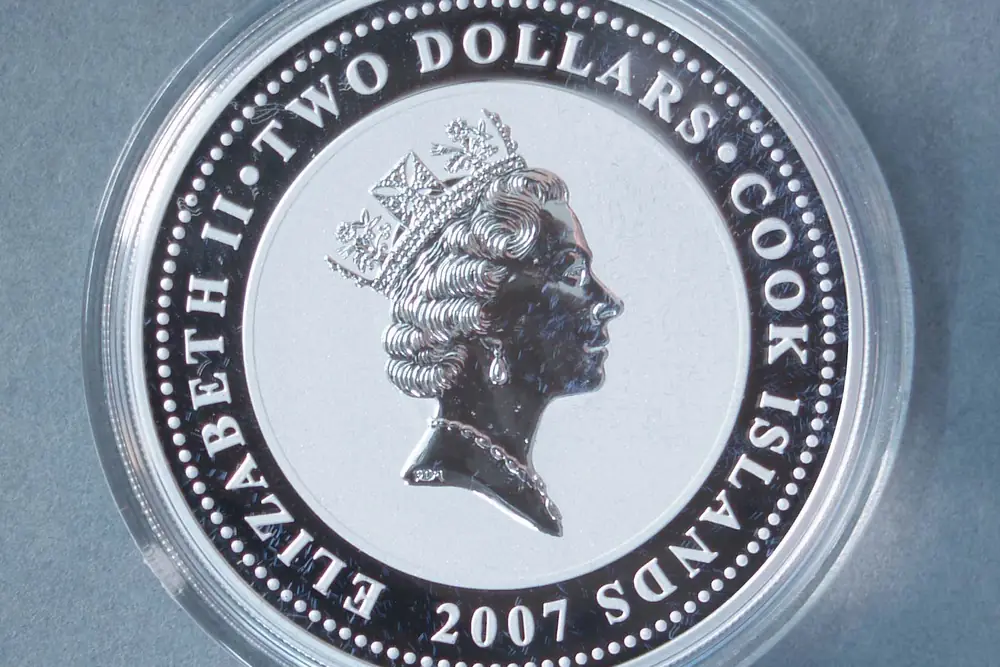
- keep coins in their original capsules or tubes,
- hold coins by the edge, ideally with clean cotton or nitrile gloves, because skin oils can leave marks,
- avoid soft PVC flips for long-term storage, as they can leave residue on coins,
- never clean a coin with polish or abrasives.
Read also: What Are the Best Gold Coins to Buy in Australia?
Records, Tax and Estate Planning
Storage is not only about vaults and safes. Paperwork protects your money too.
- Invoices: keep every purchase invoice. It proves your cost base when you sell, which matters for capital gains tax.
- Inventory: list each item with weight, purity, serial number and location. Store a copy away from the gold.
- Photos: take clear photos for insurance claims.
- Your estate: make sure a trusted person or your will explains where the gold is and how to access it.
- SMSF holdings: if a self-managed super fund owns the gold, it must be kept separate from your personal assets. Check the ATO’s SMSF rules with your adviser before choosing a location.
Where you store gold does not change your tax. Gains on bullion are generally subject to capital gains tax wherever it is kept, and a sale of A$10,000 or more in cash to a bullion dealer is reported to AUSTRAC.
Common Gold Storage Mistakes
- Assuming home insurance covers bullion. Many policies exclude it or cap it.
- Using a cheap lockbox. If it can be carried out, it will be.
- Keeping everything in one place. One event can wipe out the whole holding.
- Choosing unallocated storage without reading the terms. You own a claim, not specific bars.
- Opening sealed bars. It can lower the price a dealer pays.
- Losing the paperwork. Without invoices, proving your cost base is harder.
Summary: How to Store Gold
| Your situation | Sensible option |
|---|---|
| A few coins, want access | Bolted home safe plus specified insurance |
| Medium holding, bank offers boxes | Safe deposit box, insured separately |
| Larger holding, long term | Allocated vault storage, e.g. The Perth Mint at 1% a year for gold |
| Mostly silver | Vault or large safe, sealed tubes, dry conditions |
FAQ: How to Store Gold
What is the safest way to store gold in Australia?
A professional vault with allocated, insured storage is generally the safest option against theft. For example, The Perth Mint’s holdings are backed by a Western Australian government guarantee.
Is it safe to keep gold at home?
It can be, if you use a proper safe bolted to the floor, keep quiet about it and insure it specifically. The main risks are theft and insurance gaps.
Does home insurance cover gold bullion?
Often not in full. Many contents policies exclude bullion or limit claims to a few thousand dollars, so check your PDS and ask about listing it as a specified item.
Do Australian banks still offer safe deposit boxes?
Some do, but fewer than before. NAB has closed its safe custody service, and ANZ stopped offering boxes to new customers in 2016, so ask your bank about availability.
How much does it cost to store gold in a vault?
The Perth Mint charges 1% a year for allocated gold, or A$500 a year on A$50,000. Unallocated gold is stored free, but you hold a claim rather than specific bars.
Does gold tarnish in storage?
No, pure gold does not tarnish or rust in normal conditions. Silver does tarnish, so it benefits from sealed tubes and dry storage.
Can you store gold and silver together?
Yes, you can store them in the same safe or vault. Keep each piece in its own capsule, tube or sealed card so silver tarnish and contact scratches do not affect either metal.
How should I store a 1 oz gold bar?
Keep a minted 1 oz bar in its original sealed assay card, inside a safe or vault, and record its serial number. Opening the card can lower the price a dealer pays when you sell.
Should I wear gloves when handling gold coins?
Yes, it is a good habit. Skin oils and fingerprints can leave marks on coin surfaces and reduce their appeal to buyers.
Compare Prices Before You Buy and Store
Storage costs are easier to judge when you know what your gold is worth and what you paid over spot. metalsradar compares prices from Australian bullion dealers and shows the premium over spot for every offer.
Check today’s prices for gold bars, gold coins and silver bars, follow the gold price chart, or see the gold price per gram.
This article is for informational purposes only and is not investment, tax or insurance advice.
Was this article helpful?
Thanks for your feedback!