Key Takeaways
- Silver can be a good investment, but it is a bumpy one: in our GBP data the spot price rose 29.6% in the 12 months to 3 October 2026, after falling 51% from its January peak.
- VAT is the biggest UK drawback: physical silver bullion carries 20% VAT, while investment gold is VAT-free. That is one reason silver coins cost 28% to 51% over spot, VAT included, at UK dealers on 3 October 2026.
- Silver Britannias are free of Capital Gains Tax: The Royal Mint says all its UK bullion coins are CGT-exempt for UK residents because they are legal tender.
- Industry drives the price: industrial uses took 657.4 million ounces in 2025, about 58% of total demand, according to the Silver Institute.
- Silver is a long-term holding: the gap between what a dealer charges and what it pays back was 15.8% to 33.7% for silver products, against 3% to 4% for gold.
Is silver a good investment for a UK saver in 2026? Many people consider silver because it costs a fraction of gold, it is used in solar panels and electronics, and its dollar price more than doubled during 2025. Those are real reasons. There are also real costs that most guides skip, starting with VAT.
In this guide, we explain why you should consider investing in silver, what can go wrong, and how much you actually pay at UK dealers tracked by Metals Radar. You will see live-data tables, a 12-month chart of the silver price in pounds, UK tax rules, and an FAQ at the end.
Is Silver a Good Investment? The Short Answer
Silver is a good investment for some goals and a poor one for others. Here is the quick version:
- Good fit: you want a small, physical, affordable part of your savings outside the banking system and you can hold it for years.
- Good fit: you already own gold and want an asset that has, at times, risen faster than gold.
- Poor fit: you need the money within a year or two, or a 30% fall would force you to sell.
- Poor fit: you expect steady income. Silver pays no interest or dividends.
So should you put most of your savings into silver? No, most investors who hold it keep it as a smaller slice next to cash, shares, and often gold.
Why You Should Consider Silver Investment
Silver has a mix of features that no other common asset has. It is a monetary metal with thousands of years of use in coins, and it is also an industrial metal used in products made every day.
1. It is a real asset you can hold
A silver coin or bar is not a promise from a bank or a company. If you hold it yourself, there is no counterparty that can fail. That is the main reason people buy physical silver rather than paper products that track it.
2. Industry needs it
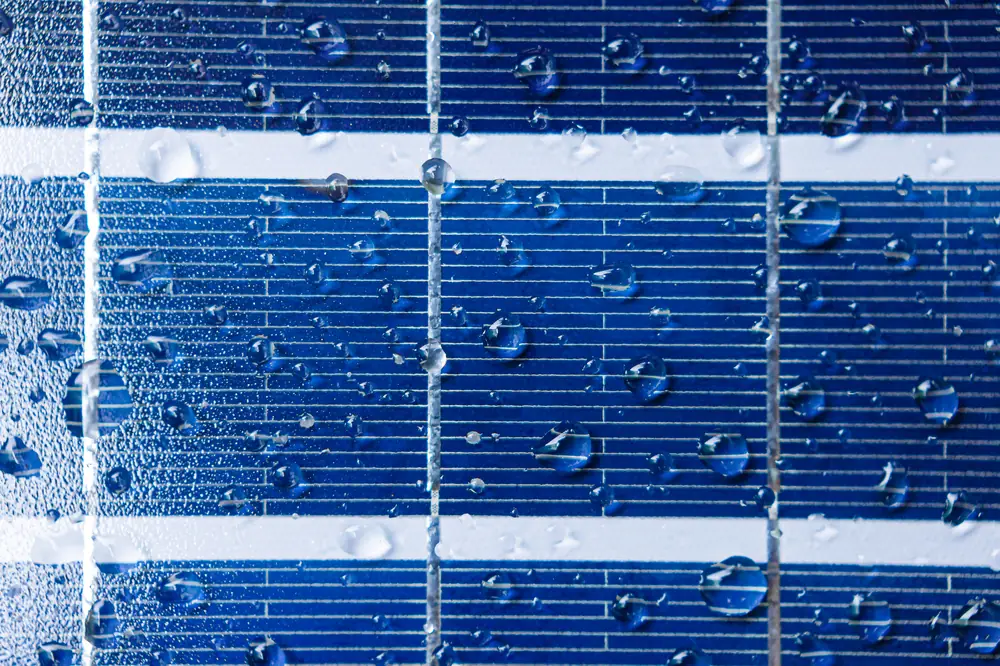
Silver conducts electricity and heat better than any other metal and reflects light well. The US Geological Survey lists uses in electrical and electronic parts, photovoltaic solar cells, brazing and solder, batteries, medical products and water purification.
According to the Silver Institute (World Silver Survey 2026, published 15 April 2026), industrial demand reached 657.4 million ounces in 2025. That was 3% lower than in 2024, mainly because solar panel makers used less silver per panel, but it was still the largest single source of demand.
3. The market has been in deficit
The Silver Institute reports that global demand exceeded supply for the fifth year in a row in 2025, and it expects a deficit of 46.3 million ounces in 2026. A deficit means demand was met partly from existing stocks. It does not guarantee higher prices, but it is one reason analysts follow silver closely.
Here is how the Silver Institute described the 2025 market in its latest annual survey:
“Global silver demand exceeded supply for the fifth consecutive year. While this narrowed compared to 2024, it continued to place additional pressure on global above-ground silver stocks.”
The Silver Institute, World Silver Survey 2026 press release (research by Metals Focus), April 2026
4. It is affordable
On 3 October 2026, the spot price of silver was £45.82 per troy ounce, while gold was £3,135.89. You can start with one coin. That makes silver easy to buy little and often, and easy to sell in small amounts.
5. It can move faster than gold
Silver tends to follow gold, but with bigger swings. During 2025, Reuters reported that silver gained more than 150% while gold rose about 66%, its best year since 1979. When precious metals rally, silver has often done more of the running. The same is true in reverse.
Read also: Why Is Silver Cheaper Than Gold? The Real Reasons Behind the Price Gap
The Silver Price in Pounds: 12 Months of Data
How bumpy is silver in practice? The chart below shows the spot price in GBP for the last 12 months.
Silver started the period at £35.36 and peaked at £84.70 on 29 January 2026. In the next two days it fell 14.2% and then another 14.4%. By 17 July 2026 it was down to £41.48, a fall of 51% from the peak. On 3 October 2026 it stood at £45.82, still 29.6% higher than a year earlier.
Compare that with gold over the same period:
| Measure (GBP, 12 months to 3 Oct 2026) | Silver | Gold |
|---|---|---|
| Price change over 12 months | +29.6% | +9.0% |
| Typical daily move (standard deviation) | 2.53% | 1.14% |
| Days with a move of 5% or more | 15 | 1 |
| Largest one-day fall | 14.4% (31 Jan 2026) | 6.6% (30 Jan 2026) |
| Largest fall from a peak | 51.0% (29 Jan to 17 Jul 2026) | 25.9% (2 Mar to 16 Jul 2026) |
Silver gave a higher return than gold over these 12 months, but with more than twice the daily swings. Can you sit through a 51% fall without selling? If the honest answer is no, keep your silver position small.
What Does Silver Really Cost in the UK?
The premium is the amount you pay above the spot value of the metal. It covers minting, distribution, the dealer’s margin and, for silver, VAT. Here is the formula:
Premium % = (price paid − spot value) / spot value × 100
Silver coin prices at UK dealers
| Product | Dealer | Price | Premium over spot |
|---|---|---|---|
| Silver bar 1 kg | Tavex UK | £1,881.20 | 27.7% |
| Silver Britannia 1 oz | Tavex UK | £58.74 (+£5 delivery) | 28.2% |
| Silver bar 1 kg | Hatton Garden Metals | £1,919.51 | 30.3% |
| Silver Kangaroo 1 oz | Tavex UK | £60.66 (+£5 delivery) | 32.4% |
| Silver Maple Leaf 1 oz | Hatton Garden Metals | £62.44 | 36.3% |
| Silver Britannia 1 oz | Hatton Garden Metals | £65.72 | 43.4% |
| Silver Philharmonic 1 oz | Hatton Garden Metals | £66.26 | 44.6% |
| Silver Panda 30 g | Hatton Garden Metals | £66.56 | 50.6% |
| For comparison: gold Krugerrand 1 oz | Hatton Garden Metals | £3,173.61 | 1.2% |
| For comparison: gold Britannia 1 oz | Tavex UK | £3,232.78 (+£5 delivery) | 3.1% |
Why silver premiums are so much higher
The main reason is tax. The Royal Mint states that “physical silver and platinum bullion, regardless of the country of issue, are subject to VAT at the current rate of 20%”. Investment gold is exempt from VAT under HMRC VAT Notice 701/21, and that exemption does not cover silver.
Watch how prices are shown. Some UK dealers list silver prices without VAT and add it at checkout, while others show prices with VAT included. Some also sell certain coins under HMRC’s margin scheme for second-hand goods, where VAT is charged only on the dealer’s margin. Always compare the final price at checkout, VAT and delivery included.
Read also: Best Silver Coins for Investment in the UK
Buying Is Half the Trade: Silver Buy-Back Spreads
The spread is the gap between the price a dealer sells at and the price it pays to buy the same item back. It is your real round-trip cost if prices do not move. Silver’s spread is several times wider than gold’s.
Take the Silver Maple Leaf at Hatton Garden Metals. On 3 October 2026 it sold for £62.44 including VAT and the dealer’s buy-back price was £41.40. The silver price would need to rise by about 51% before you could sell it back to that dealer at no loss. For a gold Krugerrand at the same dealer, the price needed to rise by about 3.3%.
What does this mean for you? Physical silver suits money you will not touch for years, not short-term trading.
How Silver Is Taxed in the UK
Tax can turn a good silver investment into an average one. Here is how the main products compare:
| Product | VAT on purchase | Capital Gains Tax on profit |
|---|---|---|
| Silver Britannia (UK legal tender) | 20% (on the full price or, under the margin scheme, on the margin) | Exempt, according to The Royal Mint |
| Foreign silver coins (Maple Leaf, Philharmonic, Kangaroo) | 20% or margin scheme | Chargeable |
| Silver bars | 20% | Chargeable |
| Investment gold bars and coins | Exempt | Bars and foreign coins chargeable; Sovereigns and gold Britannias exempt |
A few details matter here:
- the annual CGT allowance is £3,000 per person, and gains above it are taxed at 18% or 24% depending on your income (GOV.UK),
- HMRC’s Capital Gains Manual names Sovereigns minted from 1837 and gold Britannias as exempt sterling currency and does not mention silver coins by name, so check with HMRC if a large gain is at stake,
- HMRC’s pension rules allow investment-grade gold bars in a self-invested personal pension (SIPP), but silver bullion is not covered by that exception.
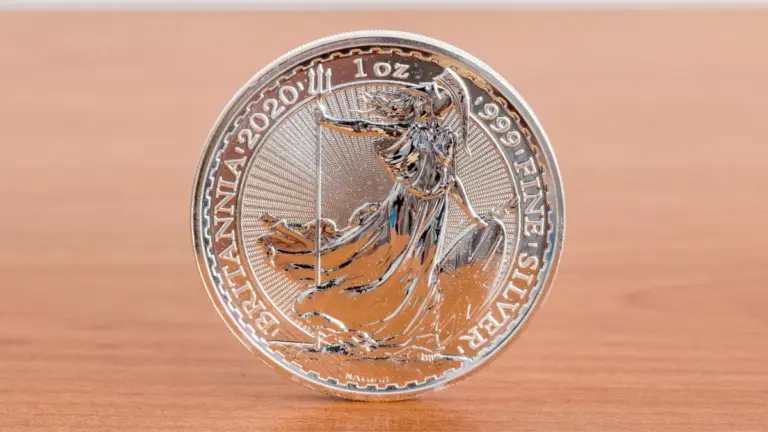
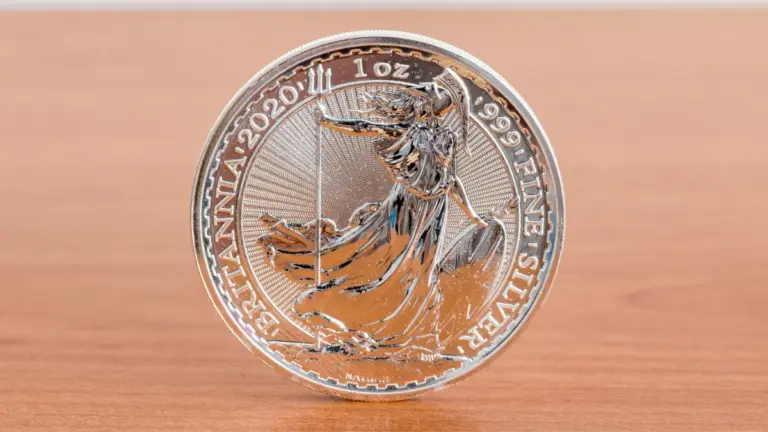
For most UK buyers, the Silver Britannia is the natural first choice: it is legal tender, widely recognised and, according to The Royal Mint, free of CGT. You can compare Silver Britannia prices across dealers before buying.
Risks of Investing in Silver
Every reason to buy silver has a flip side. Before you invest, be clear about these:
- Volatility: a 51% fall from peak to trough in six months is not unusual for silver.
- Industrial cycles: if factories cut output or find ways to use less silver, demand falls. Solar panel makers already did this in 2025.
- Costs: 20% VAT and wide spreads mean you start well below break-even.
- Storage: £10,000 of silver at £45.82 an ounce weighs about 6.8 kg, before packaging. Gold of the same value fits in a pocket.
- Fakes: counterfeit silver coins exist. Learn the basic checks in our guide to spotting a fake Silver Britannia.
- No income: silver pays no interest, so it costs you the return you could earn elsewhere.
How to Invest in Silver in the UK
There are several ways to get exposure to silver. Each has a different mix of cost, risk and control:
| Method | What you own | Main advantage | Main drawback |
|---|---|---|---|
| Silver coins | Physical metal | Easy to sell one at a time; Britannias CGT-free | VAT and higher premiums |
| Silver bars | Physical metal | Lower cost per ounce at larger sizes | VAT, CGT, storage weight |
| Exchange-traded products | A security that tracks the price | No VAT, low dealing costs | You rely on the provider; no metal in hand |
| Mining company shares | Part of a business | Can pay dividends | Company and country risk on top of the silver price |
Silver coins
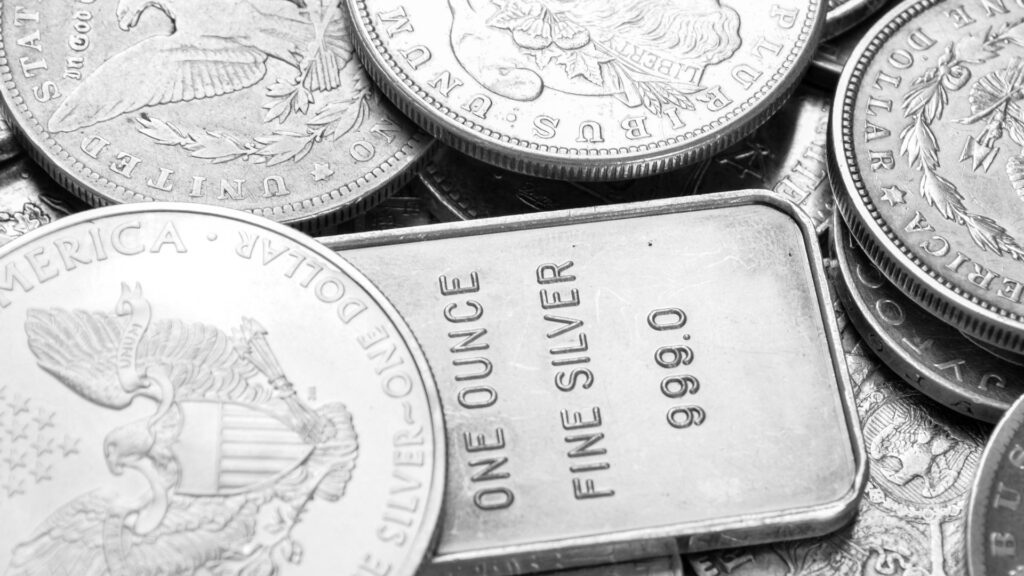
Coins are the most popular way to start. A 1 oz coin is small, recognised by every dealer, and easy to sell. Compare prices for silver coins or look at specific coins such as the Silver Maple Leaf.
Silver bars
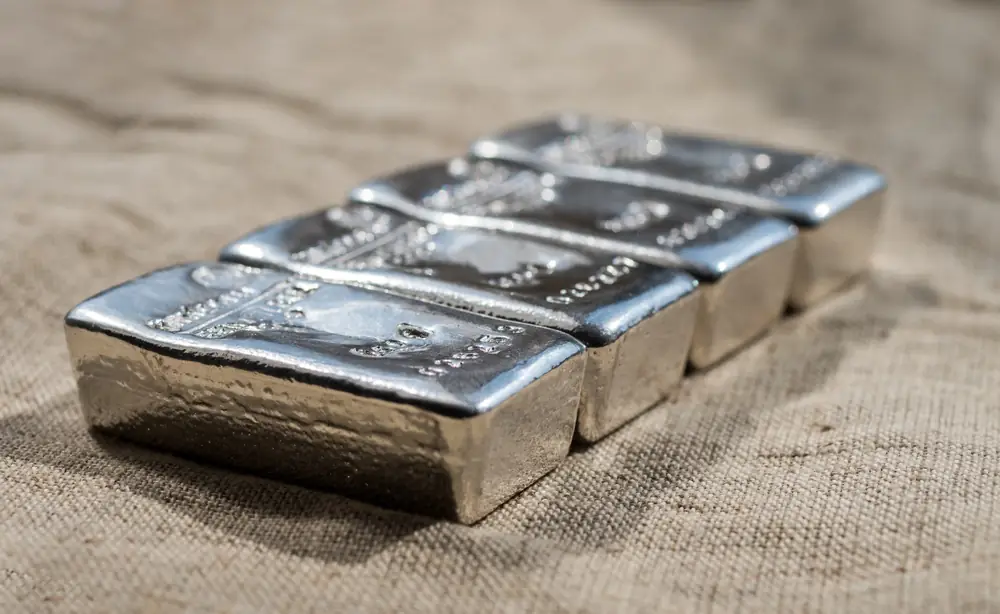
Bars from 100 g to 1 kg usually cost less per ounce than coins of the same total weight, but VAT still applies. See current prices for silver bars and check the silver price per kilogram to judge the premium.
How much silver should you buy?
There is no single right number. A simple rule many investors use is to decide in advance how much you could see fall by half without changing your plans. That figure, not a price forecast, is a sensible upper limit for silver.
Read also: How to Tell the Difference Between Real and Fake Silver
Silver vs Gold: Which Should You Consider?
One ounce of gold bought 68.4 ounces of silver on 3 October 2026, based on spot prices in GBP. Over the past 12 months that gold/silver ratio moved between 46.2 (27 January 2026) and 84.9 (27 October 2025). Follow it on our gold/silver ratio chart.
Choose silver if:
- you want a lower entry price per coin,
- you accept bigger swings in return for possibly bigger gains,
- you are happy to hold for many years.
Choose gold if:
- you want lower costs, with no VAT and narrower spreads,
- you want a calmer price path,
- you want to hold a lot of value in a small space.
Many UK investors hold both: gold as the core and silver as a smaller satellite. Compare investment gold prices if you want to see the other side.
Summary: Is Silver a Good Investment?
| Question | Answer for UK investors |
|---|---|
| Why consider silver? | Physical asset, industrial demand, market deficit, low entry price |
| Main cost | 20% VAT and premiums of 28% to 51% over spot on coins |
| Main risk | Volatility: a 51% fall from the January 2026 peak |
| Best UK coin for tax | Silver Britannia, CGT-free according to The Royal Mint |
| Holding period | Years, because spreads of 16% to 34% need time to recover |
FAQ: Is Silver a Good Investment?
Is silver a good investment right now?
Nobody can time the market reliably. On 3 October 2026 silver was 46% below its January 2026 peak in GBP but 29.6% higher than a year earlier, so it suits long-term buyers better than short-term traders.
Do you pay VAT on silver in the UK?
Yes, physical silver bullion is subject to 20% VAT according to The Royal Mint. Some dealers sell certain coins under the margin scheme, where VAT applies only to the dealer’s margin.
Is silver free of Capital Gains Tax in the UK?
Only some silver is. The Royal Mint says its UK bullion coins, including the Silver Britannia, are CGT-exempt for UK residents, while silver bars and foreign coins are chargeable assets.
Will silver be worth more in 10 years?
It may be, but nobody knows. Silver rose more than 150% in 2025 and then fell 51% from its January 2026 peak, which shows how wide the range of outcomes can be.
Is silver a better investment than gold?
Not in general. Silver rose more than gold over the last 12 months, but it had more than twice the daily volatility, carries 20% VAT and had much wider dealer spreads.
What is the best silver to buy in the UK?
For most UK buyers, 1 oz Silver Britannias are a sensible start because they are legal tender and widely recognised. Compare premiums, because the same coin cost 28.2% over spot at one dealer and 43.4% at another, VAT included.
Can I hold silver in a SIPP?
No, not as physical bullion. HMRC’s pension rules make an exception only for investment-grade gold bars, so silver exposure in a pension usually comes through funds or exchange-traded products instead.
Compare Silver Prices Before You Buy
With silver, the dealer you choose can change your cost more than a month of price moves. The same Silver Britannia cost £58.74 plus delivery at one UK dealer and £65.72 at another on the same day, VAT included. That is why Metals Radar compares prices from several dealers and shows the premium over spot for every offer.
Check today’s prices for investment silver, follow the silver price per gram, or read the profiles of Hatton Garden Metals and Tavex before you order.
This article is for informational purposes only and is not investment or tax advice.
Was this article helpful?
Thanks for your feedback!