Key Takeaways
- Definition: under the gold standard, a currency is defined as a fixed weight of gold, and the government or central bank stands ready to exchange its money for gold at that price.
- The US price was $20.67 per ounce for about a century. The Gold Reserve Act of 1934 raised it to $35, and that rate anchored the Bretton Woods system after 1944.
- The end came in two steps: Americans lost the right to redeem dollars for gold in 1933 and 1934, and foreign governments lost it on August 15, 1971, when President Nixon closed the “gold window”.
- A dollar’s gold value has shrunk: in 1933, $1 bought 1.505 grams of gold. At the spot price of $4,141.80 on October 3, 2026, it bought 0.0075 grams.
- No country uses a gold standard today, but central banks still hold gold and bought more than 1,000 tonnes a year in 2022, 2023 and 2024, according to the World Gold Council.
The gold standard is one of the most talked-about ideas in money, and one of the least understood. Some people see it as the cure for inflation. Others see it as the reason the Great Depression was so deep. What did it actually mean when a dollar was “as good as gold”?
In this guide, we explain what the gold standard is, how it worked in practice, and the key dates from Isaac Newton to Richard Nixon. You will also see what the official gold price was over time, how much gold a dollar was worth then and now, and why most economists oppose a return. Gold prices come from our gold price chart and are dated.
What Is the Gold Standard?
The gold standard is a monetary system in which a country’s currency is defined as a fixed amount of gold. Paper money is a claim on that gold, and the issuer promises to exchange notes for gold at the official price.
Think of it as a fixed exchange rate between money and metal. In the US, the Gold Standard Act of 1900 confirmed the dollar at $20.67 per troy ounce. That meant one dollar was a claim on about 1.505 grams of pure gold.
Three rules made the system work:
- Fixed price: the central bank or treasury buys and sells gold at the official rate.
- Free convertibility: anyone (or, in later versions, only foreign governments) can turn currency into gold.
- Free movement: gold can be imported and exported, so exchange rates between gold-standard countries stay almost fixed.
Is the US dollar backed by gold today? No. Since 1971, the dollar is fiat money. Its value rests on law and on confidence in the US government and the Federal Reserve, not on a gold reserve.
Types of Gold Standard
“Gold standard” covers several systems that differ in who could get gold and in what form.
| Type | How it worked | Example |
|---|---|---|
| Gold specie standard | Gold coins circulate, and notes can be swapped for coins | Britain and the US before 1914, e.g. the $20 Double Eagle |
| Gold bullion standard | No gold coins in circulation; notes can be exchanged for large bars only | Britain after its 1925 return |
| Gold exchange standard | Countries hold reserves in a gold-backed currency instead of gold itself | Many countries in the 1920s |
| Bretton Woods system | Currencies pegged to the dollar; only the dollar convertible into gold, and only for foreign governments | 1944 to 1971 |
How Did the Gold Standard Work?
The basic idea is simple. If a country could only issue money backed by gold, its money supply could not grow much faster than its gold reserves.
Between countries, the system adjusted itself through gold flows. Philosopher David Hume described this “price-specie flow” mechanism in 1752:
- A country imports more than it exports and pays the difference in gold.
- Its gold reserves fall, so its money supply shrinks.
- Prices and wages fall, which makes its goods cheaper abroad.
- Exports rise, imports fall, and gold flows back.
In practice, central banks sped this up. The Bank of England, for example, raised its interest rate when gold left the country, which attracted capital and gold back to London.
What does this mean for ordinary people? Price levels were stable over long periods, but they could fall for years at a time when gold was scarce. A falling price level sounds pleasant, but it raises the real burden of debts for farmers, businesses and governments.
A Short History of the Gold Standard
The gold standard did not start on one day. It grew out of the coinage rules of the 18th and 19th centuries and spread in the 1870s.
Britain leads (1717 to 1821)
Britain drifted onto gold almost by accident. In 1717, Isaac Newton, then Master of the Royal Mint, set the value of the gold guinea at 21 shillings. That rate made silver coins worth more as metal than as money, so they left circulation, and gold became the de facto standard.
The legal step followed a century later. After the Napoleonic Wars, the Coinage Act of 1816 made gold the standard, and in 1821 Bank of England notes became fully convertible into gold again.
The classical gold standard (1870s to 1914)
Most major economies used silver or both metals until the 1870s. After unification, Germany moved to gold in the early 1870s, and other countries followed. The US effectively joined with the Coinage Act of 1873, which dropped the standard silver dollar, and resumed paying gold for its Civil War greenbacks in 1879. The Gold Standard Act of March 14, 1900 made gold the legal standard at $20.67 per ounce.
This period, from the 1870s to 1914, is called the classical gold standard. Trade and capital moved between countries at nearly fixed exchange rates, and London was the center of the system.
Why did silver lose out? The gold to silver ratio is part of the story. If you want to see how the two metals compare today, follow our gold/silver ratio chart.
World War I and the interwar years (1914 to 1939)
War broke the system. In 1914, most countries suspended convertibility so they could print money to pay for the war. Afterward, they tried to rebuild it.
- 1925: Britain returned to gold at the prewar parity under Chancellor Winston Churchill, a rate many economists later judged too high.
- 1931: under pressure from the Depression, Britain left gold on September 21, 1931.
- 1933 to 1934: the US suspended gold payments and called in privately held gold.
- 1936: the last countries of the “gold bloc”, led by France, devalued.
Not everyone wanted the old system back. Two years before Britain returned to gold, John Maynard Keynes wrote:
“In truth, the gold standard is already a barbarous relic.”
John Maynard Keynes, economist, A Tract on Monetary Reform, 1923
Did the gold standard make the Great Depression worse? Many economists think so. Federal Reserve History cites research by Barry Eichengreen and Jeffrey Sachs (1985) showing that “economic recovery in the United States and in most of the world’s leading industrial nations began at the time they suspended the gold standard and reflated their economies.”
The US leaves gold at home (1933 to 1934)
In 1933, the new Roosevelt administration acted fast. Executive Order 6102 of April 5, 1933 required Americans to turn in most gold coins, bullion and gold certificates at $20.67 per ounce, with exceptions for small amounts, rare coins and industrial use. In June 1933, Congress cancelled “gold clauses” in contracts.
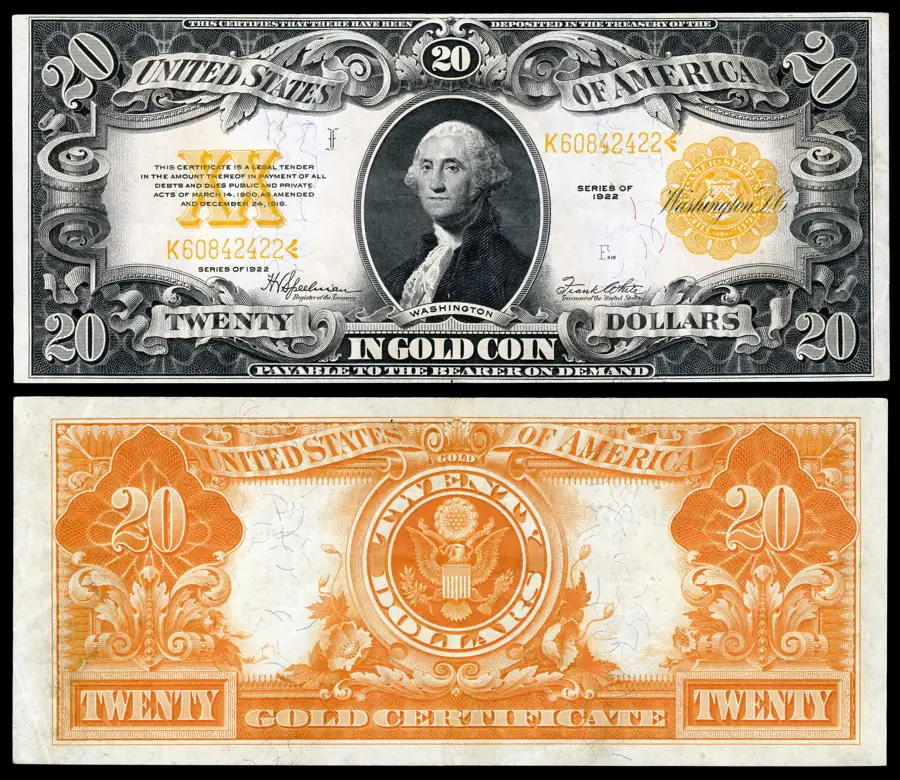
Then the Gold Reserve Act of January 30, 1934 moved ownership of all monetary gold to the US Treasury and ended the redemption of dollars for gold at home. The official price was raised to $35 per ounce. In other words, the dollar lost about 41% of its gold value overnight ($20.67 ÷ $35 = 0.59).
Private gold ownership became legal again only on December 31, 1974. If you own gold today, our guide on how to store gold covers the practical side.
Bretton Woods (1944 to 1971)
In July 1944, delegates from 44 nations met at Bretton Woods, New Hampshire. According to Federal Reserve History, they agreed that “the dollar was fixed to gold at $35 an ounce” and other currencies were kept fixed but adjustable to the dollar within a 1% band. The conference also created the International Monetary Fund and the World Bank.
Only foreign governments and central banks could exchange dollars for gold. Ordinary Americans could not. The system became fully functional in 1958, when major European currencies became convertible.
Its weak point was built in. The world needed more dollars to grow trade, but the more dollars circulated abroad, the less credible the promise to pay $35 in gold became. Economist Robert Triffin warned about this tension in 1960, and it is still called the Triffin dilemma.
Nixon closes the gold window (1971 to 1973)
On the evening of August 15, 1971, President Richard Nixon announced that the US would stop exchanging dollars for gold with foreign governments. The same speech introduced a 90-day freeze on wages and prices. As Federal Reserve History puts it, “in effect, the international monetary system turned into a fiat one.”
The key sentence of the address was this:
“I have directed Secretary Connally to suspend temporarily the convertibility of the dollar into gold or other reserve assets, except in amounts and conditions determined to be in the interest of monetary stability and in the best interests of the United States.”
Richard Nixon, President of the United States, Address to the Nation on a New Economic Policy, August 1971
The December 1971 Smithsonian Agreement tried to save fixed exchange rates. The official gold price was raised to $38 in 1972 and $42.2222 in 1973. By 1973, major currencies were floating, and the gold standard era was over.
Read also: Gold Isn’t Rising: Currencies Are Losing Value
The Official Price of Gold in Dollars
For most of US history, the gold price was not a market price. It was set by law. The chart shows how rarely it changed.
Here is the same history as a dollar’s weight in gold. The formula: grams of gold per dollar = 31.1035 ÷ gold price per ounce.
| Period | Gold price per troy oz | Gold per $1 |
|---|---|---|
| 1900 to January 1934 | $20.67 (official) | 1.505 g |
| 1934 to 1972 | $35 (official) | 0.889 g |
| 1972 | $38 (official) | 0.819 g |
| Since 1973 | $42.2222 (statutory book value) | 0.737 g |
| October 3, 2026 | $4,141.80 (market spot) | 0.0075 g (7.5 mg) |
Put simply, gold costs about 200 times more dollars than it did in 1933 ($4,141.80 ÷ $20.67 = 200.4). Has gold gone up, or has the dollar gone down? Mostly the second. We explore that view in our article on why currencies are losing value against gold.
What a $20 gold coin was worth then and now
The $20 Double Eagle shows the gap clearly. It weighed 33.436 grams of 90% gold, so it held 0.9675 troy ounces of pure gold. At $20.67 per ounce, that was worth exactly $20.00, its face value.
| $20 Double Eagle | Pure gold | Gold price | Metal value |
|---|---|---|---|
| Before 1933 | 0.9675 oz | $20.67 | $20.00 |
| October 3, 2026 | 0.9675 oz | $4,141.80 | $4,007.16 |
You can run the same math for any coin with our gold melt value calculator. Today’s American Gold Eagle still carries a $50 face value, but you can compare Gold Eagle prices and see they trade at their gold value, not their face value.
Advantages and Disadvantages of the Gold Standard
Why do some people still want it back, and why do most economists not? The table sums up the main arguments.
| Advantages | Disadvantages |
|---|---|
| Limits how much money governments can create | Money supply depends on gold mining and discoveries, not on the economy’s needs |
| Long-run price stability | Prices can fall for years (deflation), raising the real burden of debt |
| Fixed exchange rates between gold countries | Shocks spread quickly from one country to another |
| Discipline on government budgets | Central banks cannot cut rates or add liquidity freely in a crisis |
| A clear, simple rule that people trust | Vulnerable to runs: if people doubt the peg, they rush to swap money for gold |
John Maynard Keynes was blunt about it. In A Tract on Monetary Reform (1923), he wrote: “In truth, the gold standard is already a barbarous relic.”
Could the US Return to the Gold Standard?
It comes up from time to time. Judy Shelton, a long-time advocate of a link between the dollar and gold, was nominated to the Federal Reserve Board, but the Senate blocked her nomination in a 47 to 50 procedural vote on November 17, 2020.
Most economists are firmly against it. In January 2012, the IGM Forum at Chicago Booth (now the Kent A. Clark Center) asked leading economists whether a gold standard would improve price stability and employment for the average American. None of the panel agreed: 40% disagreed, 52.5% strongly disagreed, and the rest did not answer.
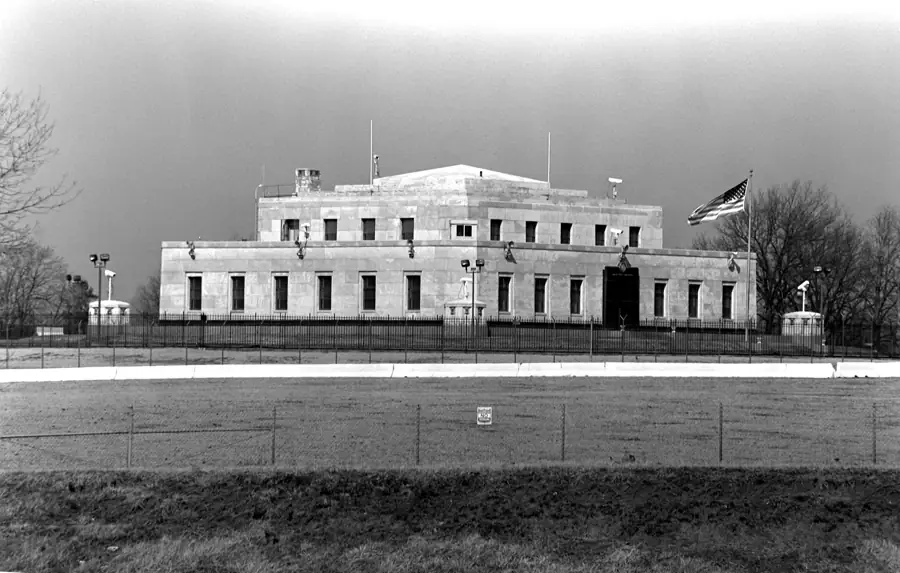
There is also a practical problem: size. Treasury status reports list the US government gold reserve at about 261.5 million troy ounces, with about 147.3 million ounces at Fort Knox. At $4,141.80 per ounce on October 3, 2026, the whole reserve was worth about $1.08 trillion. That is a small fraction of the dollars in circulation and in bank deposits today, so any return would need a far higher gold price or a much smaller money supply.
| US government gold reserve | Troy ounces | Book value at $42.2222 | Market value at $4,141.80 |
|---|---|---|---|
| Fort Knox, Kentucky | 147,341,858 | $6.22 billion | $610.3 billion |
| Total reserve (all sites) | 261,498,926 | $11.04 billion | $1.083 trillion |
Gold After the Gold Standard
Gold did not disappear from the monetary system. It just changed roles. Central banks hold it as a reserve asset with no counterparty, and they have been buying. According to the World Gold Council, central banks bought more than 1,000 tonnes of gold in each of 2022, 2023 and 2024, with 1,045 tonnes in 2024.
For private investors, the end of the gold standard turned gold into a market asset with a floating price. That is why today you buy it at the spot price plus a premium, in forms such as:
- bullion coins like the Gold Eagle, Krugerrand or Maple Leaf,
- minted and cast gold bars from 1 gram to 1 kilogram,
- historic gold coins such as the Double Eagle, which trade above their gold value.
If you are new to gold weights, start with our guide to the troy ounce, the unit every gold price is quoted in.
Summary: The Gold Standard
| Question | Short answer |
|---|---|
| What is the gold standard? | A system where money is defined as a fixed weight of gold and is convertible into it |
| When did Britain adopt it? | De facto from 1717; in law with the Coinage Act of 1816 and convertibility from 1821 |
| US gold price under the standard | $20.67 per ounce until 1934, then $35 |
| When did the US leave it? | Domestically in 1933 to 1934; internationally on August 15, 1971 |
| Who ended it? | Franklin D. Roosevelt for Americans; Richard Nixon for foreign governments |
| Is the dollar backed by gold today? | No, it is fiat money |
FAQ: Gold Standard
When did the US go off the gold standard?
The US left the gold standard in two steps. Americans could no longer redeem dollars for gold after 1933 and the Gold Reserve Act of 1934, and foreign governments lost that right on August 15, 1971.
Who took the US off the gold standard?
President Franklin D. Roosevelt ended domestic gold convertibility in 1933 and 1934. President Richard Nixon ended the dollar’s convertibility for foreign governments in 1971.
Why did Nixon end the gold standard?
The US no longer had enough gold to back all the dollars held abroad at $35 an ounce. Closing the gold window stopped foreign governments from draining US gold reserves.
What is the US dollar backed by today?
The dollar is not backed by gold or any commodity. It is fiat money whose value depends on law, the US economy and confidence in the Federal Reserve.
What would happen if we went back to the gold standard?
Most economists expect less flexibility in a crisis and more swings in prices and jobs. In a 2012 Chicago Booth survey, none of the economists agreed that a gold standard would improve outcomes for the average American.
Was the gold standard a cause of the Great Depression?
Many economists believe it made the Depression deeper and longer. Research by Eichengreen and Sachs found that recovery began when countries left the gold standard.
Does any country use the gold standard today?
No, no country ties its currency to gold today. Central banks still hold gold as a reserve asset and have bought large amounts in recent years.
Compare Gold Prices Before You Buy
The gold standard is history, but gold itself still trades every day, and dealers charge very different premiums for the same coin or bar. That is why metalsradar compares gold prices from many US dealers and shows the premium over spot for every offer.
Check today’s offers for investment gold and gold coins, follow the gold price per gram, or find a bullion dealer near you.
This article is for informational purposes only and is not investment advice.
Was this article helpful?
Thanks for your feedback!